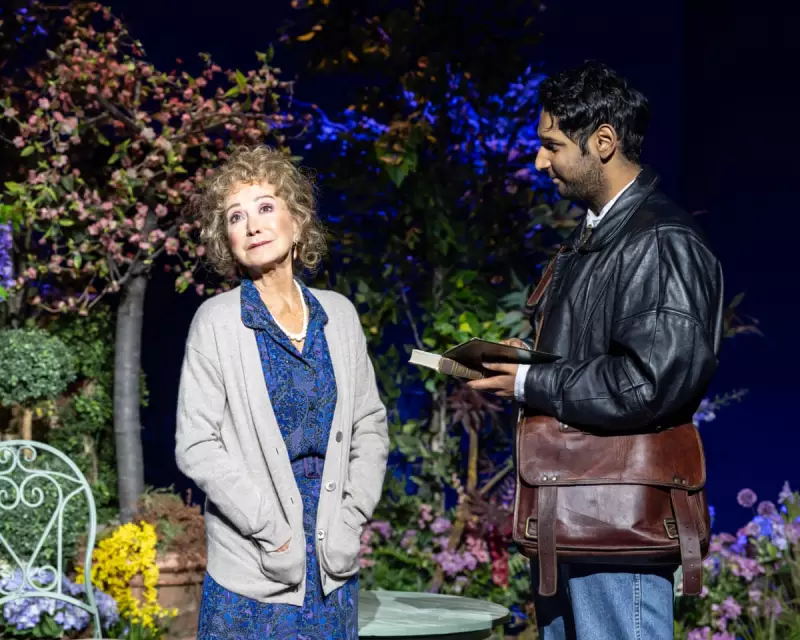
A poignant new chapter has opened for one of Sir Tom Stoppard's most personal works. Just a fortnight after West End theatres dimmed their lights in his memory, the stage lights have risen on a powerful revival of his 1995 play, Indian Ink, at London's Hampstead Theatre.
A Play About Legacy, Staged as a Tribute
This production, directed by Jonathan Kent, was originally intended to mark 30 years since the play's premiere. Its arrival so soon after Stoppard's passing, however, has imbued it with profound resonance. The play itself is a meditation on literary posterity and historical memory, making its timing strikingly poignant.
Indian Ink tells a dual-timeline story. In the 1930s, we follow Flora Crewe, a forward-thinking English poet travelling in India, where she is painted by a young Indian artist, Nirad Das. Fifty years later, in the 1980s, an American academic named Eldon Pike obsessively pursues Flora's surviving sister, Eleanor Swan, for letters and papers, aiming to write a biography that the play suggests will be crass and inaccurate.

A Formidable Performance from a Stoppard Veteran
The production boasts a skilled ensemble cast. Gavi Singh Chera is powerful as the artist Nirad Das, a man capable of loving an Englishwoman but not the British Empire. Donald Sage Mackay provides amusing moments as the hapless academic Pike, while Ruby Ashbourne Serkis is both amusing and moving as the doomed poet Flora.
The emotional core, however, is Felicity Kendal. Having played Flora in the original radio and stage productions three decades ago, she now graduates to the role of the older sister, Eleanor Swan. Kendal's performance is a masterclass, switching deftly between steeliness and sweetness. Given that Stoppard dedicated the play's text to Kendal's own mother, a lover of India and theatre, there is a profound personal layer to her portrayal.
A Courageous and Fitting Epitaph
The climax of the play requires Kendal's character to stand at the grave of a renowned writer. So soon after the death of Stoppard, her former partner and the author of that very scene, the moment carries an immense emotional weight, risking a fracture between fiction and fact. Yet, through courageous craft and immense skill, Kendal and the entire company deliver a performance that serves as a fitting first theatrical epitaph for the late, great dramatist.
The revival underscores a truth often overlooked about Stoppard: that for all his intellectual brilliance, his work is deeply emotional. Indian Ink resonates with notes of grief, love, and the complexities of colonial history, which this production sounds perfectly. It is a loss felt keenly across theatre, but perhaps most acutely in this venue now. The production runs at Hampstead Theatre until 31 January.