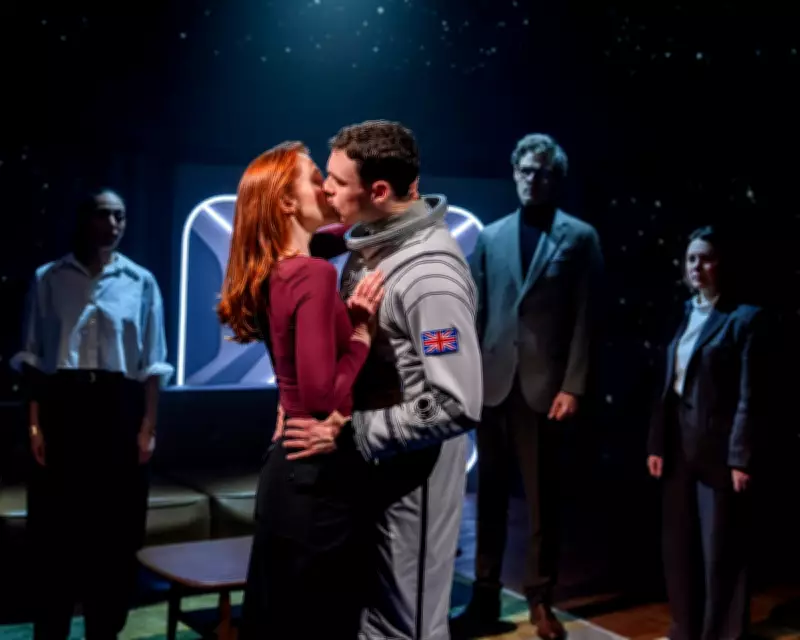
Flyby Musical Review: A Voyage of Epic Strangeness and Emotional Wreckage
The scope and ambition of the dark musical Flyby by Theo Jamieson and Adam Lenson are truly boundless, currently captivating audiences at Southwark Playhouse Borough in London. This jagged, time- and space-traveling drama delves deep into the emotional wreckage of a mutually destructive relationship, presenting a narrative that is as inventive as it is intense.
A Non-Sequential Journey Through Toxic Romance
The story begins with reports of a young astronaut named Daniel, portrayed fabulously by Stuart Thompson, who has gone awol in a shuttle with limited fuel. The central mystery revolves around his kamikaze journey and its purpose. Through a non-sequential backstory, the musical builds a chopped-up picture of Daniel's relationship with Emily, played with equal brilliance by Poppy Gilbert.
Similar to The Last Five Years, the narrative shows glimpses of formative traumas and cruelties that shape their bond. Daniel, bullied as a child, seems unconsciously drawn to someone who inflicts similar emotional damage. Emily, meanwhile, lives in a state of guilt and betrayal passed on by her parents, particularly her philandering film-maker father who co-opts his teenage daughter into his web of infidelity and deception.

Arresting Performances and Soaring Musicality
Directed by Adam Lenson, the scenes between Emily and Daniel are arresting in their visceral rawness. Thompson and Gilbert demonstrate tremendous strength in their performances, with songs that soar and blast through the audience, leaving a lasting impact. The production achieves a wonderful, epic strangeness through its combination of interstellar projections, the emotional intelligence of Jamieson's book, and the accomplishment of his music.
The musical score is particularly noteworthy, displaying Sondheim-like complexity at times while shifting to grandly symphonic arrangements at others. This musical diversity enhances the emotional depth of the story, creating a rich auditory experience that complements the visual spectacle.
Narrative Imperfections and Structural Challenges
Despite its many strengths, Flyby does present some imperfections. The narrative purpose and motivation often feel disjointed, even beyond the intentional non-sequential structure. Audiences may find themselves wanting to see the full, tragic shape of this relationship, which feels somewhat unfinished with too many gaps between key moments.
The "stranded in space" metaphor becomes overstretched at times, and Daniel's surname Defoe feels like an unnecessary nod to the writer of Robinson Crusoe. The storytelling as a whole appears lopsided, beginning as Daniel's drama but gradually shifting to become Emily's story. Three narrators—Simbi Akande, Gina Beck, and Rupert Young—provide commentaries with too many digressive cutaway scenes that sometimes disrupt the narrative flow.
Smaller details occasionally hang without proper resolution, such as the revelation that Emily's father put her in an X-rated film at age 13, which Daniel watched in his childhood, yet neither character acknowledges this significant shared trauma.
Glimmers of Brilliance and Future Promise
Yet amidst these challenges, Flyby contains genuine glimmers of brilliance, from its powerful music to its nuanced exploration of mental-health drama. The musical shows promise of evolving into something comparable to Next to Normal or Dear Evan Hansen with some artful reordering and refinement.
The production continues at Southwark Playhouse Borough in London until 16 May, offering theatregoers a unique opportunity to experience this ambitious interstellar musical that combines raw emotional drama with innovative storytelling techniques.