Mission to Space with Francis Bourgeois Review: A Misguided Television Experiment
Channel 4's documentary Mission to Space with Francis Bourgeois presents a curious and ultimately frustrating television proposition. The two-part series, totalling 90 minutes, attempts to transform the social media-famous trainspotter into a potential astronaut, but the premise quickly unravels under scrutiny.
The Unlikely Protagonist and His Astronomical Ambitions
Francis Bourgeois rose to prominence through his genuinely joyful TikTok videos celebrating locomotives, particularly favouring Class 37 and 158 trains while expressing less enthusiasm for the Class 170. His authentic geekiness and engineering background made him an internet sensation. The documentary seeks to explore whether this passionate enthusiast could translate his terrestrial interests to celestial aspirations.
From the outset, the answer appears painfully obvious. The programme makers seem to operate under the mistaken assumption that being a dedicated enthusiast automatically equates to possessing savant-like capabilities across unrelated disciplines. This fundamental misunderstanding shapes the entire production.

A Series of Astronomical Setbacks
The documentary follows Bourgeois through various space-related challenges with consistently disappointing results. At the RAF Centre of Aerospace Medicine, he meets retired European Space Agency astronaut Tim Peake for G-force testing. Bourgeois admits to frequently losing vision when standing too quickly, foreshadowing his rapid unconsciousness in the centrifuge.
His journey continues to the United States, where commercial space flight company Axiom Space extends an invitation. Here, Bourgeois' characteristically British humour and literal-mindedness create awkward interactions, particularly when discussing his 99th percentile head circumference at birth with former Axiom executive Matt Ondler.
Physical Limitations and Emotional Disconnects
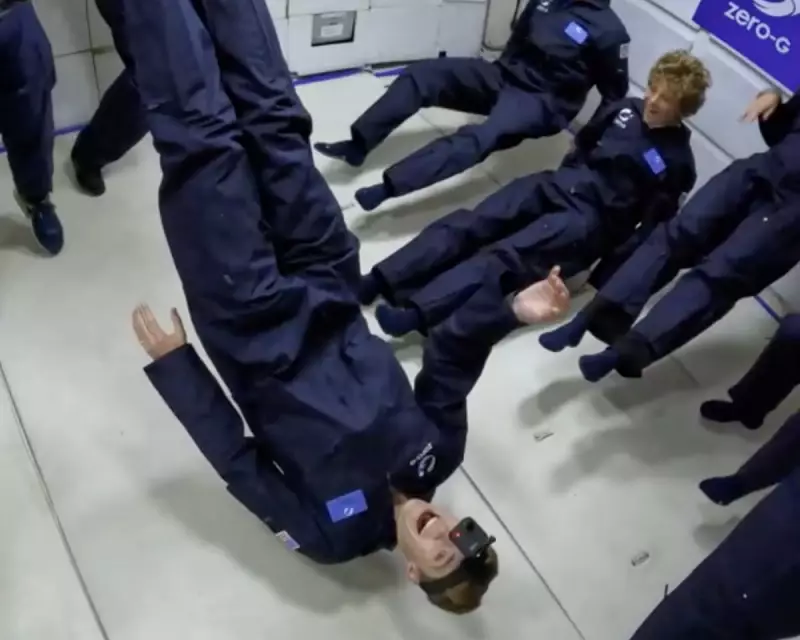
Further testing reveals significant limitations. At the American College of Hyperbaric Medicine, Bourgeois demonstrates negligible resistance to hypoxia, the dangerous condition of low oxygen levels in body tissues. During zero-gravity flight simulations, he experiences violent sickness. Emergency response drills aboard mock space stations result in panicked decisions that would prove fatal in real scenarios.
The programme attempts to broaden its emotional scope by examining the personal sacrifices astronauts make, particularly regarding family separation. This leads to an uncomfortable therapy session where Bourgeois discusses his cat while the therapist visibly questions her participation.
Glimmers of Potential in Engineering Exploration
The documentary's most engaging moments arrive in the final fifteen minutes when Bourgeois discovers space engineering. His genuine enthusiasm returns as he connects with fellow passionate engineers discussing valves, revolutions, and pressure systems. "It's like you're singing to me!" he exclaims delightedly to one specialist.
This segment highlights what the programme could have been: an exploration of space technology through the eyes of an engineering graduate with exceptional communication skills. Instead, viewers endure Stephen Fry's overly lyrical narration and a premise that stretches credibility across ninety minutes that could easily have been condensed.
A Missed Opportunity for Authentic Storytelling
Mission to Space with Francis Bourgeois ultimately feels like television forcing a square peg into a round hole. While Bourgeois remains his authentic, witty self throughout, the documentary asks him to undertake challenges far beyond his capabilities rather than leveraging his genuine strengths. The result is a programme that occasionally embarrasses its subject while failing to deliver either compelling astronaut training narrative or satisfying engineering exploration.

The documentary's extended runtime exacerbates these issues, with the emotional beats feeling manufactured and the physical challenges highlighting limitations rather than potential. One leaves hoping future productions will better utilise Bourgeois' unique combination of engineering knowledge and communicative charm, perhaps focusing on subjects where his enthusiasm can shine without artificial constraints.