German Theatre Premiere Descends into Chaos Over Provocative Fascism Play
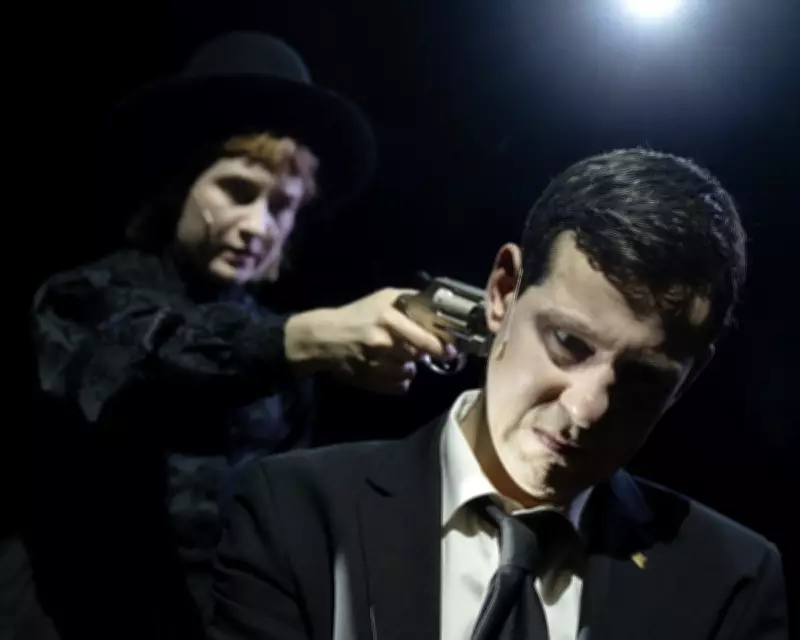
A theatrical performance in Germany erupted into violent scenes over the weekend when audience members shouted down, pelted with fruit, and attempted to physically drag an actor from the stage during his portrayal of a far-right activist. The incident occurred during the German premiere of Portuguese playwright Tiago Rodrigues's award-winning work Catarina, or The Beauty of Killing Fascists at the Bochum Schauspielhaus in North Rhine-Westphalia.
Provocative Narrative Sparks Audience Fury
The 2020 play, which has received multiple international awards including best foreign performance at Italy's Ubu awards and equivalent recognition from the French Critics' Union, presents a disturbing family tradition. The story follows a family that annually kidnaps and executes a "fascist" to avenge the real-life murder of farm worker Catarina Eufémia, a resistance martyr killed during Portugal's Salazar dictatorship in 1954.
The narrative explores generational conflict between bloodthirsty parents and their more hesitant adult daughter regarding what methods are justified to defend democracy. The climax features a 15-minute monologue delivered by the year's chosen victim, a far-right party functionary, who outlines a nightmarish extremist agenda.

Performance Interrupted by Physical Confrontation
As actor Ole Lagerpusch began delivering the incendiary final speech, the audience reaction escalated from whistling and heckling to physical confrontation. Theatre spokesperson Alexander Kruse described how spectators became increasingly agitated, with one audience member throwing an orange that narrowly missed the actor.
"Furthermore, two spectators mounted the stage, apparently with the intention of dragging the actor off the stage, which was prevented," Kruse stated, calling the assault "completely unacceptable." Despite the hostile environment, Lagerpusch persevered and managed to deliver his chilling final line: "The future belongs to us."
Director Expresses Shock and Disappointment
The play's acclaimed Slovenian director, Mateja Koležnik, expressed both pride in her actor's professionalism and dismay at the audience's reaction. "For me it was quite a shock – we did expect people talking back, even shouting back, because, of course, the last monologue is a provocation," she said from Ljubljana.
Koležnik described Lagerpusch as "traumatised" by the experience and noted his effectiveness in the role came from his softly spoken, affable delivery of hateful messages. "I was astonished by the stupidity, really. I never ever thought – nobody did – that somebody from the audience would jump on stage and try to hit the actor," she added.
Critical Reactions and Subsequent Performances
Culture critic Martin Krumbholz of Nachtkritik.de, who attended the premiere, placed blame squarely on the audience. "Parts of the Bochum audience, which one would have thought to be among the most theatre-savvy in the country, are apparently too stupid, to put it bluntly, to distinguish between fiction and reality," he wrote.
Regional public broadcaster WDR critic Christoph Ohrem released an audio recording of the tumult, noting it recalled something from the age of Shakespeare. He concluded the play was effective precisely because it took spectators out of their comfort zone, remarking, "It's truly astonishing that a play can still elicit such reactions in 2026."
Following the incident, the theatre implemented enhanced security measures for subsequent performances. Deputy director Angela Obst appealed for calm, and later shows proceeded without incident. Audience members expressed support on the theatre's Instagram page, with one commenter noting the disturbing irony that "supposedly anti-fascist theatregoers storm the stage and attack the actors."
Another spectator reflected on the Saturday premiere, stating she had been "shocked how disrespectful some people can be in the theatre" when "the actor was just doing his job." The incident has sparked broader conversations about audience behavior, artistic provocation, and contemporary responses to theatrical representations of extremism.