The Ladies Football Club Premieres at Sheffield's Historic Crucible Theatre
A groundbreaking new theatrical production titled The Ladies Football Club is currently running at Sheffield's renowned Crucible Theatre until 28 March. This compelling play sheds light on the early struggles of women's football in the early 20th century, exploring themes of gender injustice and the dissolving boundaries between sport and the performing arts.
Historical Significance of the Crucible Theatre Venue
The Crucible Theatre, best known as the prestigious host of international snooker tournaments, actually holds a significant place in football history. A distinctive blue plaque on its exterior wall marks the exact location where the Sheffield Rules of football were formally agreed upon in 1858, when the site functioned as the Adelphi hotel. This historical connection makes the venue particularly fitting for premiering a production that examines the establishment and subsequent dismantling of women's football during the early decades of the twentieth century.
The Growing Convergence of Football and Theatre
While football enthusiasts and theatregoers might not have traditionally represented overlapping demographics, the past decade has witnessed a remarkable surge in theatrical productions centered around football themes. Notable examples include Three Lions, a farcical treatment of the 2018 World Cup bid; The Pass, a Royal Court drama addressing homophobia in football; The Wolves, a Pulitzer Prize-nominated exploration of teenage girlhood through soccer; and even The Bounds, a sixteenth-century folk horror production. Additionally, Dear England, a critically acclaimed and still-touring smash hit, chronicles Gareth Southgate's tenure as manager of the England national men's team.

The Ladies Football Club, adapted by Tim Firth from Stefano Massini's original monologue, distinguishes itself by focusing intensely on the physical dimension of football. Director Elizabeth Newman has collaborated with movement expert Scott Graham, co-founder of the celebrated devised theatre company Frantic Assembly, to ensure authentic representation of football action on stage.
Authentic Movement and Physical Transformation
"Representing football convincingly on stage presents significant challenges," explains Graham, a passionate football supporter who grew up following Rangers and aspiring to a professional playing career. "Audience members who understand the sport will immediately detect any inaccuracies. I have rarely witnessed truly successful theatrical depictions of football."
Massini's narrative about World War One ammunition factory workers who began kicking a ball during shift breaks and eventually established one of England's most popular football teams ultimately persuaded Graham to undertake this project. His personal observations of his daughter's football journey from age nine provided crucial inspiration.
"I witnessed firsthand the girls' initial reluctance to be visible, their apprehension about occupying space, and their fear of potential humiliation or disappointing others," Graham recalls. "You could observe them physically withdrawing, which was genuinely heartbreaking. Over seven years of watching my daughter and her teammates, I observed a remarkable transformation. They developed physical confidence, began literally occupying more space, and I recognized this as both metaphor and political statement."
Addressing Injustice and Gender Inequality
For director Elizabeth Newman, this physical transformation represents the core message of The Ladies Football Club. "A primary motivation for telling this specific story involves addressing fundamental injustice," Newman emphasizes. "The Football Association's ban on women's football represents a historical wrong. In our contemporary moment, where hard-won women's rights face erosion in numerous global contexts, this narrative feels particularly urgent."
Newman, who played football during her childhood in Croydon, reflects: "Football was simply what children did—you saw a ball, you kicked it. Until you grew older and received societal messages that this activity wasn't appropriate for you."

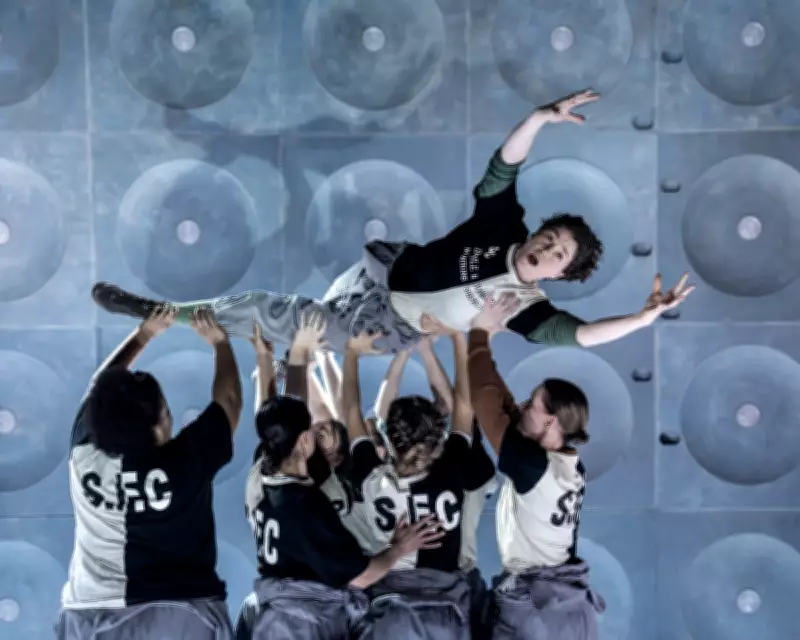
In her production, the choreography evolves progressively as the players develop their skills. The ensemble engages in increasingly expansive movements, lifting and spinning each other to execute scissor kicks or launching through the air for dramatic goal-saving maneuvers. This fictional team's development parallels the cast's own journey, with some actors being dedicated football enthusiasts while others confronted personal insecurities about physicality during rehearsals.
Bridging Cultural Divides Between Sport and Arts
The historical distance between theatre and football appears particularly ironic given their substantial common ground: both represent live, embodied dramatic experiences; both offer immersive shared moments that can only be fully appreciated in real time; and sporting stadiums essentially function as theatre-in-the-round venues. Graham recalls that during his university years, participating simultaneously in drama society and the first XI football team created such discomfort that "I deliberately concealed each involvement from the other group."
Contemporary cultural shifts have significantly altered this landscape. Sport's global dominance has transformed it into a nearly universal cultural reference point, while its intersection with contemporary society and politics makes it increasingly compelling theatrical subject matter. As storytellers increasingly recognize both its narrative value and audience appeal, the traditional division between sport and elite performing arts continues to dissolve.
Recent examples include the Royal Shakespeare Company setting Much Ado About Nothing within Serie A football culture, an Edinburgh Fringe production retelling Lady Macbeth's story on a netball court, and a new musical about the first all-female sailing crew in the Whitbread Round the World race.
Collegiality and Collective Action in Women's Sport
Newman, who previously worked on football-themed plays including And Did Those Feet about Bolton's 1923 FA Cup victory, finds particular resonance in sport's demonstration of collective effort toward common objectives. "In our current cultural moment, showcasing collegial cooperation feels vitally important," she observes. "Women's sport consistently demonstrates this collaborative spirit in particularly powerful ways."
Just three miles from the Crucible Theatre, Sheffield Wednesday's ongoing financial collapse unfolds as its own dramatic saga. Football supporters across Sheffield recognize how rapidly privatization and profit-seeking undermine their sport's collectivist foundations. For Hillsborough faithfuls seeking illumination during challenging times, The Ladies Football Club offers both historical perspective and contemporary relevance.