The Erosion of Live Music in Theatre: A Critical Loss for Dramatic Art
News that the Royal Shakespeare Company is proceeding with severe cuts to its music department, shrinking a dedicated team from seven professionals to merely two, has sounded a dire alarm for the future of live music in theatrical productions. This cost-saving measure reflects a troubling trend across the industry, where touring shows and West End musicals increasingly replace orchestral forces with minimal ensembles or technology-driven alternatives. The fundamental question arises: why invest in live performers when digital solutions can seemingly replicate the experience?
The Historical Significance of Theatre Music
Contrary to modern perceptions, theatre music has never been merely "incidental." From the 17th century onward, composers like Henry Purcell and Harrison Birtwistle crafted scores that were integral to bringing drama to life, collaborating closely with writers and directors to shape the atmosphere of texts and stories. These compositions, such as Felix Mendelssohn's work for A Midsummer Night's Dream or Edvard Grieg's for Henrik Ibsen's Peer Gynt, served as precursors to contemporary film and video game scoring, demonstrating music's crucial role in narrative immersion.
Iconic classical pieces like Mendelssohn's orchestral scherzo or Grieg's Morning Mood owe their existence to the plays that inspired them. Yet, today, audiences rarely experience Shakespeare or Ibsen with the accompaniment of a full symphony orchestra. When Morning Mood appears on a relaxing playlist, its sublime flute and oboe melody often evokes Norwegian fjords, but Grieg's original intent was far different: to depict Peer Gynt stranded in the Moroccan desert, defending against monkeys at dawn. This disconnect highlights how theatre music allowed composers to explore innovative soundworlds beyond concert hall conventions.

Innovative Examples of Essential Theatre Scores
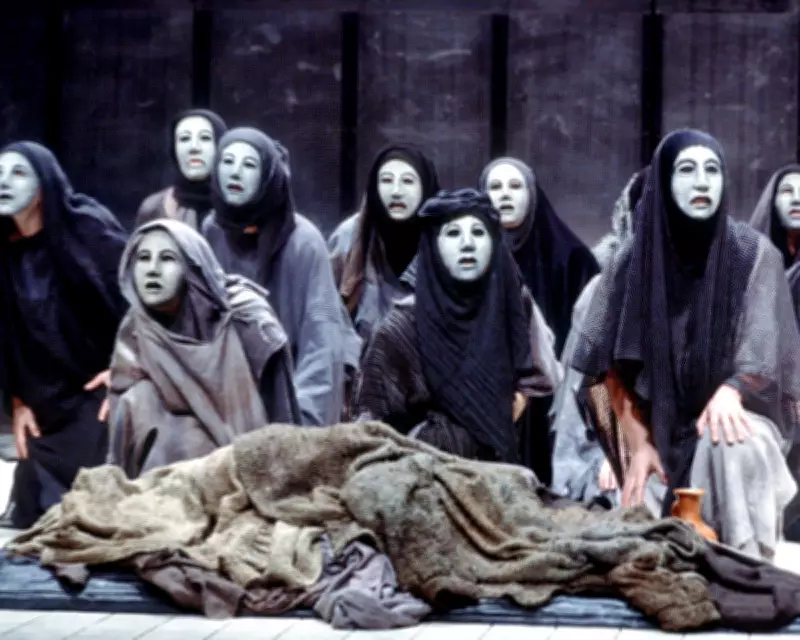
Jean Sibelius's score for Hugo von Hofmannsthal's play Everyman stands as one of his most extreme orchestral visions, featuring a ten-minute piece that uses achingly dissonant semitones to convey the protagonist's desolation. Similarly, Harrison Birtwistle's work as musical director for Peter Hall's 1981 production of The Oresteia at the National Theatre created a "new sonic ritual," blending percussion and speech-rhythms into a hybrid music-theatre form that closely approximated the spirit of Ancient Greek drama.
These examples underscore a vital truth: from Sophocles to Shakespeare, theatre has never been solely about the spoken word. The music inherent in language, and scores composed to enhance it, has always been fundamental to the artform—essential, not incidental. Reducing music departments risks hollowing out the very soul of theatrical expression, sacrificing artistic depth for financial expediency.
The Broader Context: Popera and Modern Spectacles
Despite these cuts, orchestral musicians continue to thrive in other venues, such as the Heritage Orchestra's collaboration with Rosalía at the Brit Awards, which transformed Berlin's Berghain club into a four-minute multimedia spectacle reminiscent of grand theatrical traditions. This performance, operatic in scale if not in genre, highlights how ambition and drama persist outside traditional theatre.
For true operatic pop fusion, few can rival Freddie Mercury and Montserrat Caballé's 1988 collaboration on Barcelona, which birthed the genre of "popera" by merging operatic excess with pop glamour. Imagine a stage show featuring a full symphony orchestra alongside such divas—a vision that could potentially reinvigorate theatreland with live musicianship.
Conclusion: Preserving a Vital Artistic Legacy
The RSC's decision reflects a broader cultural shift that prioritizes cost over creativity, threatening to sever theatre from its rich musical heritage. As audiences lose access to live scores, they miss not just notes, but the emotional and narrative layers that composers have woven into drama for centuries. The return to valuing live music in theatre, perhaps through innovative productions like a Barcelona stage show, could restore this essential connection, ensuring that the artform remains vibrant and whole.