

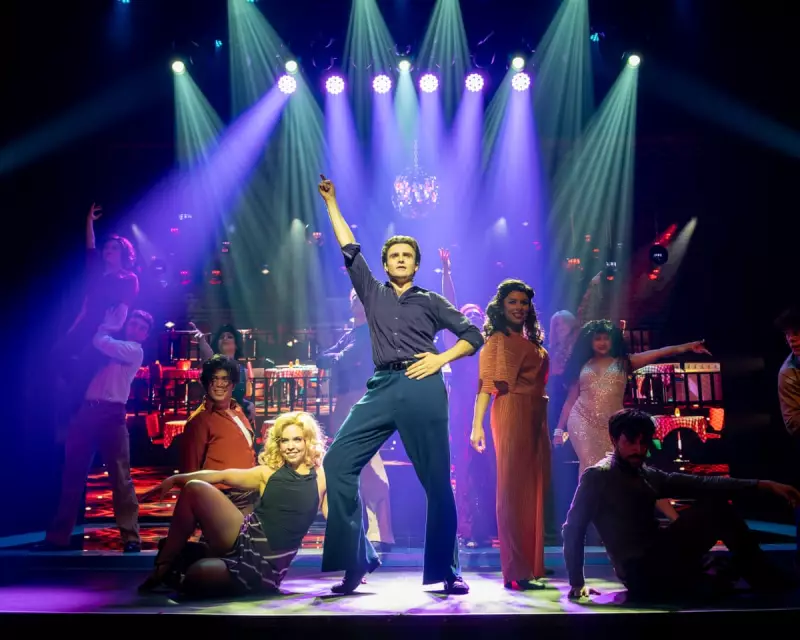
A new stage adaptation of the iconic 1977 film Saturday Night Fever has opened to a lukewarm reception at Melbourne's historic Athenaeum Theatre. The production, which runs until 25 January, attempts to channel the gritty glamour of disco-era Brooklyn but ultimately serves as a pale imitation, leaving audiences yearning for John Travolta's definitive cinematic performance.
A Tall Order: Filling Travolta's White Suit
The central challenge for any Saturday Night Fever adaptation is the unavoidable shadow of John Travolta's star-making turn as Tony Manero. The role demands a unique blend of arrogant machismo, vulnerable grace, and explosive dance talent. This production casts relative newcomer Ethan Churchill in the pivotal role. While Churchill physically resembles the part, his portrayal is criticised as underpowered, lacking the necessary vocal strength, warmth, and vulnerability. His dancing, crucially, fails to reach the sensational heights that make Tony's club-floor supremacy believable, fatally undermining a core appeal of the story.
Thin Plot and a Shallow Stage
The musical follows the film's simple narrative: nineteen-year-old Brooklyn paint salesman Tony Manero seeks escape from his dreary life through weekly triumphs at the 2001 Odyssey disco. He dumps his dance partner Annette (played by Izzi Green) for the more sophisticated Stephanie Mangano (Regan Barber), hoping she will be his ticket to a better life. However, on stage, the crucial distinction between Tony's mundane daily existence and the transformative power of the nightclub is lost. The disco becomes just another setting for his solipsism, and he is rarely seen dancing with the solitary, magnetic intensity of the film.

Director Drew Anthony relies heavily on projected backdrops by Aquixel Studios to evoke 1970s New York. While this allows for seamless scene transitions, it creates an anti-theatrical feel, with actors often performing in front of a giant screen using dialogue lifted verbatim from the movie. The production has also been sanitised for a family-friendly nostalgia trip, toning down language and moving a dark gang-rape scene offstage.
Standout Performances Amidst Technical Flaws
Despite the production's core weaknesses, several cast members deliver commendable performances. Sam Hamilton brings palpable pathos to the troubled Bobby C, even if his solo rendition of 'Tragedy' is over-sung. Barber effectively captures Stephanie's steeliness, and Green is excellent as the heartbroken Annette. The parental roles are bolstered by George Kapiniaris and Chelsea Plumley, who add gravitas to the family scenes. However, technical aspects let the side down, with reports of excessive, cheesy lighting and patchy, inconsistent sound design throughout the show.
Ultimately, this jukebox musical—which debuted in London's West End in 1998 with Australian star Adam Garcia—fails to leverage its one clear advantage over film: the live, kinetic energy of real dancers on stage. Instead of a powerful reimagining, it offers a cheap knockoff that primarily functions as a soundtrack-driven nostalgia trip, making the audience's mind inevitably wander back to the superior original. For a stage show about the transformative power of dance, its greatest failure is leaving the spectacular moves largely in the memory of the film.






