The Red Rogue of Bala Fails to Ignite Its Potential
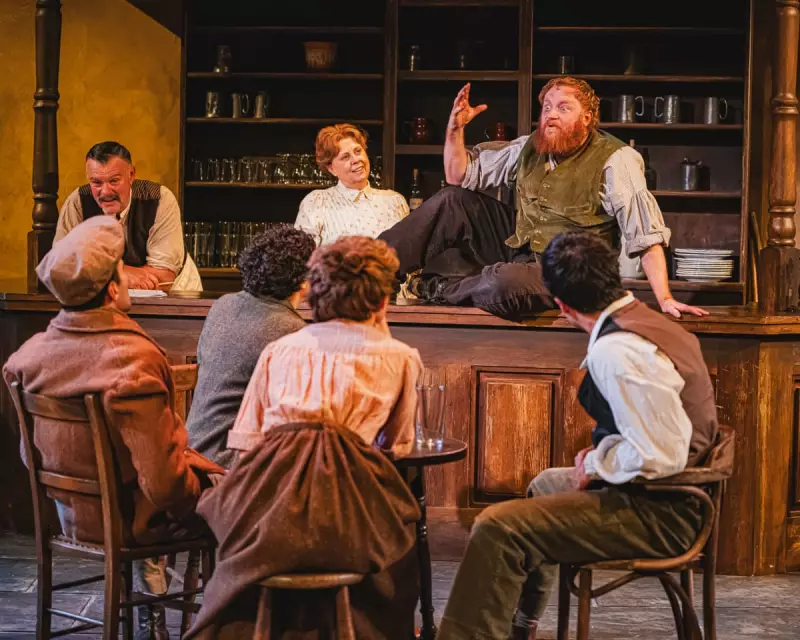
A new theatrical production exploring the life of legendary Welsh outlaw John Jones has opened at Theatr Clwyd in Mold, but critics suggest it falls short of capturing the true renegade spirit of its fascinating subject. The Red Rogue of Bala, written by former theatre critic Chris Ashworth-Bennion, runs until 22 November.
Promising Material Undermined by Execution
John Jones's life story appears perfect for dramatic adaptation, filled with extraordinary escapes and criminal exploits that earned him nicknames including the Welsh Houdini, Little Turpin and Coch Bach y Bala. By the time of his death in 1913, he had become something of a folk hero in north Wales.
However, this debut play from Ashworth-Bennion struggles to translate that compelling reality to the stage. The production begins in a pub where Jones, portrayed by Simon Holland Roberts, holds drinkers spellbound with tales of his adventures after escaping prison. The central mystery revolves around whether he's merely a common criminal or represents something more substantial - a genuine force of rebellion.

Characterisation and Tone Problems
The production suffers from uncertain tone, fluctuating between comedy and farce before abruptly shifting to darkness just before the conclusion. This inconsistency prevents audiences from becoming properly invested in the central character's journey.
Simon Holland Roberts's portrayal of Jones lacks the depth required for such a complex figure. Rather than emerging as a charismatic rogue in the tradition of Jez Butterworth's Rooster from Jerusalem, he comes across as a broadly drawn figure of fun - a barefoot Falstaff whose motivations remain unclear throughout.
Under Dan Jones's direction, the characterisation becomes overly generic. Qasim Mahmood plays Reginald Jones-Bateman as the stereotypical haughty English landowner, while Rhys ap Trefor's police officer seems lifted from a 1970s sitcom with his extreme ineffectuality.
Plot Issues and Missed Opportunities
The narrative ventures into increasingly unbelievable territory that undermines its dramatic impact. Despite having firearms, Reginald's party fails to apprehend Jones. The police officer suffers a beating after being mistaken for a badger in a sack without crying out to identify himself. Most puzzlingly, Jones hauls a giant cauldron onstage claiming to have carried it across the Irish Sea - a moment that feels distracting rather than meaningful.
Several promising themes receive superficial treatment. Cross-class romances function merely as plot devices rather than meaningful relationships. References to poverty and war feel disconnected from the main narrative. Even the design elements, including Mark Bailey's evocative period pub setting, can't compensate for the script's deficiencies.
The production touches on potentially powerful parallels between English colonialism in India and the aristocracy's treatment of Wales, suggesting Jones represents the spirit of native resistance. Like Rooster in Jerusalem, he's connected to land invaded by English outsiders. Unfortunately, these themes become diluted by the busy plot and generic humour.
The tragic conclusion and transition into mythological territory - questioning whether Jones represents the ancient Prince of Wales's spirit - fails to deliver the emotional impact it should. While glimmers of a powerful play about rebellion and storytelling emerge occasionally, The Red Rogue of Bala ultimately represents a missed opportunity to do justice to its remarkable historical subject.