The Kennedy Center's Year of Turmoil Under Trump's Influence
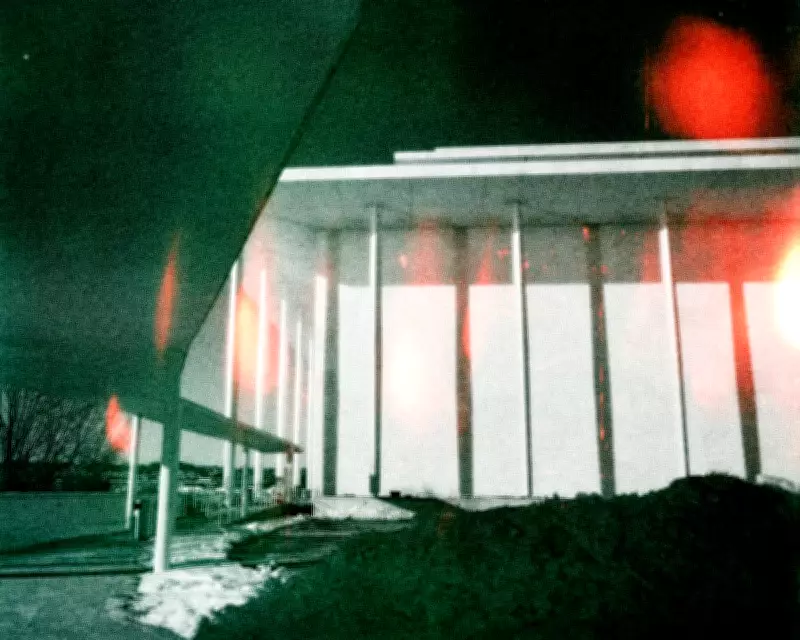
The John F Kennedy Center for the Performing Arts in Washington DC, once a beacon of American cultural excellence, now stands at a crossroads of uncertainty. What was designed as a non-partisan national treasure has become embroiled in political controversy, facing leadership upheavals, artistic boycotts, and an impending two-year closure that threatens its very foundations.
A Legacy Unravelled
Established as a living memorial to President John F Kennedy following his 1963 assassination, the centre formally opened in 1971 on the banks of the Potomac River. For over five decades, it served as Washington's premier cultural institution, hosting everything from Leonard Bernstein's Mass premiere to Stephen Sondheim festivals, August Wilson play cycles, and Wagner's complete Ring Cycle operas. The complex became synonymous with artistic excellence, attracting luminaries like Supreme Court Justice Ruth Bader Ginsburg, who attended performances and even officiated weddings within its halls.
The Trump Takeover Begins
The centre's transformation began dramatically on 7 February 2025, when President Donald Trump announced via Truth Social that he was terminating "multiple individuals" from the board of trustees who didn't share his vision for a "Golden Age in Arts and Culture." He promised a new board with himself as chairman and criticised previous programming, specifically targeting drag shows aimed at youth audiences. This social media declaration sent shockwaves through the institution's staff, who initially struggled to comprehend the implications.

Trump swiftly replaced president Deborah Rutter with Ric Grenell, a former ambassador to Germany with no arts administration experience. The new leadership dissolved the centre's social impact initiative, created in 2020 to promote anti-racism and community outreach, affecting ten staff members. Former vice-president of social impact Marc Bamuthi Joseph described the atmosphere as "morally untenable," noting how difficult it became to operate when the highest office publicly chastised their work.
Artistic Exodus and Empty Seats
The political interference triggered an artistic boycott that saw performers ranging from the Brentano String Quartet to actor Issa Rae and composer Philip Glass cancel engagements. Violinist Mark Steinberg explained his quartet's cancellation: "I would have felt ashamed to walk out on stage there. Had we appeared there, in my eyes, that would be a way of condoning everything that's happening."
When performances did proceed, social media filled with images of sparsely attended shows as audiences voted with their feet. Long-time subscribers like retired academic Mark Rosenman cancelled memberships after three decades, describing Trump's approach as "megalomania" that imposed personal taste on artistic programming.
Rebranding and Closure
In a controversial move, the board renamed the institution the "Trump Kennedy Center," adding Trump's name to the exterior wall before Congress could object. The 70-year-old Washington National Opera announced its departure from its home since 1971, planning to perform at multiple venues across the metropolitan area instead.
The situation reached a critical point when Trump announced via Truth Social on 1 February 2026 that the centre would close for approximately two years for renovations, estimating costs around $200 million without specifying funding sources. Critics suspect this serves as cover for diminishing audiences and programming challenges, with former president Michael Kaiser warning that such closures typically cause supporter networks to "wander off and start doing other things."
Institutional Knowledge at Risk
Charlotte Canning, a drama professor at the University of Texas at Austin, expressed concern about losing decades of accumulated expertise: "All those people are some of the best in the business. How do you rebuild that?" The centre's specialised staff in backstage operations, scene shops, costume departments, and technical roles represent institutional knowledge that cannot be easily replaced.

For performers like Bob McDonald, who grew up with the centre and has worked on nearly every stage, the changes feel personal: "I consider the Kennedy Center to be a part of the family and it feels like I've lost somebody." The institution that once provided an escape from Washington's political tensions has become engulfed by them, raising fundamental questions about the future of publicly-supported arts in America.
As the marble complex prepares for its uncertain hiatus, it stands as a symbol of how quickly even the most established cultural institutions can unravel when political agendas override artistic vision and institutional independence.