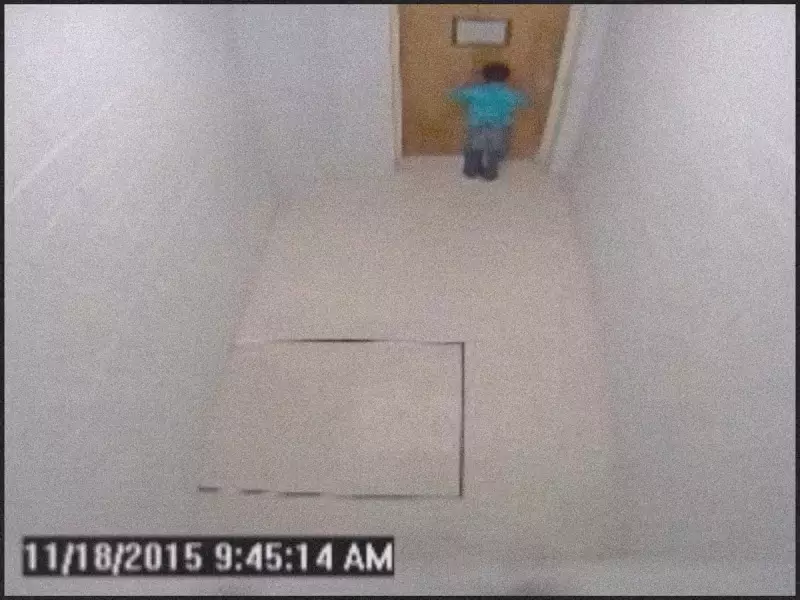
A disturbing video shown to Maryland state lawmakers in 2017 depicted a ten-year-old boy being dragged down a school hallway by two staff members and forced into a small, empty room. The door was shut, leaving the first-grader alone. When staff returned over ten minutes later, blood from the child's face was smeared across the floor.
Leslie Seid Margolis, a lawyer with Disability Rights Maryland, presented the footage as part of a 15-year campaign to ban the practice known as seclusion—where children, often those with disabilities, are involuntarily isolated. Despite the graphic evidence, legislators were reluctant to outlaw it.
A Federal Catalyst for Change
The turning point came in 2021, when the US Justice Department's Civil Rights Division concluded an investigation into a Maryland school district. It found more than 7,000 cases of unnecessary restraint and seclusion within a two-and-a-half-year period. Merely four months later, Maryland passed a bill prohibiting seclusion in public schools with near-unanimous support.

"I can't really overstate the impact that [the] justice [department] can have," Margolis stated. The division's Educational Opportunities Section traditionally pursued high-impact cases on issues like racial harassment, disability discrimination, and seclusion, forcing educators and policymakers to take notice.
A Dramatic Shift in Priorities and Personnel
This landscape has transformed under the second Trump administration. The department's focus has pivoted to investigating allegations of antisemitism, transgender policies, and bias against white people in schools. It has sued states over tuition for undocumented immigrants and challenged university diversity policies.
Concurrently, the section has been decimated by staff resignations. From about 40 lawyers in January, by June only five remained, according to former employees. Shaheena Simons, who resigned as chief of the section in April, warned, "The investigations aren't going to happen. Remedies aren't going to be sought."
The pace of new investigations has also raised concerns. A probe into antisemitism at UCLA concluded in just 81 days, whereas such investigations typically take years. A federal judge later blocked the administration from using its findings to levy a massive fine, accusing it of a playbook "of initiating civil rights investigations of pre-eminent universities to justify cutting off federal funding."
Stalled Justice for Families
As new cases are opened, older investigations into systemic abuses have stalled. In Colorado, Douglas County Public Schools have been under Justice Department scrutiny since 2022 for its use of seclusion and restraint, and since 2023 for severe racial harassment allegations where students were called monkeys, threatened with lynching, and made to argue the benefits of Jim Crow laws.
After an initial flurry of activity under the Biden administration, the district received an email in May noting "some staffing changes." The racial harassment case was reduced to a single staffer. For parents, the delay means ongoing risk. One mother, whose son was secluded in kindergarten, said, "He kept saying: 'I can't go back.'... I never envisioned a world where the school would not care about my child."
Advocates like Emily Harvey of Disability Law Colorado had hoped for a statewide ban on seclusion, mirroring Maryland's success. Colorado only requires restraints to be recorded if they last over a minute, leaving shorter incidents untracked. "We believe this is an arbitrary distinction," Harvey said.
Early End to Oversight and a Pattern of Ambivalence
Former officials worry the shift affects not just future cases, but also enforcement of past settlements. In Vermont, the Elmore-Morristown district agreed to implicit bias training in a settlement signed just before Trump's inauguration—a concept now targeted by an executive order seeking to eliminate its federal funding.

More strikingly, oversight of a 2023 settlement with Vermont's Twin Valley district ended a year early, despite a December 2024 letter from the Justice Department noting persistent issues like a "pervasive culture of sexism" and ineffective responses to biased behaviour. Lia Ernst of the ACLU of Vermont said, "It is my hope that it is ending early because Twin Valley has made so much progress, but it is my fear that it is ending early because DoJ just doesn't care."
While the department has restored a webpage on past seclusion cases and announced a new settlement in Michigan in July, advocates sense a fundamental change. Guy Stephens of the Alliance Against Seclusion and Restraint observed, "There are still people very, very dedicated to this work... but it's very hard to work in a system that is shifting and reprioritizing."
Frederick Lawrence, a former federal prosecutor, cautioned against viewing this as a temporary aberration. "My experience is that the river only flows in one direction," he said, "and things never go back to the way they were." For vulnerable students across the United States, the current shift in civil rights enforcement may have lasting consequences.