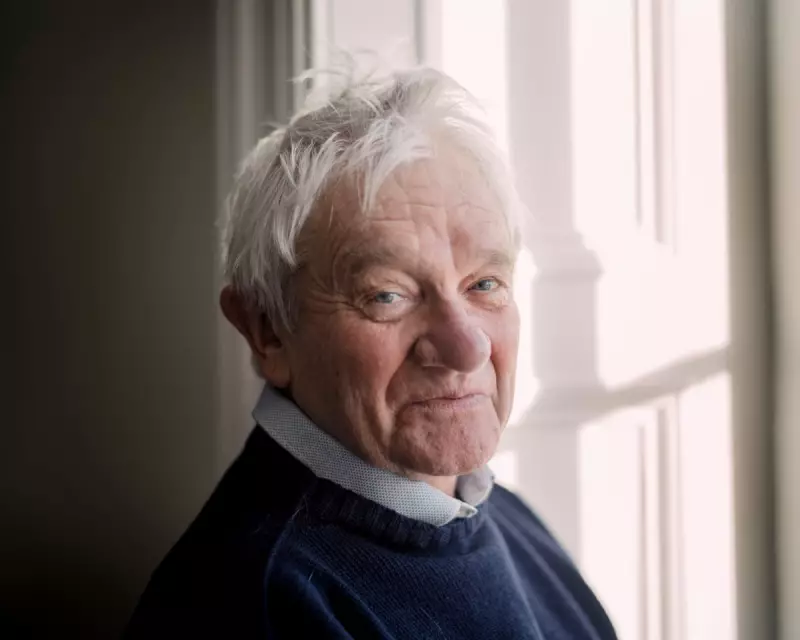
Sir Paul Nurse, the Nobel Prize-winning geneticist, has embarked on a historic and contentious second term as President of the Royal Society, becoming the first scientist in centuries to reclaim the role. In an exclusive interview, the 76-year-old addressed criticisms of his reappointment, the ongoing controversy surrounding fellow Elon Musk, and the growing threat he perceives from right-wing populism to scientific endeavour.
A Controversial Return to Leadership
The eminent scientist, whose career includes leading the Francis Crick Institute and Rockefeller University, did not seek the presidency again. He was anonymously nominated and subsequently elected, securing the required two-thirds vote from the Society's 1,500 fellows. His reappointment sparked debate, with some critics arguing it was time for a female president and that his selection perpetuated an image of the 364-year-old institution as a "boys' club".
Nurse defends the process as "semi-democratic" and pushes back on the suggestion that the Society lacked other qualified candidates. He emphasises the role's demanding, unpaid nature, which deters many. "It's not an easy position to fill," Nurse stated. "You're always in the headlines, you're always being challenged in different ways… Lots of people don't actually really want to do it." He asserts his scientific credibility is crucial for opening doors in government and international circles.

The Elon Musk Conundrum
One significant inheritance from his predecessor, Sir Adrian Smith, is the dilemma of tech billionaire Elon Musk's fellowship. Elected for his work in space and electric vehicles, Musk's conduct—including inflammatory social media remarks and overseeing deep cuts to US research funding—has led some fellows to call for disciplinary action under the Society's code of conduct.
Nurse describes it as "an immensely complex situation," noting the Society has expelled only two people in 370 years. He suggests the code may need review, as it resembles an employer's contract. His firm stance is that fellows should primarily be removed for fraudulent science, not for political views or actions elsewhere. "The fact that [Musk] comes and talks in rightwing rallies is irrelevant. I abhor it, I hate it," Nurse said. "But as for the view it is a reason for ejection? I don't agree."
He revealed that, as president-elect, he wrote to Musk suggesting the billionaire consider whether he wished to remain a fellow given the Society's mission, but received no reply. Nurse acknowledges the situation was worsened by delayed action but stands by his principle-based approach.
Confronting Populism and Future Challenges
Beyond internal disputes, Nurse identifies a broader threat. "I think rightwing populism is an issue because science depends on the pursuit of truth, evidence, rational thinking [and] courteous debate, all of which is missing in the right populist way of thinking," he warned, citing the Reform party in the UK as an example.
Looking ahead, Nurse aims to tackle systemic issues from UK science funding to visa rules that deter early-career researchers. He also reflects on concerns about one individual wielding prolonged influence over British science. "It troubles me too," he admitted, emphasising self-criticism. "But I'm actually more modest than that. I'm not a power nut."
As he settles back into the Royal Society's London headquarters, Sir Paul Nurse prepares to steer the venerable institution through a period of intense scrutiny, political pressure, and debate over the very values it exists to uphold.