Education Secretary Accuses Lawyers of Exploiting Special Needs Parents
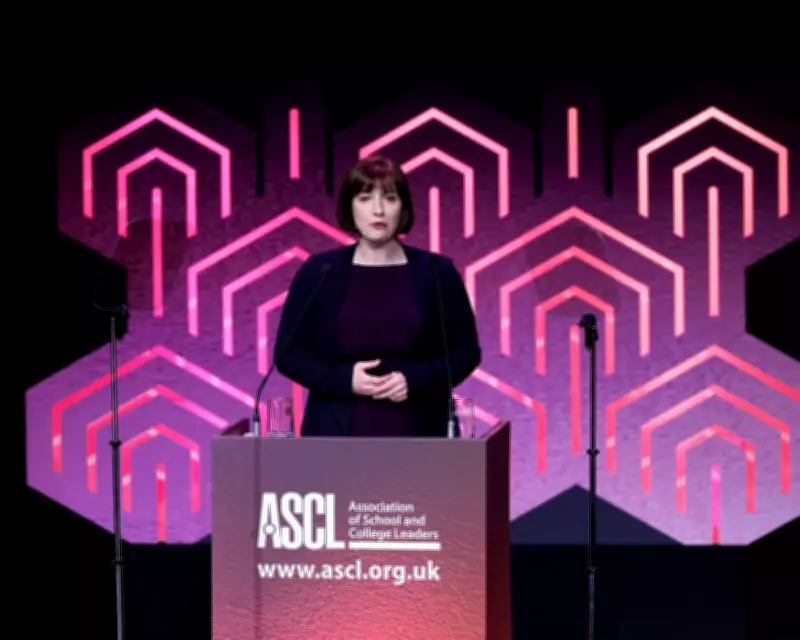
Education Secretary Bridget Phillipson has launched a scathing attack on lawyers, accusing them of exploiting parents of children with special educational needs. Speaking at the Association of School and College Leaders annual conference, Phillipson claimed that legal professionals have a vested interest in maintaining what she called the failed status quo of the current system.
Profiting from Parental Struggles
Phillipson asserted that lawyers' criticisms of her department's policy changes are motivated primarily by profit. She stated that these professionals want the system to remain as it is because they make money from exploiting parents who are fighting for support for their children.
The education secretary emphasized that she doesn't blame parents for pushing hard for what their children need. However, she argued that the current system is fundamentally unfair because parents with money to hire lawyers end up getting better deals than those without financial resources.

Labour's Special Educational Needs Overhaul
The special educational needs overhaul, outlined last month in the schools white paper, aims to move more children with conditions such as autism or ADHD into mainstream schools rather than special schools. Phillipson described this as moving away from the adversarial system where parents have had to fight hard for support.
"Our support to tilt the system towards much earlier support, a fairer system of support for all children, is absolutely the right approach," Phillipson told conference attendees. She added that this approach is backed by evidence and supported by the education profession.
Addressing Private Special School Concerns
The proposed changes will also limit council spending on private special school fees, which has led to concerns that some institutions might be forced to close, potentially creating shortages of places elsewhere. Phillipson defended this aspect of the reform, stating that the government needs to clamp down on unacceptable income increases in private-equity backed, independent specialist provision.
"It's sucking money out of the education system in profits," she explained, "which should be focused on delivering outcomes for children, and where the quality of the provision is highly variable and doesn't always deliver good outcomes for children."
School Leaders Express Concerns
Earlier in the conference, ASCL president Jo Rowley, a deputy headteacher from Stafford, expressed mixed reactions to the proposed changes. While welcoming schools being given more responsibility for providing extra support to pupils with special needs, she noted that some educators are slightly anxious that this could bring them into conflict with parents.
Rowley explained that currently, parents often battle with local authorities over education, health and care plans, with schools working alongside parents. She expressed concern that this conflict might shift to become a battle between families and schools under the new system.
"I wouldn't like to see that battle then become a battle between the family and the school because that is definitely not helpful," Rowley stated. "And it shouldn't be teachers who are making those decisions, and that's something that we're all very agreed on at the moment."
Finding Common Ground
When asked if schools could avoid becoming the new battleground over special needs, Phillipson acknowledged that parents have every right to air concerns with their child's school when things aren't working well. However, she emphasized that it's about how those concerns are responded to collectively.
The education secretary added that parents also have a responsibility to support their child's school, suggesting that successful implementation of the reforms will require cooperation from all parties involved in children's education.