Cambridge University Unveils Rare Botanical Archive That Inspired Charles Darwin
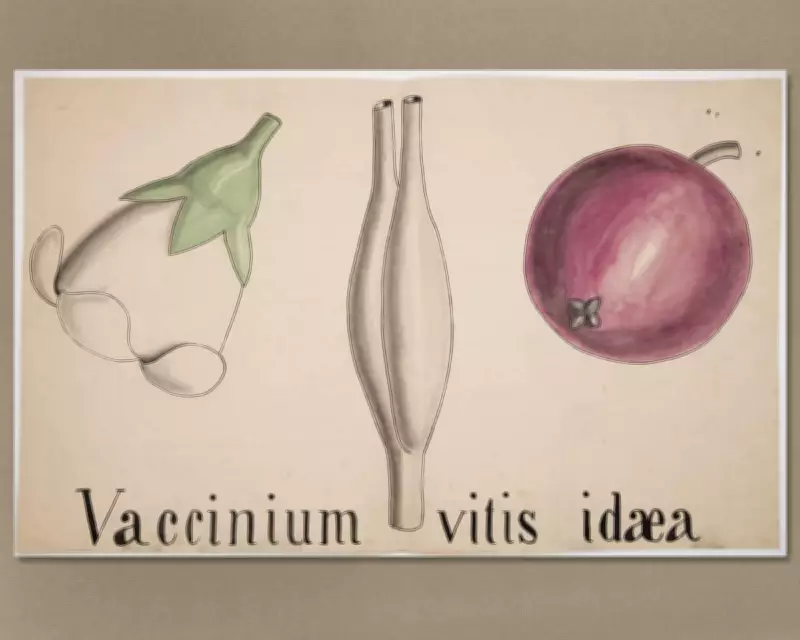
For the first time, Cambridge University is publishing a collection of fragile plant specimens, ink drawings, and watercolour illustrations that belonged to Prof John Stevens Henslow, the mentor of Charles Darwin. These materials, stored in the university's herbarium for nearly 200 years, include "very rare" botanical illustrations believed to be among Henslow's earliest teaching tools. They will now be used to teach contemporary students in a new four-week summer botany course, reviving the methods that inspired Darwin's groundbreaking work.
Henslow's Pioneering Teaching Methods and Darwin's Foundation
John Stevens Henslow, an Anglican clergyman and natural theologian, began offering an annual botany course at Cambridge in 1827, using these specimens and illustrations to teach students about plant variation. When Darwin arrived in Cambridge in 1828, he attended Henslow's five-week course three years in a row, which introduced him to the concept of variation—laying the foundation for his later theory of evolution. Henslow's approach included "herborising excursions" into the Cambridgeshire fens, where students learned to identify, categorise, and collect plants while observing adaptations to the environment.
Darwin later described Henslow as having "influenced my whole career more than any other," and wrote upon Henslow's death in 1861 that "a better man never walked this Earth." The course materials, including illustrations of species like Vaccinium vitis-ideae (cowberry) and Sambucus nigra (elder), are now being utilized to bridge a gap in modern botany education.

Addressing the Decline of Botany Education in the UK
Cambridge University Botanic Garden (CUBG) is launching the summer course to combat the near-disappearance of botany as a stand-alone undergraduate degree in the UK. Dr Raphaella Hull, acting head of learning for CUBG, noted that this decline has created a significant gap in students' understanding of plant morphology and diversity. Prof Sam Brockington, CUBG curator, explained that even in plant science laboratories, many talented students lack the language or conceptual framework to describe plant form and diversity.
The new course, open to internal and external undergraduate and postgraduate students, academic researchers, and professionals in fields like ecology and conservation, will use Henslow's original teaching materials and hands-on techniques. Students will engage in field excursions to habitats similar to those Darwin visited, emphasizing practical skills such as dissection and species identification. "We designed what we felt was the ideal four-week immersive programme in botany, and when we compared it with the curriculum that Henslow taught in Cambridge in the 19th century, the overlap was remarkable," said Brockington.
The Historical Significance and Modern Relevance
Henslow's teaching was pioneering for its time; he used illustrations in a manner akin to modern PowerPoint presentations, making complex botanical concepts accessible. His belief that studying plants could reveal divine wisdom led him to closely observe variations within species, documenting the natural world's intricacies. This empirical approach profoundly influenced Darwin, who later credited Henslow with shaping his scientific career.
In 1831, when Captain Robert Fitzroy of HMS Beagle offered Henslow the post of "gentleman naturalist," Henslow declined and recommended the 22-year-old Darwin instead. Darwin's subsequent voyage and specimen collections were shared with Henslow, maintaining their lifelong friendship. Today, the revival of Henslow's methods aims to inspire a new generation of botanists, addressing global challenges like biodiversity loss and climate change. "If we don't have botanists who are able to read the environment and the species within them, we don't have a good way of understanding the condition of habitats across the world," Hull emphasized.

The course also highlights the importance of hands-on learning in botany. Hull described Henslow's approach as the "fullest, most complete way to teach botany," requiring students to engage directly with plant material in the field. This immersive experience is critical for developing the observational skills needed in contemporary plant science, which often focuses on cellular processes but can become siloed without a broader context.
By uncovering and utilizing this rare archive, Cambridge University not only honors a historical legacy but also seeks to fill an educational void, ensuring that future scientists are equipped with the foundational knowledge to advance botanical research and conservation efforts.