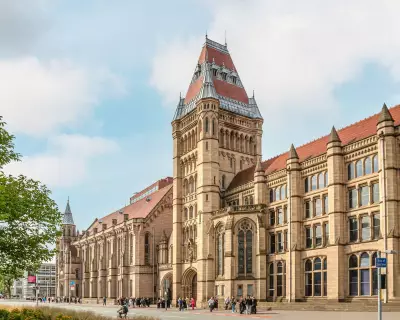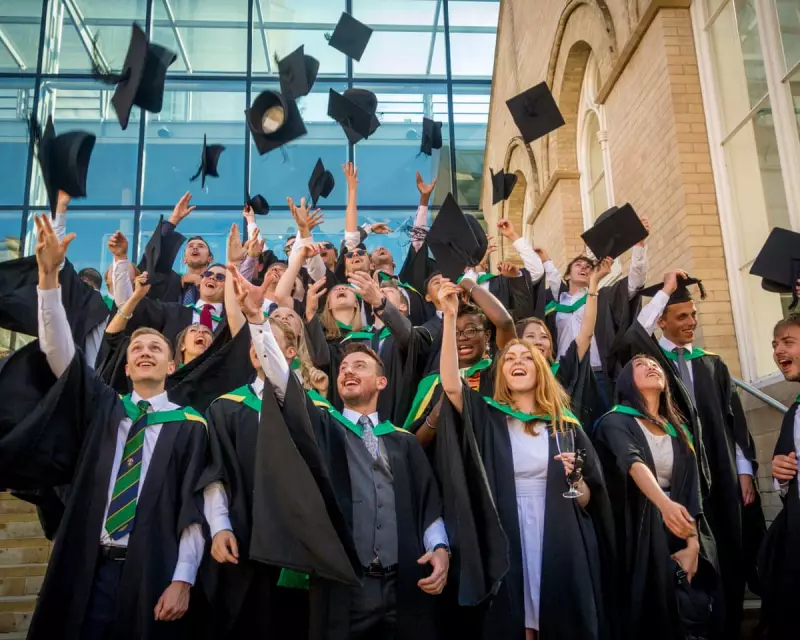
A major shift is coming to British higher education, with a new mandate requiring all university students to develop core skills in critical thinking. The change, set to take effect from the 2026-27 academic year, follows a pivotal report from the Quality Assurance Agency for Higher Education (QAA).
The Core Mandate: A New Skills Framework
The QAA's report, titled 'The Future of UK Higher Education: Skills for a Complex World', establishes a new national framework. It will make dedicated modules in critical thinking and liberal arts compulsory for undergraduates across all disciplines. The goal is to arm students with the intellectual tools needed to analyse information, identify bias, and construct reasoned arguments in an era saturated with digital misinformation and complex global challenges.
Professor Sir David Watson, the report's lead author, emphasised the urgency. "We are seeing a generation of students who are highly digitally literate but sometimes lack the foundational skills to interrogate the content they consume," he stated. The framework is not about adding years to degrees but integrating these competencies into existing courses through dedicated first-year modules and ongoing assessment.

Bridging the Divide Between Arts and Sciences
A central pillar of the new approach is breaking down traditional barriers between academic fields. Science, technology, engineering, and mathematics (STEM) students will engage with philosophy, ethics, and logic, while humanities scholars will tackle modules on data literacy and the scientific method. This cross-pollination is designed to produce more adaptable and discerning graduates.
The report highlights concerning data from a 2024 study by the Higher Education Policy Institute (HEPI), which found that over 60% of employers believed new graduates lacked sufficient critical analysis skills. Furthermore, research cited by the QAA indicated a worrying trend of students struggling to differentiate between credible sources and online falsehoods.
Implementation and Academic Response
Universities will have autonomy in designing their specific programmes but must align with the QAA's learning outcomes by September 2026. Initial reactions from the sector have been mixed. While many vice-chancellors have welcomed the focus on essential skills, some have raised concerns about curriculum overcrowding and funding for the necessary teaching resources.
Dr. Anya Sharma, a lecturer in sociology at the University of Manchester, voiced support. "This is a necessary corrective. For too long, the market-driven model of education has sidelined these foundational intellectual virtues in favour of narrow vocational training," she commented.
Conversely, a spokesperson for the Russell Group of research-intensive universities cautioned that while the intent was positive, the practical implementation must be carefully managed to preserve depth in specialist subjects. The Department for Education has endorsed the QAA's findings, signalling likely government support for the initiative.
A Long-Term Strategy Against Misinformation
The policy is framed as a long-term, structural response to societal problems exacerbated by the digital age. By embedding critical analysis from the first year of university, policymakers aim to create a more resilient citizenry, better equipped for democratic participation and the modern workplace. The success of the mandate will be evaluated in a five-year review scheduled for 2031, assessing its impact on graduate employability and societal engagement.
This move places the UK at the forefront of a global reconsideration of higher education's purpose, asserting that the ability to think clearly and critically is not an optional extra but the essential bedrock of a university degree.