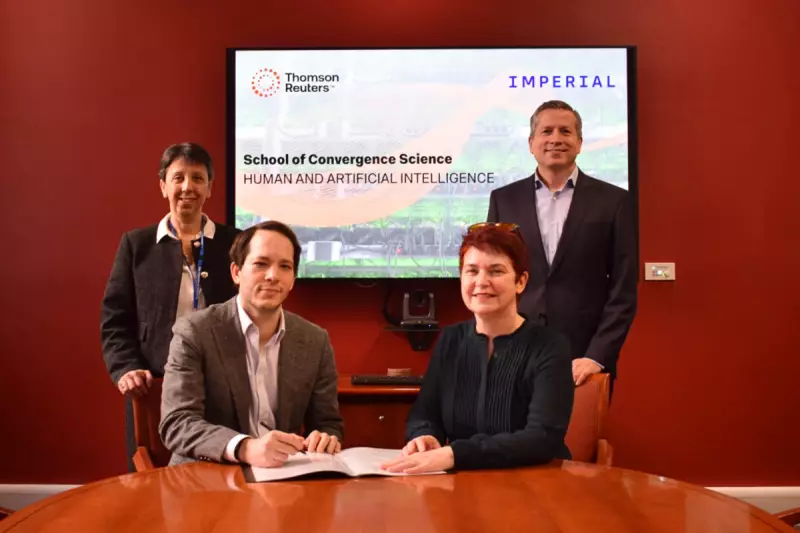
London has cemented its position as a global centre for artificial intelligence research with the unveiling of a major new partnership. Imperial College London and Thomson Reuters have announced the creation of a Frontier AI Lab, set to bring advanced AI development directly to the UK capital.
A New Hub for Cutting-Edge Research
The new lab, announced on Tuesday 2 December 2025, is designed to move cutting-edge AI development beyond the domain of a few large technology corporations. It will host more than a dozen PhD researchers, focusing on large-scale foundation models. The core mission is to address fundamental questions surrounding AI safety, reliability, and societal impact.
Researchers will benefit from a unique combination of resources: Imperial's high-performance computing infrastructure and Thomson Reuters' vast proprietary datasets. "This collaboration gives our researchers the space and support to explore fundamental questions about how AI can and should work for society," said Professor Mary Ryan, Imperial's vice-president for research and enterprise.

From Academic Theory to Real-World Application
The lab's work will be firmly anchored in practical applications. It is set to explore areas from agentic systems and reasoning algorithms to the broader economic impact of AI and the future of work. Legal AI applications will be a key focus, with input from experts like Professor Felix Steffek of Cambridge on the critical need for ethical and safe design.
"Our collaboration with Thomson Reuters anchors research in practical use cases, ensuring breakthroughs translate into societal benefit," explained Professor Alessandra Russo, the lab's co-director at Imperial. "There is huge potential to unlock creative approaches across industries, strengthening society and energising the economy."
London's Bid for AI Leadership
The launch aligns with a significant national push into AI. The announcement came as Chancellor Rachel Reeves unveiled a £1.5 billion Autumn Budget skills package, which includes AI-focused programmes and funding for digital apprenticeships. This signals a clear UK strategy to compete on the global stage in both talent and technology.
With planned joint seminars, visiting researcher programmes, and open publication of findings, the lab aims to foster wide collaboration. Backed by multi-year funding and a dedicated PhD cohort, Imperial and Thomson Reuters are making a substantial bet that the next wave of AI breakthroughs could originate in London, supported by policies encouraging university spinouts and high-skilled job creation.