

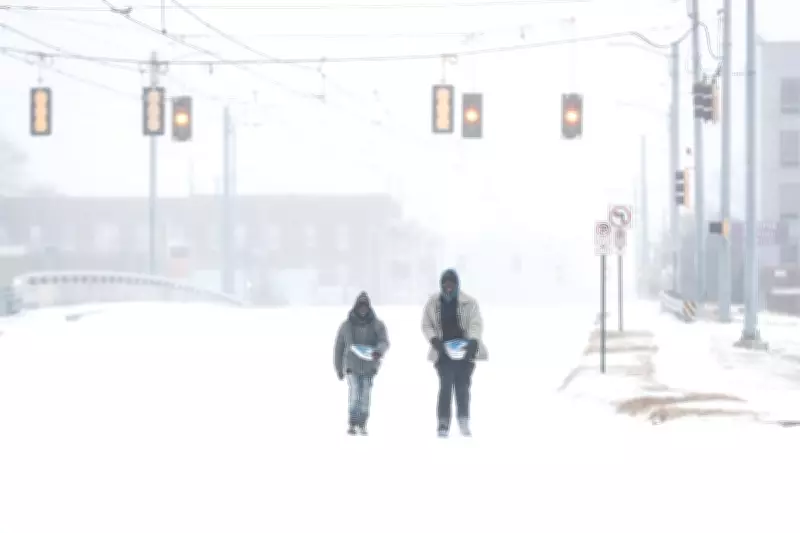
Florida Prepares for Historic Cold Snap Amid Ongoing Southern Power Crisis
Florida is bracing for an unprecedented weekend freeze as Arctic air descends upon the southeastern United States, threatening to bring rare snowfall to the Sunshine State while hundreds of thousands of households in Tennessee and Mississippi remain without electricity for a sixth consecutive day. This latest winter onslaught follows last week's deadly storms that claimed at least 85 lives across the region, with millions now preparing for another severe weather event.
Power Outages and Freezing Temperatures Extend Misery
According to poweroutage.us, approximately 230,000 customers were still disconnected from electricity on Friday morning, with the vast majority located in Tennessee and Mississippi. These states, already reeling from last week's devastating storms, now face additional hardship as the National Weather Service warns of temperatures plummeting into the teens in Tennessee. Parts of northern Mississippi could experience wind chills as low as -5°F (-21°C), creating dangerously cold conditions for vulnerable populations.
Mississippi officials have declared this the worst winter storm since 1994, with National Guard troops delivering essential supplies including meals and blankets by truck and helicopter. Governor Tate Reeves urged residents to prepare for "another weekend of extremely cold temperatures" and to check on neighbors, particularly elderly residents and families with young children who remain especially vulnerable without power.

Rare Snowfall Threatens Florida's Agriculture and Infrastructure
The Arctic blast is expected to reach deep into Florida, with forecasters predicting potentially historic conditions. Tony Hurt, a National Weather Service forecaster for the Tampa Bay area, told the Associated Press there's up to a 20% chance of snowfall this weekend, though any accumulation would be unlikely. The last recorded snowfall that settled in Tampa occurred in 1977, according to local news reports.
Miami could experience temperatures dropping below freezing, potentially challenging the city's record low of 27°F set in January 1940. The extended freeze threatens Florida's agricultural industry, with farmers implementing emergency measures including harvesting crops early, increasing water levels in ditches, and deploying helicopters to protect sensitive fields.
Christina Morton, spokesperson for the Florida Fruit and Vegetable Association, explained that "preparations vary by crop and include harvesting and planting ahead of the freeze, increasing water levels in ditches, using overhead irrigation and, in some cases, deploying helicopters to protect sensitive fields."
Widespread Impact Across Eastern United States
The National Oceanic and Atmospheric Administration warned that this powerful Arctic blast "will bring dangerously cold, record low temperatures to the Gulf coast, upper Ohio valley, mid-Atlantic and south-east US." A rapidly developing storm system is expected to produce heavy snow from the southern Appalachians across the Carolinas and southern Virginia, with some areas potentially receiving up to a foot of accumulation.
The eastern seaboard from Maryland to Maine could also see significant snowfall, while rare flurries might even reach Florida's west coast. The cold weather has already disrupted NASA's schedule, delaying the planned dress rehearsal for the Artemis 3 moon rocket launch at Cape Canaveral until at least February 8th.
Public Health Concerns and Emergency Response
Public health officials have expressed grave concerns about those still without electricity during the prolonged cold spell. Dr. Hans House, professor of emergency medicine at the University of Iowa, emphasized that "the longer you're exposed to the cold, the worse it is. The body can handle cold temperatures briefly very well, but prolonged exposure is a problem."
Emergency services across affected states are urging residents to stay indoors whenever possible and use multiple layers of clothing and blankets for warmth. The situation remains particularly dire in rural areas where power restoration has been slowest, with energy provider crews struggling against challenging conditions to reconnect households.

This latest weather event originates from Arctic air moving south and east from Canada across the mainland United States, continuing a pattern of unusually severe winter conditions that have affected hundreds of millions of Americans in recent weeks. The National Oceanic and Atmospheric Administration noted that last week's storm was "unusually large and severe," closing hundreds of miles of interstate highways for several days and overwhelming emergency response systems across multiple states.





