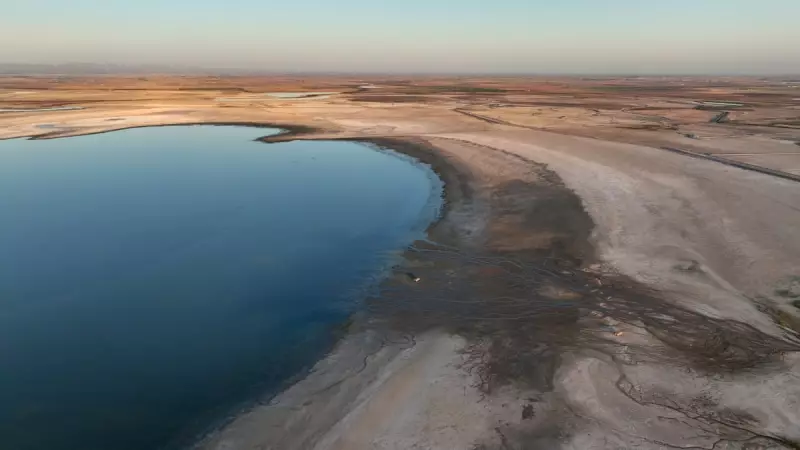
Toxic Dust from Shrinking Lake Triggers Health Emergency
Southern California's rapidly receding Salton Sea is creating a severe public health crisis as contaminated dust from its exposed lake bed spreads across surrounding communities, according to two new peer-reviewed studies. Research from the University of California reveals this chemical-laden dust is significantly harming respiratory health, with children being particularly vulnerable to its effects.
Children's Lung Function Measurably Impaired
The University of California, Irvine study examined lung capacity in approximately 500 children around 10 years old living near the shrinking lake. Researchers discovered a clear connection between reduced lung function and proximity to the Salton Sea, with those living closer showing increased wheezing and respiratory conditions.
Jill Johnston, co-author of the UC Irvine study, stated: "Our study provides concrete evidence that children in surrounding communities are facing measurable harm to their lungs as a result of increased dust exposure." The research team used state air quality data to estimate exposures to particulate matter originating from the lake.

Contaminated Dust Alters Lung Microbiome
A separate University of California, Riverside study uncovered even more alarming effects. Using advanced technology, researchers found that Salton Sea dust appears to alter the lung microbiome in mice, potentially triggering a form of non-allergic asthma that doesn't respond to traditional inhalers.
Emma Aronson, co-author of the Riverside study, described the findings as particularly concerning: "There could be many kinds of environmental exposures around the world that are changing or potentially rewriting our lung microbiome, but we don't yet understand the impact."
The crisis stems from multiple factors including:
- Climate crisis and ongoing drought reducing Colorado River flows
- Poor water resource management
- Pesticide and fertilizer runoff from surrounding farmland
- Naturally occurring heavy metals like arsenic in the lake bed
The dust contains high levels of endotoxic bacteria membranes likely caused by fertilizer runoff promoting bacterial growth. This contaminated dust has been detected travelling over 100 miles from the lake, though prevailing winds typically blow southeast from the location approximately 60 miles from metropolitan Los Angeles.
Low-income and Latino communities near the lake bear the greatest health burden. Experts recommend that residents wear masks outdoors and use air filtration systems indoors. A taskforce is advocating for wetland installations that could help remove nutrients from the water and reduce the problem.