

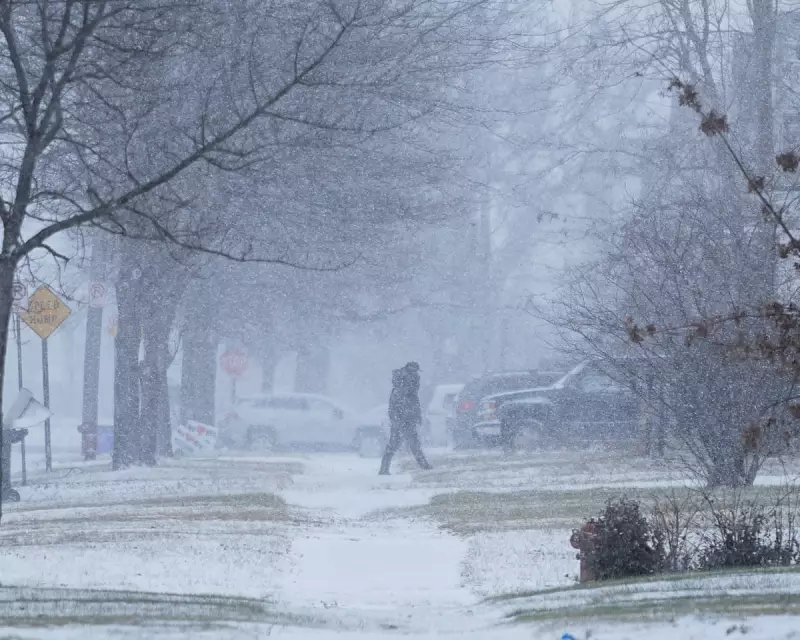
A powerful and rapidly intensifying winter storm has wreaked havoc across large parts of the United States, bringing heavy snowfall, damaging winds, and frigid temperatures that have left tens of thousands without power and caused treacherous travel conditions.
Storm Unleashes Snow Squalls and Power Cuts
The severe weather system, which meteorologists said met the criteria for a "bomb cyclone" due to its rapid intensification, moved across the Plains and Great Lakes on Monday 29 December. It delivered a dangerous mix of snow, ice, and rain alongside sharply colder air. By Tuesday morning, nationwide power outages affected more than 120,000 customers, with nearly a third of those disruptions occurring in Michigan.
As the storm progressed into Canada, the National Weather Service warned of further inclement conditions for the eastern US, including sudden, intense snow squalls. Blustery winds were forecast to exacerbate an Arctic chill, with freezing temperatures expected as far south as the Florida panhandle.

Record Snowfall and Damaging Winds Hit New York
Areas in western and upstate New York bore the brunt of the snowfall, with some locations seeing a foot or more on Monday. Forecasters warned totals could accumulate up to 3ft (91cm) by the week's end. The winds proved equally destructive, with a gust of 81 mph (130 km/h) recorded in Buffalo, knocking down trees and power lines across the region.
The fierce winds on Lake Erie created dramatic effects, pushing water towards Buffalo and exposing normally submerged lakebed on the western side in Michigan. Kevin Aldrich, a maintenance worker from Monroe, Michigan, noted he had never seen the lake recede so much, revealing historic wooden pilings from the 1830s. "Where those are at would typically be probably 12ft deep," he said.
Social media videos captured the storm's impact, showing individuals struggling to walk in gusty conditions and debris clogging waterways in downtown Buffalo. In Lackawanna, just south of Buffalo, Diane Miller was blown off her daughter's front steps by the wind. "I opened her door and the wind caught me, and I went flying," she told local media, fortunately escaping serious injury.
Dangerous Conditions Extend Coast to Coast
The extreme weather was not confined to the north-east. Dangerous wind chills plunged as low as -30F (-34C) in parts of North Dakota and Minnesota. Meanwhile, on the West Coast, strong Santa Ana winds with gusts over 70 mph toppled trees in southern California, where saturated soil from recent rains increased the risk. Downed power lines forced a freeway closure north of Los Angeles.
While meteorologist Andrew Orrison indicated the worst of the storm was likely over, with conditions improving later on Tuesday, officials continued to urge caution. New York Governor Kathy Hochul warned residents in impacted areas to avoid all unnecessary travel due to the risk of whiteout conditions.
The storm's reach was vast, affecting maritime activity too. Waves on Lake Superior were anticipated to reach 20ft, forcing most cargo ships to seek shelter. As the clean-up begins, attention turns to further forecasts, including potential rain on New Year's Day that could dampen the famous Rose Parade in Pasadena for the first time in around twenty years.






