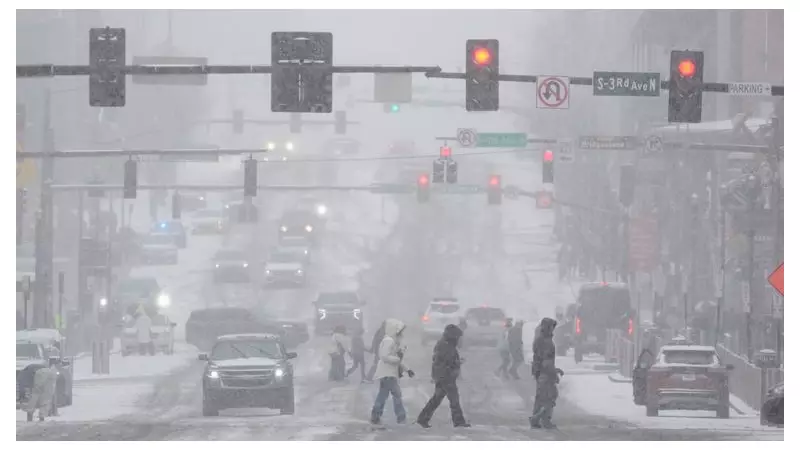
A colossal winter storm has plunged vast swathes of the United States into chaos, leaving an estimated 500,000 households without electrical power and severely disrupting travel across the nation. The severe weather system, which stretches an immense 2,000 miles from the southern Rocky Mountains to the northeastern coast of New England, is threatening nearly 180 million people with heavy snow, sleet, and freezing rain.
Widespread Impact and Emergency Response
The National Weather Service has confirmed that a total of 37 states are feeling the effects of this formidable storm. In response, at least 17 states alongside the District of Columbia have declared states of emergency. Homeland Security Secretary Kristi Noem has issued stark advice to the public, urging residents to "stay home if possible" to ensure safety during the dangerous conditions.
Transportation Network in Disarray
The storm's fury has paralysed air travel, with more than 13,000 flight cancellations recorded over Saturday and Sunday alone. Aviation analytics firm Cirium reports that Sunday's cancellations represent the highest single-day total since the peak of the COVID-19 pandemic. On the ground, highway travel is also perilous; New Jersey Governor Mikie Sherrill has implemented a reduced speed limit of 35mph on major roads, cautioning that the state is bracing for conditions "the likes of which we haven't seen in years."

Power Grid Under Severe Strain
According to data from PowerOutage.us, approximately half a million customers are experiencing power outages along the storm's path. The states of Mississippi, Texas, and Tennessee are among the hardest hit, each reporting over 100,000 outages. Meteorologists warn that the combination of ice and snow will be slow to thaw, potentially prolonging the restoration of services. Allison Santorelli, a meteorologist, emphasised that "the snow and ice will be very, very slow to melt and won't be going away anytime soon."
Localised Crises and Unprecedented Conditions
The storm's unique characteristics, noted by National Oceanic and Atmospheric Administration meteorologist Josh Weiss, include its exceptionally broad geographic spread and the forecast for lingering extreme cold in its wake. In Georgia, senior state meteorologist Will Lanxton described the impending ice storm as "perhaps the biggest we have expected in more than a decade." Meanwhile, in Louisiana's DeSoto Parish, emergency services have responded to incidents involving vehicles colliding with fallen trees and branches damaging homes.
Major Cities Mobilise Resources
Urban centres are deploying significant resources to manage the crisis. In New York City, Mayor Zohran Mamdani announced that thousands of refuse collection vehicles have been outfitted with snow plough attachments. The city has mobilised more than 2,000 sanitation workers per 12-hour shift throughout the weekend to tackle the accumulation. Mayor Mamdani also noted that temperatures are expected to reach their lowest point in eight years, exacerbating the hazardous conditions.
With the storm showing little sign of abating, authorities continue to stress the importance of heeding safety warnings. As Governor Sherrill of New Jersey succinctly put it, "It's a good weekend to stay indoors." Residents across the affected regions are urged to monitor official updates and avoid unnecessary travel as the nation weathers this extensive and severe winter event.