

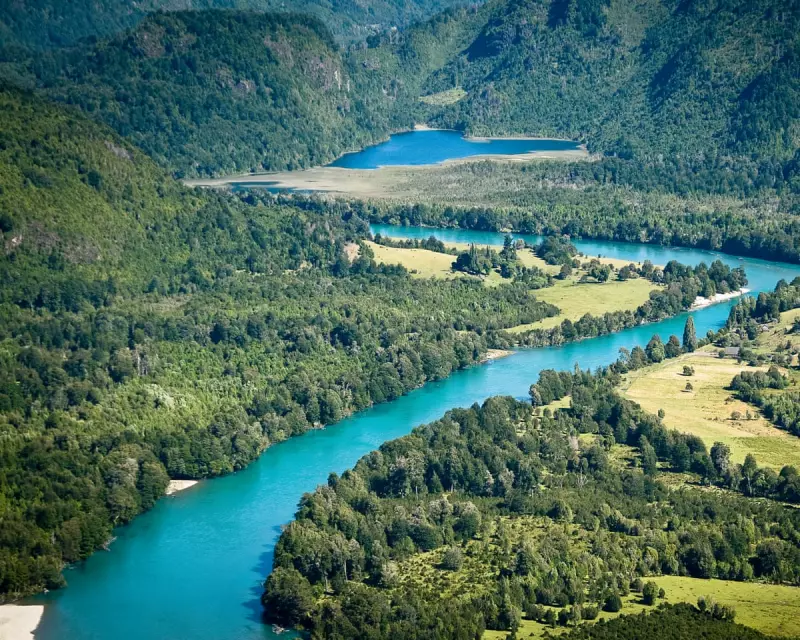
In a landmark victory for grassroots conservation, a vast expanse of pristine wilderness in Chilean Patagonia has been permanently shielded from industrial development, logging, and hydroelectric dams. The Guardian can exclusively reveal that the 133,000-hectare Cochamó Valley, an area 800 times the size of London's Regent's Park, was purchased for $78m (£58m) following a remarkable local fundraising effort.
A Pristine Ecosystem Secured for the Future
The title to these wildlands was officially handed over to the Chilean nonprofit Fundación Conserva Puchegüín on 9 December, following a campaign spearheaded by the NGO Puelo Patagonia. This newly protected region is a treasure trove of biodiversity, featuring ancient forests, turquoise rivers, and granite cliffs soaring over 970 metres high.
At the heart of the valley are groves of ancient alerce trees, some of which first sprouted around 1,000BC. These forests, logged historically for their durable wood, constitute a staggering 11% of the world's remaining alerce forests. The ecosystem is a biological corridor, connecting to 1.6 million hectares of already-protected lands across Chile and Argentina.

From Threats to a $78m Opportunity
The path to preservation began over a decade ago when local ranchers, cowboys, tour operators, and international climbers united to oppose a $400m hydroelectric plan that threatened the valley's rivers and rural way of life. This coalition later thwarted a luxury vacation home development and road-paving projects.
"Our goal was to transform threats into opportunities," explained José Claro, president of Puelo Patagonia. This community resolve laid the groundwork for the ambitious land purchase. The fundraising campaign attracted significant donations, including a $20m grant from the James M Cox Foundation, championed by its CEO Alex Taylor after a visit with Patagonia founder Yvon Chouinard.
"I can't think of a place more pristine," said Taylor. "It's almost like the spiritual centre of the universe from a forest biodiversity standpoint." The clothing company Patagonia, through its non-profit owner Holdfast Collective, also contributed $4m in 2024.
A Model for Community-Led Conservation
The acquisition is just the start of a decades-long project to conserve both the valley's rich biodiversity and the traditional homesteader lifestyle. Plans are underway to place at least 80% of the land under permanent, national park-level protection, while 20% will be zoned for sustainable, low-impact use like family farming and eco-tourism.
To manage its growing popularity, a strict limit of 15,000 visitors per year has been instituted, with reservations now required. A master plan for trails and facilities is being developed with direct input from local communities. The project includes an endowment to ensure long-term management, a critical factor given Chile's underfunded national parks system.
The initiative draws inspiration from the monumental conservation work of Kris and Doug Tompkins, who created vast national parks in Patagonia. However, the Cochamó model pioneers a new approach, using recent Chilean environmental laws to secure permanent protection while keeping the land in private, non-profit ownership.
As camera traps survey wildlife—recently capturing a herd of the endangered huemul deer, Chile's national symbol—the focus remains on balance. "How do we ensure that traditional living and practices... don't get disrupted?" asked Alex Perry of Patagonia. "How do we make it so that this model... is attractive to the next generation?" The preservation of the Cochamó Valley offers a powerful, community-forged answer.






