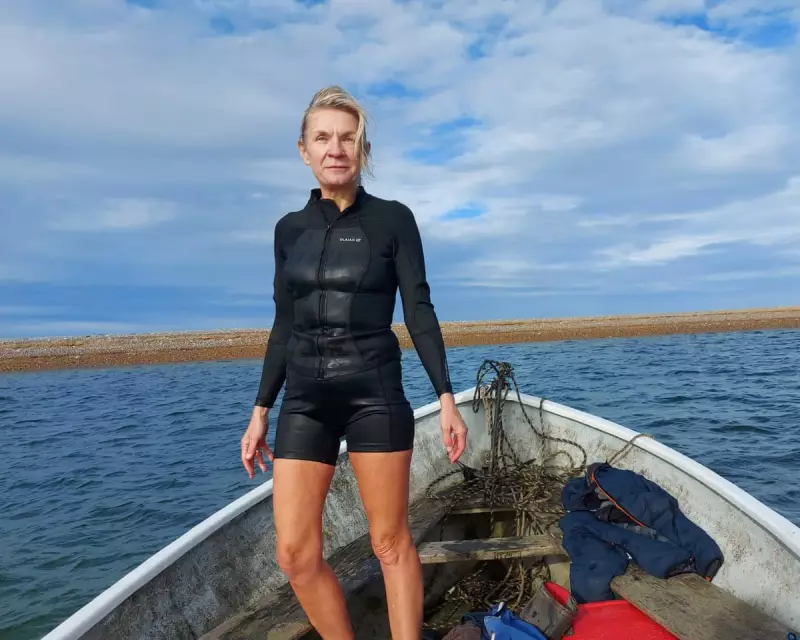
From the frontlines of global conflict to the tranquil waters of the North Sea, Allie Wharf has embarked on a profoundly different mission. After a demanding career as a senior foreign producer for BBC's Newsnight, covering wars in Iraq, Afghanistan, and Ukraine, Wharf has traded conflict zones for conservation. She now co-leads the ambitious Luna Oyster Project on the north Norfolk coast, aiming to create Europe's largest natural oyster reef.
Rebuilding a Lost Underwater World
The groundbreaking initiative, a collaboration between Norfolk Seaweed and Oyster Heaven, has a clear target: to restore 4 million oysters to the North Sea. The project's cornerstone is the first-ever mass deployment of specially designed 'mother reef bricks'. These fired clay structures act as a foundational skeleton, attempting to replace what centuries of bottom trawling and human activity have destroyed.
Historical oyster reefs, once teeming hubs of marine life across Britain and Europe, have been stripped bare. The new reefs, installed two miles off the Norfolk coast, will provide the crucial surface area for millions of baby oysters, sourced from Morecambe Bay, to cling to when they are introduced in April. The vision is for these individual reefs to eventually connect with other restoration projects, forming a continuous living lattice of biodiversity along England's eastern coastline.

An Expensive and Meticulous Labour of Love
The path to this point has been neither simple nor cheap. The licence application alone was a 280-page document that cost a six-figure sum, with the process taking over three years to complete. George Birch of Oyster Heaven highlighted the regulatory challenges, noting that the authorities "had to jump through the same hoops as oil and gas platforms," with little special consideration for biodiversity restoration.
Once in the water, the work requires painstaking care. "You have to tend to oysters like babies," Wharf explained, describing the nurturing environment as a "sweet nursery." The team is so attentive that they are considering playing locally recorded sea sounds to the sensitive creatures, which are known to respond to changes in light, pressure, and even the ambient quiet of a weekend.
More Than Ecology: A Community and Commercial Revival
While these native oysters are not destined for the plate, their impact extends far beyond pure ecology. The project is reviving local maritime skills and creating jobs for ecologists, project managers, and crew in Norfolk. Furthermore, it has attracted significant commercial backing from pet food giant Purina.
Birch explains this partnership as an investment in "supply-chain resilience." Purina sources fish from the North Sea and requires a sustainable, high-quality marine environment for its products. The oysters are powerful natural filters, with each one capable of cleansing around 200 litres of water daily. Historically, trillions of oysters kept the North Sea crystal clear, a stark contrast to its current state.
The reefs also act as natural coastal defences, stabilising shorelines and transforming barren, flat seabeds into complex 3D ecosystems. A trial in the Netherlands saw a virtually bare seabed sprout 12.7 million new crabs, worms, fish, and other organisms on similar reefs within just one year.
For Wharf and her partners, this meticulous work cultivating perceptive, microscopic life offers a hopeful counterpoint to her previous career. They are quietly laying the foundations for vibrant new ecosystems that could, oyster by oyster, help reshape the future of the North Sea.