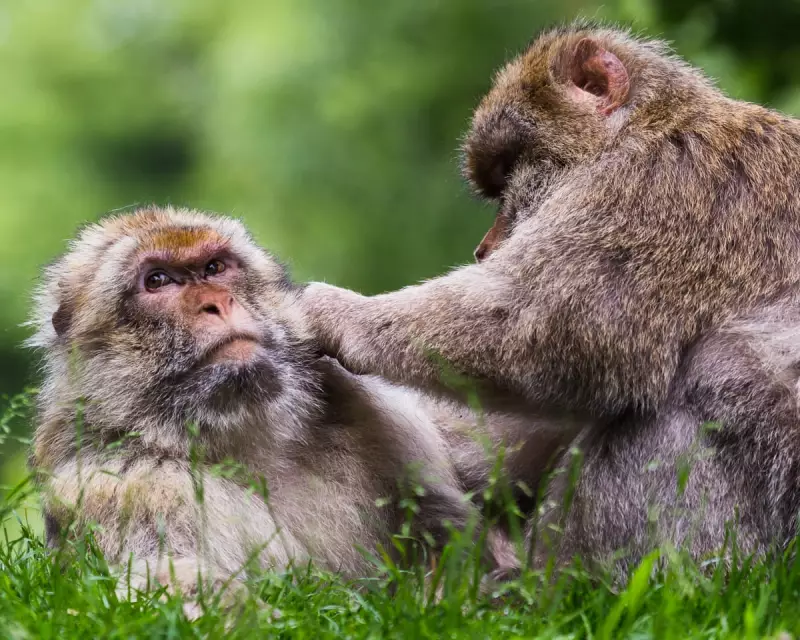
A groundbreaking new study suggests that same-sex sexual behaviour observed across dozens of non-human primate species may serve a vital evolutionary purpose: reinforcing social bonds and helping groups stay cohesive in the face of environmental hardship and social tension.
Widespread Behaviour Across the Primate Family Tree
Researchers from Imperial College London conducted a comprehensive analysis of accounts of same-sex sexual behaviour in our evolutionary cousins. They found the behaviour to be remarkably common, documented in 59 distinct species including chimpanzees, Barbary macaques, and mountain gorillas.
Publishing their findings in the journal Nature Ecology & Evolution, the team noted this widespread prevalence points to one of two possibilities. It either indicates an evolutionary origin deep in the primate family tree, or shows the behaviour evolved independently multiple times in different lineages.

Professor Vincent Savolainen, a co-author from Imperial, emphasised the implications for understanding our own history. He suggested that early human species, facing similar survival pressures, likely exhibited comparable behaviours. "There were many different species that unfortunately [are] all gone, that must have done this same thing as we see in apes, for example," he said.
Environmental Stress and Social Complexity as Key Drivers
The study moved beyond simply cataloguing the behaviour to investigate its potential drivers across different species. The analysis revealed clear patterns linking the behaviour to specific ecological and social pressures.
Chloe Coxshall, the study's first author, highlighted the interplay of genetics and environment. "Previous research has shown there is a heritable element to [same-sex sexual behaviour], however, there is also environmental influence which is often overlooked," she explained.
The research team discovered that same-sex sexual behaviour was more likely in species living in drier environments where resources are scarce, and where threats from predators are higher. It was also more common in species with longer lifespans and in those where males and females differ significantly in size—a trait often linked to larger social groups with intense competition.
Furthermore, the behaviour was frequently observed in species with complex social systems and rigid hierarchies. Professor Savolainen summarised the function as an "affiliative behaviour" that serves to "increase the bonding, decrease tension and aggression, and allow whatever species and their particular environment and society to basically navigate the challenges that they face."
Implications and Cautions for Understanding Human Behaviour
The researchers were careful to caution against simplistic interpretations of their findings in relation to modern human sexuality. They noted that human sexual orientation, preferences, and identities are profoundly complex and cannot be directly mapped from animal studies.
They explicitly warned against misusing the research to suggest, for instance, that social equality could eliminate same-sex attraction. Instead, they proposed that while the primal drivers for humans may have shifted, the underlying need for social cohesion remains. "In humans, it may not be food scarcity or rigid social hierarchies that drive these patterns, but rather the pressures of modern social living," they wrote, noting correlations between reported sexual fluidity and mental health challenges in younger generations.
Independent experts praised the study's contribution. Professor Zanna Clay of Durham University, who was not involved in the research, stated it "clearly shows that far from being rare or atypical, same-sex behaviour is a common and important part of primate sociality, of which humans are of course part." She added it provides a "nice novel angle" to debates on the origins of such behaviour.

Josh Davis of the Natural History Museum, author of A Little Gay Natural History, welcomed the findings but urged caution in drawing parallels. "People are complex and a result of a whole range of different factors separate from other animals, making these comparisons and extrapolations incredibly contentious," he said, emphasising the diverse expressions of queer behaviour across the natural world.
The study ultimately frames same-sex sexual behaviour in primates not as an anomaly, but as a potential adaptive strategy—a social tool that has helped species navigate the challenges of survival for millions of years.