

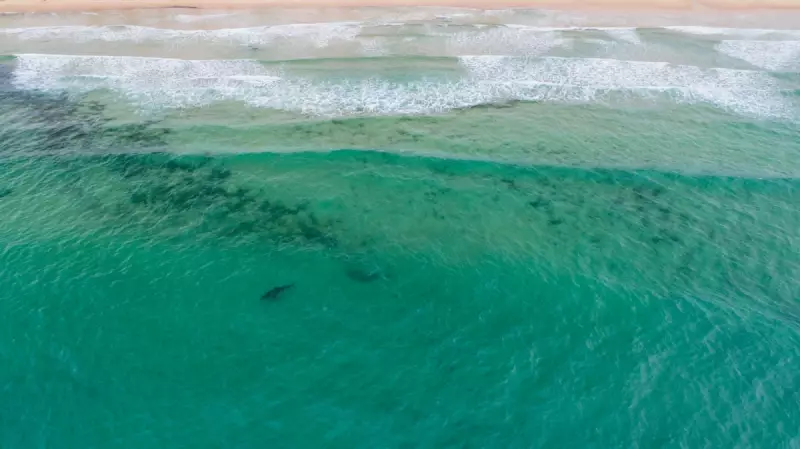
The Queensland government has announced that shark-spotting drones will become a permanent fixture on its beaches, following a comprehensive four-year trial that demonstrated their superior effectiveness compared to traditional shark nets.
Drones Outperform Nets in Major Shark Study
A significant government report, monitoring ten beaches from 2020 to 2024, revealed that drones detected more than double the number of sharks than those caught in adjacent nets. During the trial, drones recorded 676 shark sightings, significantly higher than the 284 sharks caught in nets. For larger sharks over two metres – those considered a greater potential risk – drones spotted 190, compared to 133 caught in the Shark Control Program gear.
Rob Adsett, Chief Remote Pilot at Surf Life Saving Queensland, praised the drones as a "really good surveillance tool" that provides lifeguards with a superior view of beach conditions. He explained that the real-time monitoring allows for more precise safety management. "Previously if there was a shark reported, we might close the beach for an hour, but then find out that there wasn't a shark at all," Adsett said.

The Environmental Cost of Traditional Methods
While drones are set for expansion, the state government confirmed it will continue using shark nets and drum lines, despite overwhelming evidence of their deadly impact on non-target marine species, known as bycatch.
The trial report documented that 123 non-target animals were caught in nets at the ten beaches. This tragic toll included:
- 13 dolphins
- 8 whales
- 45 turtles
- 2 dugongs
- Dozens of rays and other fish
Alarmingly, approximately half of these animals were already dead when retrieved. Many are species protected under Australian federal environment laws. So far this year, twelve whales have been entangled in Queensland's shark nets.
Expert Reactions and Future Directions
Marine scientists have welcomed the drone trial results but question the continued reliance on lethal methods. Professor Robert Harcourt, a marine ecologist at Macquarie University, said the findings were "no surprise."
"Using drones, you don't stop anything coming in, but you can see what's there and can tell people to get out of the water – which means nobody gets hurt," Harcourt stated. He advocated for a switch to "smart drum lines," which catch, tag, and release sharks, as a better alternative to lethal nets.
Professor Charlie Huveneers from Flinders University emphasised that while there is "no silver bullet" to eliminate all shark-bite risk, drones are a valuable non-lethal tool. He noted their limitations, such as strong wind and rain, but affirmed they should be part of a modern shark management toolbox.
Despite the evidence, the Crisafulli government announced in May it would expand the use of shark nets. The state currently deploys 27 nets and 383 drum lines designed to catch and kill seven target shark species.
A Department of Primary Industries spokesperson confirmed the drone programme will be expanded from 10 to 20 beaches under the 2025 to 2029 shark management plan. However, they asserted that "drones cannot replace core program gear such as drum lines and nets at this time," indicating they will serve as a complement to, rather than a replacement for, traditional measures.






