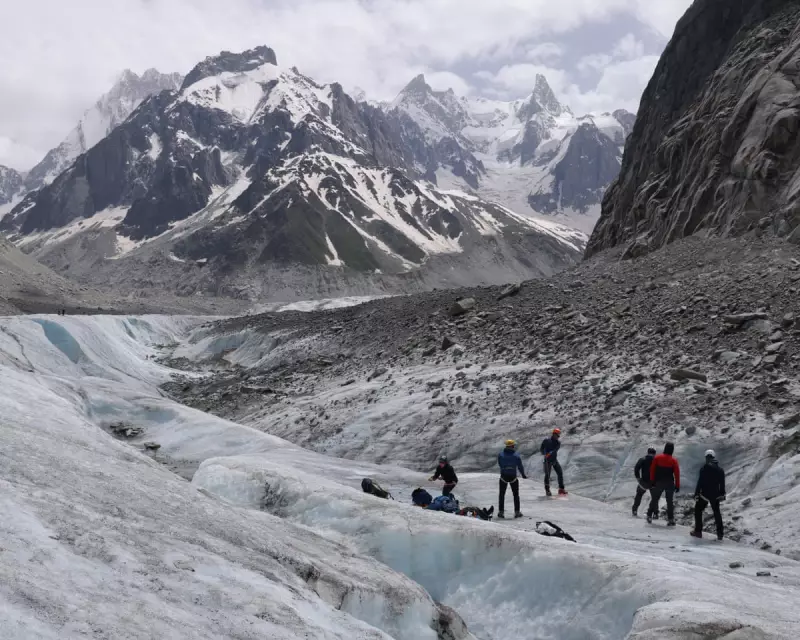
A stark new scientific report has issued a dire warning for the glaciers of the European Alps, forecasting they will reach their peak rate of disappearance in just eight years. The research, published in the journal Nature Climate Change, indicates that more than 100 individual glaciers in the Alps are set to vanish permanently by 2033.
A Global Crisis Accelerating
The study, which analysed over 200,000 glaciers worldwide using satellite data and three separate models, paints a grim picture of accelerated loss driven by human-caused global heating. Almost 40% of the world's glaciers are already doomed due to climate change, with about 750 currently disappearing each year. However, this pace is set to skyrocket if emissions continue unabated.
Under current government climate pledges, which would push global temperatures to around 2.7°C above pre-industrial levels, the annual loss of glaciers is projected to peak at a staggering 3,000 per year by 2040. This rate would then plateau until 2060. By the century's end, such a scenario would see 80% of today's glaciers completely gone.

Cultural and Ecological Catastrophe
The research shifts focus from just ice volume loss to the disappearance of individual glaciers, each of which holds profound significance. Glaciers are crucial water sources for communities, key tourist attractions, and often possess deep spiritual and cultural value.
Dr Matthias Huss, a senior scientist at ETH Zurich and study co-author, recently declared four glaciers extinct in Switzerland, where an estimated 1,000 have been lost in the last 30 years. He spoke movingly of a 2019 funeral ceremony for the Pizol glacier, attended by over 250 people. "People climb up to these vanishing glaciers to say goodbye for themselves, but also to send out a strong signal to the public," Huss stated.
This sentiment is echoed globally. Māori political leader Nā Lisa Tumahai, visiting the rapidly retreating Kā Roimata o Hine Hukatere glacier in New Zealand in 2022, described it as "shrinking into oblivion... humiliated by the actions of humans."
Regional Impacts and the Path Forward
The vulnerability of glaciers varies by region, with those that are smallest and melting fastest facing the greatest immediate threat.
- Central Europe: The study estimates the 3,200 glaciers here would shrink by 87% by 2100 even if warming is limited to 1.5°C, rising to a devastating 97% loss under a 2.7°C scenario.
- Western US & Canada: This region, including Alaska, is forecast to reach its peak year of glacier loss less than a decade after the Alps. Here, about 70% of today's 45,000 glaciers would vanish with 1.5°C of heating, and over 90% under 2.7°C.
- Greenland & Beyond: Larger glaciers take longer to melt, with Greenland's peak extinction rate expected around 2063. However, the melting is projected to continue well beyond 2100.
The researchers stress that these peak loss dates are more than numerical milestones; they mark turning points with profound implications for ecosystems, water security for 2 billion people downstream, and cultural heritage. The study underscores the urgent need for adaptation measures, from new farming practices to alternative tourism models, and most critically, rapid emissions cuts.
Dr Arun Bhakta Shrestha, a senior adviser at the International Centre for Integrated Mountain Development, commented that the research "underscores how today’s climate decisions will profoundly influence the future of these vital natural features." The message is clear: the fate of the world's icy landscapes remains in human hands.