A significant retreat from ambitious climate commitments is underway across British industry, threatening to derail the UK's legally binding drive towards a carbon-neutral economy. The political consensus that once underpinned the world's first major net zero law in 2019 has fractured, emboldening businesses to deprioritise emissions cuts in favour of shareholder returns.
Key Industries Backtrack on Climate Promises
The automotive and aviation sectors exemplify the widespread slowdown. Carmakers who pledged a rapid shift to electric vehicles (EVs) after the pandemic have dramatically scaled back ambitions. Disappointing growth in EV sales through 2024 triggered intense lobbying for weaker regulations, yielding success in multiple jurisdictions.
In the United States, former President Donald Trump's return to the White House led to the tearing up of EV subsidies and eased emissions rules. This week, Ford announced a staggering $19.5 billion write-down and is scrapping several electric models. The UK government softened its Zero-Emission Vehicle (ZEV) mandate in April, allowing more hybrid sales, while the European Union conceded that 10% of car sales post-2035 could still be petrol or diesel.

"While China accelerates, Europe is hesitating, and hesitation is not a strategy," warned Chris Heron of the electric carmaker lobby group E-Mobility Europe.
The picture in aviation is even bleaker. Plane manufacturers Airbus and Boeing have confirmed their next-generation aircraft will rely on traditional kerosene. Airbus has delayed its zero-emission hydrogen plane target to 2035, and supplies of Sustainable Aviation Fuel (SAF) remain minuscule against global demand. UK policy offers little hope, with expansion plans approved for Gatwick and Luton airports and strong ministerial backing for a third runway at Heathrow.
Finance and Retail Follow Suit
The financial sector has witnessed a stark reversal. The UN-backed Net-Zero Banking Alliance (NZBA) effectively collapsed in October 2024 after a wave of departures by major banks including JP Morgan, Citigroup, Goldman Sachs, Barclays, and HSBC. HSBC had already announced it was delaying key climate goals by two decades and watering down environmental targets in its CEO's bonus plan.
Investment giants Vanguard and BlackRock have left the Net Zero Asset Managers initiative amid pressure from US Republicans. In the UK, there are fears the Labour government may dilute plans to force FTSE 100 firms to adopt credible climate transition plans after lobbying from the City of London.
Retailers, squeezed by rising costs, are also recalibrating. Supermarket chain Morrisons this week pushed its net zero target back by 15 years to 2050, having previously aimed for 2035. The British Retail Consortium's latest assessment found only 38% of top suppliers have committed to net zero, with most progress limited to in-store efficiencies like LED lighting.
Political Shift and Local Authority Rollbacks
The domestic political landscape has transformed, eroding the cross-party support for net zero. The rise of Nigel Farage's Reform UK party has been pivotal. Earlier this year, Conservative leader Kemi Badenoch officially ditched the 2050 net zero target as Tory policy, while even Labour was forced to defend its climate plans from criticism by former Prime Minister Tony Blair.
This shift is cascading down to local government. Over 300 councils declared climate emergencies, with 90% setting net zero targets. However, Reform-led authorities are now actively rolling back commitments. In Lincolnshire, Mayor Andrea Jenkyns vows to block all renewables projects, threatening 12,000 jobs. Staffordshire, Durham, Kent, Derbyshire, and West Northamptonshire councils have rescinded climate emergencies, disbanded committees, or scrapped green upgrade schemes.

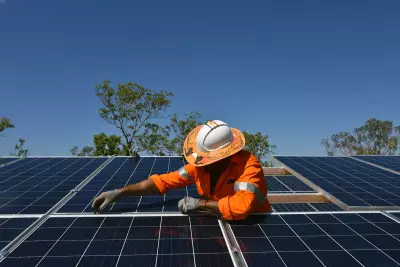
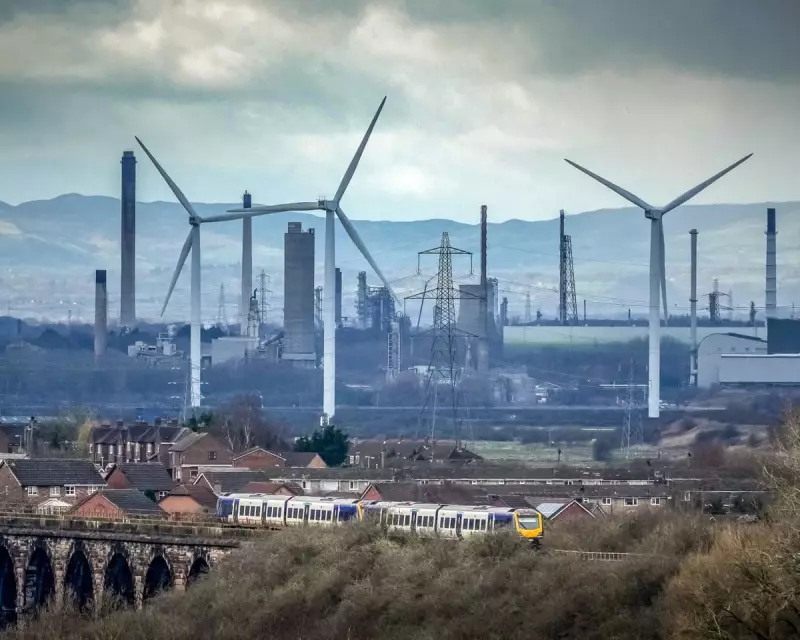
This retreat runs counter to global trends in clean energy investment, which, according to the International Energy Agency, now stands at $2 trillion annually—double the investment in fossil fuels. China, notably, has seen renewable power generation surpass coal this year. In the UK, green energy investors still hope Labour's pledge for a near carbon-free electricity system by 2030 will hold, despite setbacks like Ørsted's cancellation of the massive Hornsea 4 offshore windfarm.
Europe's oil majors, including BP and Shell, have refocused on oil and gas. BP's ousted CEO, Murray Auchincloss, admitted the company's optimism in the energy transition was "misplaced," a stance his successor is unlikely to reverse. The collective corporate and political retreat poses a severe threat to the UK's climate goals and its position as a leader in the global fight against climate change.