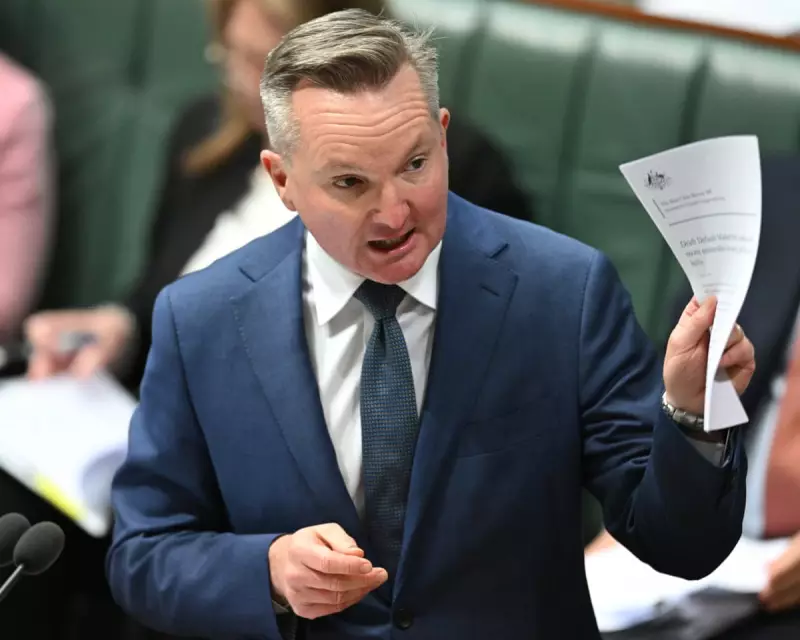
Australia's Climate Change Minister Chris Bowen has thrown his support behind UK Prime Minister Keir Starmer's sobering assessment of global climate cooperation, declaring that achieving net zero emissions by 2050 represents the "bare minimum necessary" to combat rising global temperatures.
Consensus Crumbles on Climate Action
The endorsement comes as Starmer delivered a stark message to world leaders at the COP30 summit in Belém, Brazil, declaring that the international consensus on climate action has disintegrated since the landmark Paris Agreement nearly a decade ago.
"Ten years ago, the world came together in Paris united in our determination to tackle the climate crisis," Starmer told delegates. "The only question was how fast we could go. Today, however, sadly that consensus is gone."

Bowen, who will travel to the Brazilian summit next week, confirmed Starmer's analysis reflects the current challenging landscape for global climate negotiations. "I think that's fair comment," Bowen stated during an interview for Guardian Australia's Australian Politics podcast.
Australia's Climate Leadership Test
Despite the fractured international cooperation, Bowen emphasised that the scientific imperative for urgent action remains unchanged. "Science tells us that net zero by 2050 is the bare minimum necessary to keep the world as close as possible to 1.5 degrees of warming," he asserted.
The minister's comments come at a critical juncture for Australia's climate policy, with the opposition Liberal party reportedly preparing to abandon support for net zero targets as early as next week. Bowen described this potential policy reversal as "really sad, frankly" and expressed disappointment that Australia's alternative government wasn't persuaded by the overwhelming scientific consensus.
High-Stakes Hosting Battle
Meanwhile, intense lobbying continues behind the scenes at COP30 as Australia and Turkey compete to host the crucial COP31 summit next year. Australia has proposed Adelaide as the host city in partnership with Pacific Island nations, while Turkey remains in contention despite lacking support from key international partners.
Under UN climate organisation rules, hosting decisions require unanimous consensus, creating a real possibility that neither candidate will secure sufficient support. In such circumstances, the event would default to Bonn, Germany - the permanent home of the UN climate organisation.
Bowen expressed significant concern about this potential outcome, noting that "it would be a terrible result for the Pacific, who needs a voice in these negotiations." He emphasised that Pacific Island nations strongly support Australia's hosting bid precisely because it would amplify their concerns in global climate discussions.
The diplomatic efforts have reached the highest levels of government, with Foreign Minister Penny Wong contacting her Turkish counterpart and Prime Minister Anthony Albanese lobbying directly to Turkish President Recep Tayyip Erdoğan.
As the final days of COP30 approach, Bowen confirmed the hosting matter would be resolved "one way or another" while maintaining that climate action represents both an "environmental imperative" and "excellent economics" for nations committed to serious emissions reduction policies.