

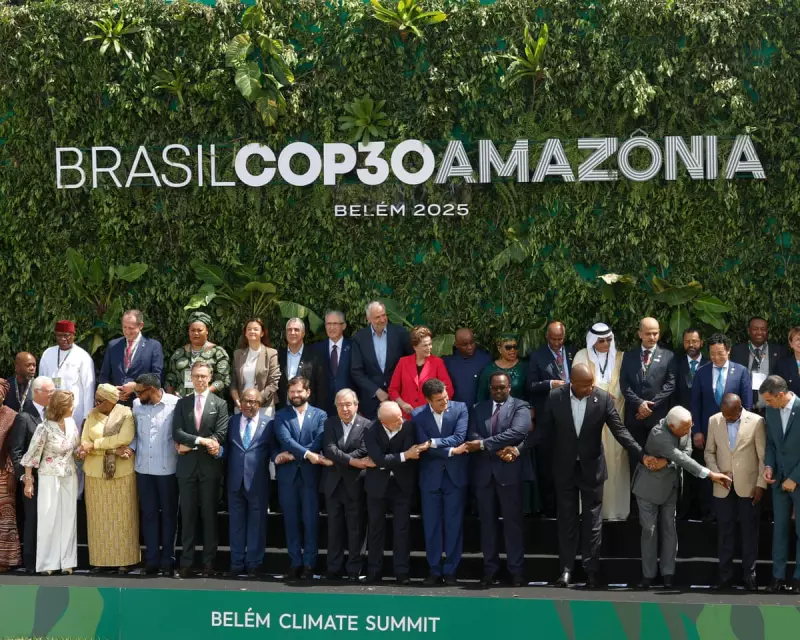
Heads of state and government officials from around the world have assembled in Belém, Brazil, for the opening of the crucial Cop30 climate conference, as the urgency of the climate emergency collides with political inertia.
Political Backdrop Threatens Climate Progress
The conference begins under the shadow of significant political challenges to climate action policies. UN secretary general António Guterres recently described the failure to limit global heating to 1.5C as a "moral failure and deadly negligence" during his opening address.
Natalie Hanman, the Guardian's head of environment, noted the particular timing challenges: "The climate crisis is a slow-motion disaster, but the news agenda thrives on quick, new, fast, ever-changing stories. We think Cop provides us with a key moment every year to pull people's attention back to what we think is the biggest and most urgent crisis facing humanity."

The political landscape appears increasingly hostile to climate action, with a potential Trump administration promoting fossil fuel expansion and Reform UK, currently leading British opinion polls, campaigning against renewable energy and net zero targets.
Guardian's Comprehensive Coverage Plans
The Guardian has deployed a significant team to Brazil to provide extensive coverage of the conference. Veteran environment correspondent Fiona Harvey, attending her nearly 20th Cop summit, will be joined by Jonathan Watts, Oliver Milman, Dharna Noor, Damian Carrington and Damien Gayle.
Hanman outlined their ambitious coverage strategy: "We'll have a global team supporting them around the clock – a daily live blog, the podcast, newsletters, helpful explainers, deep dives and hopefully some scoops."
The newspaper will also run its "This is climate breakdown" series, profiling individuals personally affected by extreme weather events exacerbated by the climate crisis.
Historical Context and Changing Coverage
The Guardian's environmental reporting dates back to 1972 when correspondent Malcolm Stuart attended the UN Conference on the Human Environment in Stockholm. That conference produced the Stockholm Declaration, which included principles about safeguarding Earth's natural resources for future generations.
Hanman explained how their Cop coverage has evolved: "Over the last five years, the team have tried to shift the reporting away from simply narrating the outcome of the summit, and instead really engage critically with the process."
This includes revealing that more than 5,000 fossil fuel lobbyists have attended climate summits over the past four years, despite record oil and gas expansion and inadequate climate action.
Potential Outcomes and Realistic Expectations
Despite the challenges, some positive developments could emerge from Cop30. A proposed deal on forest protection could have significant positive impacts if properly funded. Other potential successes include increased climate finance from wealthier to poorer nations, agreements to rapidly reduce fossil fuel production, and greater inclusion of Indigenous perspectives throughout the process.
Hanman maintained cautious optimism: "We know exactly what we need to do to address the climate crisis. We already have all the technology and all the money that we need. The problem is the politics and the power, which isn't addressing these issues in an equitable way, or moving anywhere near fast enough."
She concluded with tempered expectations: "But I think we probably have to approach it with high hopes, low expectations and rigorous scrutiny."
The conference comes as experts confirm that 2023, 2024 and 2025 were the three hottest years in 176 years of records, making the Paris Agreement's 1.5C target now "virtually impossible" to achieve.






