

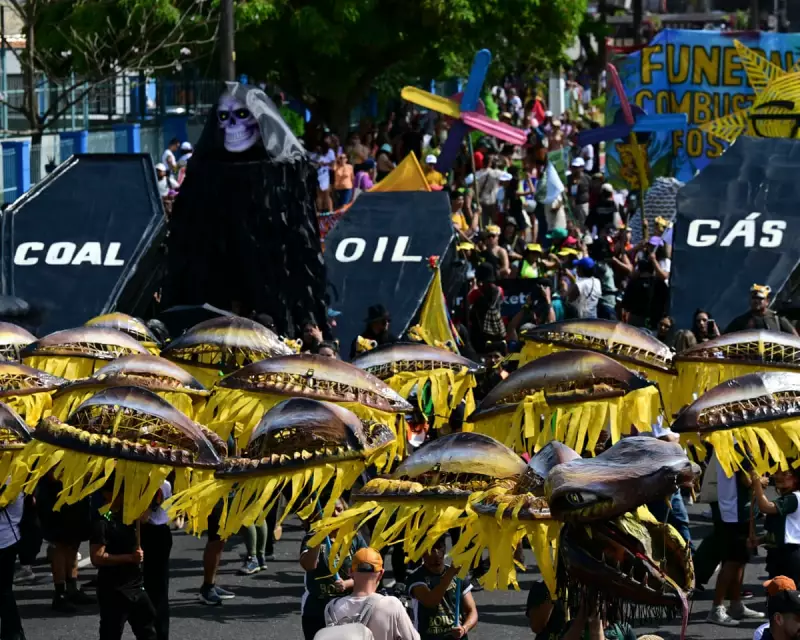
On the sidelines of the Cop30 climate summit in Belém, Brazil, activists have staged a dramatic performance symbolising the death of fossil fuels. This powerful protest underscores the central, yet contentious, issue dominating conversations at this year's UN climate conference: the urgent need to phase out coal, oil, and gas.
The Unavoidable Elephant in the Room
For over three decades, fossil fuels have been the proverbial elephant in the room at these conferences. The very structure of the UN Framework Convention on Climate Change (UNFCCC), which includes nearly every nation, gives petrostates like Saudi Arabia, Qatar, and Russia an equal platform. Historically, these nations have used their position to veto substantive discussions about ending fossil fuel use, preferring to focus vaguely on 'greenhouse gas emissions' from all sources.
The climate science, however, is unequivocal. Burning fossil fuels is the primary driver of the climate crisis, having already heated the planet to 1.5°C above pre-industrial levels. Without a decisive end to their use, scientists warn temperatures could soar beyond 2.5°C, leading to widespread and irreversible damage to our global ecosystem.

A Historic Pledge and Its Immediate Unravelling
A breakthrough seemed to occur at Cop28 in Dubai, 2023. In a surprising move, nations agreed for the first time to a 'transition away from fossil fuels'. This landmark commitment was buried in the text of the 'global stocktake' assessment. The fact it passed was remarkable, given the conference was hosted by the United Arab Emirates—a petrostate—and presided over by Sultan Al Jaber, the CEO of the UAE's national oil company.
However, this victory proved fleeting. Almost immediately after the summit closed, Saudi officials began attempting to unpick the deal, characterising the transition as merely one option among many, not a firm commitment. Subsequent efforts to build on the resolution at Cop29 in Azerbaijan, another oil-dependent nation, were stymied by overt and covert opposition.
Cop30: The Battle for a Roadmap
Despite this resistance, a coalition of nations including the UK, many EU states, and numerous vulnerable developing countries has not given up the fight. They argue that the Cop28 decision cannot be erased and must serve as the foundation for a concrete plan. Their goal for Cop30 is to initiate a process that could eventually lead to a formal phaseout roadmap.
Significantly, the transition away from fossil fuels will not appear on the formal agenda in Belém. Brazil, the host nation, contends it lacks the power to force the issue and believes there is insufficient support for a formal agenda item, fearing a failed vote could be a major setback.
Instead, discussions will occur on the sidelines through Brazil's 'action agenda' and other informal talks. Here, countries are free to debate without the need for consensus. Key proposals on the table include a declaration in support of the transition, championed by Colombia, and the 'fossil fuel non-proliferation treaty', backed by more than a dozen nations.
What Can Realistically Be Achieved?
Expectations for a binding agreement or a detailed roadmap from Cop30 are low. Proponents acknowledge that a fortnight is insufficient to create such a complex document, which would need to reconcile the vast disparities between fuel-dependent economies and those with none.
The more realistic and crucial goal is to establish an ongoing forum for discussion. This would be a multi-year process, potentially spanning the Cop31 and Cop32 presidencies, creating a 'safe space' for both producers and consumers of fossil fuels to have frank, non-binding conversations about the path forward.
Supporters, estimated to number around 60 countries, believe that assembling a 'coalition of the willing' is the most pragmatic step. They hope Cop30 can lay the groundwork for a more substantial outcome at future summits, keeping the ambition of a liveable planet within reach.






