

Iran War Sparks Global Oil Crisis and Clean Energy Dilemma
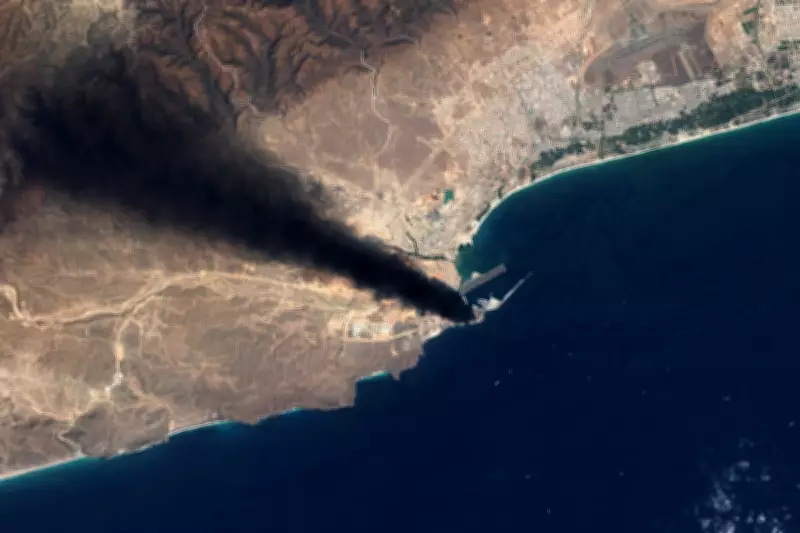
The ongoing war in Iran, marked by drone strikes on facilities like the Port of Salalah oil storage tanks in Oman, has escalated into what the International Energy Agency describes as the worst oil crisis in history. This conflict is reshaping the global energy landscape, with climate advocates pushing for an accelerated shift away from fossil fuels, even as the war itself poses significant hurdles to that transition.
Supply Disruptions and Market Shocks
US-Israeli strikes on Iran have severely disrupted critical supply routes through the Strait of Hormuz, a chokepoint for 20% of global oil flows. Additionally, military actions by the US, Israel, and Iran have targeted fossil fuel infrastructure, causing further market instability and price volatility. These disruptions highlight the fragility of oil-dependent economies and underscore the urgent need for energy diversification.
Renewable Energy as a Buffer Against Crisis
In regions with robust renewable energy infrastructure, the impact of the fuel crisis has been mitigated. "Electricity generated from wind and solar is largely insulated from fossil fuel price volatility – once built, the fuel is free," explains Jan Rosenow, an energy professor at Oxford University. Countries like Spain and Portugal have seen electricity prices decline due to their renewable capacity, while Pakistan has experienced a surge in rooftop solar panel installations, helping households and businesses cope with oil and gas market disruptions.

Electric vehicles (EVs) are also playing a crucial role in reducing reliance on gasoline. In China, over 50% of new car sales are electric, and in Nepal, that figure reaches 70%, demonstrating how clean technologies can enhance energy security and economic resilience.
Challenges to Clean Energy Expansion
Despite the push for renewables, the war is creating near-term obstacles. Supply chain disruptions in the Strait of Hormuz are affecting the transport of essential materials like aluminum, which is vital for solar panel production. With the Middle East accounting for approximately 9% of global aluminum output, regional production cutbacks could hinder the construction of new clean power capacity.
Moreover, potential inflation spurred by the conflict may increase the upfront costs of renewable energy projects, which require significant investment in construction, equipment, and installation. These factors could slow the pace of clean energy growth, even as demand for it rises.
Fossil Fuels Gain Short-Term Incentives
The energy shocks from the war have provided a temporary boost to fossil fuels, including coal. "Renewables are winner here, but so is coal," notes Ira Joseph, a global fellow at Columbia University’s Center on Global Energy Policy. Countries like India, Thailand, and Vietnam are burning more coal to compensate for shortages in liquefied natural gas (LNG), much of which passes through the disrupted Strait of Hormuz.
High fossil fuel prices are also driving increased exploration and drilling, as seen with LNG expansion plans being fast-tracked. For instance, US company Venture Global recently secured a new LNG supply contract, while Canadian firm TC Energy is considering expanding its export facilities due to war-related disruptions. This trend risks a "carbon lock-in effect," where new fossil fuel infrastructure remains operational for decades, undermining long-term climate goals.
Policy Responses and Future Directions
Experts propose various policy measures to support the green transition amidst the crisis. Jan Rosenow advocates for tax reforms to reduce the disproportionate burden on electricity compared to gas. Gregor Semieniuk, a public policy professor, suggests imposing windfall taxes on oil and gas companies to curb excessive profits and discourage production expansion.
Governments could also subsidize materials like aluminum for renewable energy projects and implement strategic price controls to manage interest rates. However, as Semieniuk emphasizes, "The most important policy is to end the conflict" to restore stability. Environmental advocates like Lauren Pagel call for ending fossil fuel subsidies and enforcing polluter-pay principles to ensure a sustainable energy future.

Conclusion: A Pivotal Moment for Energy Transition
The Iran war presents a dual challenge: it reinforces the need for a rapid shift to clean energy while creating barriers that could delay progress. As Kingsmill Bond of Ember notes, "This is the first oil shock in history where oil faces a superior alternative. Solar, wind and EV are cheaper, local, faster to deploy, and huge." The crisis serves as a critical wake-up call for global leaders to prioritize renewable energy investments and policies that reduce dependence on volatile fossil fuels, ensuring a more secure and sustainable path forward.





