While the opposition descends into internal warfare over climate policy, the Albanese government faces the substantial challenge of actually governing and delivering on Australia's ambitious net zero commitments.
Coalition Implosion Over Net Zero
The political landscape shifted dramatically this week as the Nationals formally abandoned support for net zero emissions by 2050, following research from a party-aligned thinktank and a review led by coal advocate Matt Canavan. Nationals leader David Littleproud insisted his party wasn't walking away from emissions reduction entirely but proposed pegging Australia's efforts to OECD averages, which he claimed would halve the current pace of reduction.
The move forced Opposition Leader Sussan Ley into a difficult position, with expectations that she will capitulate to rightwing Liberal MPs and abandon her previous support for net zero. Despite likely concessions, Ley faces continued leadership challenges, with backbencher Sarah Henderson openly questioning her authority and declining to endorse her leadership.

Labor's Governing Challenge
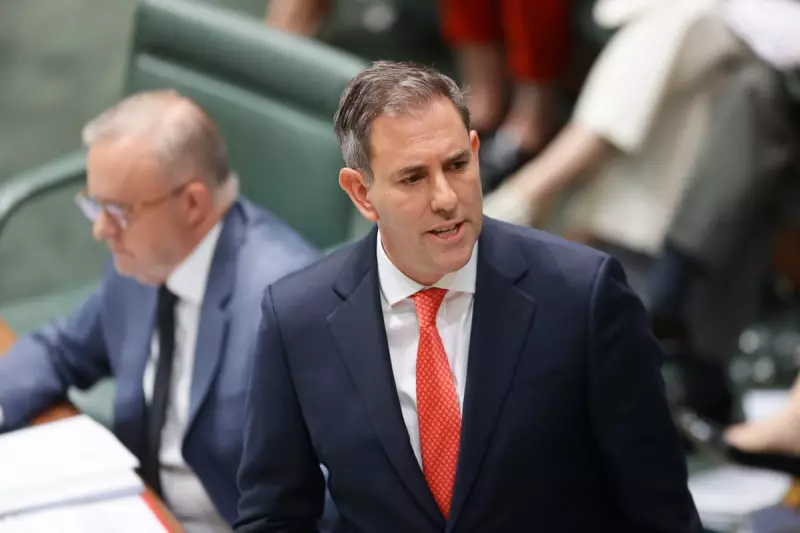
As Treasurer Jim Chalmers told an alumni event at the Australian National University's Crawford School, Australia stands at a critical economic juncture. He outlined three distinct economic eras: the agricultural and colonial period of the early 1900s; the post-Second World War industrial boom protected by trade tariffs; and the modernisation period from the 1980s to today.
Chalmers warned that Australia cannot afford to amble along the path of least resistance, stating that such an approach leads to mediocrity and malaise. His message carries particular weight given that if economic eras change every 40 years, Australia is now overdue for another transformation.
Meanwhile, the government advanced its environmental approvals and biodiversity laws through parliament during a frenetic sitting that saw 40 divisions in a single day - the most votes in at least half a century.
The Scale of the Climate Transition
The reality of Australia's climate commitments presents an enormous challenge. To reach even the lower end of the 2035 emissions reduction target of 62-70%, the Climate Change Authority outlines requirements that include halving current emissions, doubling the decarbonisation rate, achieving a sixfold increase in battery storage, quadrupling wind capacity, tripling solar capacity, and ensuring half of all new car sales between now and 2025 are electric vehicles.
Additional politically sensitive recommendations include a total block on logging of old growth forests, presenting further complications for the government.
Internationally, Climate and Energy Minister Chris Bowen heads to climate talks in Brazil amid efforts to convince Turkey to withdraw from hosting next year's Cop31 summit. The government also announced plans to provide three hours of free renewable power daily to households in three states from next year, with potential expansion to other states.
As Chalmers recalled former Prime Minister Paul Keating's distinction between protesting and governing, the message for Labor is clear: distraction by opposition chaos isn't an option when the real work of running the country demands so much more.