Northern Territory's Unprecedented Wet Season: A Climate Crisis Unfolding Now
The 2025–26 wet season has delivered a stark reality check for Australia's Northern Territory, with five major disasters striking in rapid succession. This series of catastrophic events underscores that the climate crisis is not a distant threat but a present-day emergency, testing the resilience of communities to their limits.
Five Disasters in One Season: A Record of Devastation
The season began with Tropical Cyclone Fina making landfall on the Cobourg Peninsula and Darwin in November 2025, marking the earliest cyclone on record for the NT coast and the most intense to hit Darwin since Cyclone Tracy. This was followed by severe flooding in late February, affecting approximately 85% of roads in the Barkly region due to a tropical low settling over central Australia.
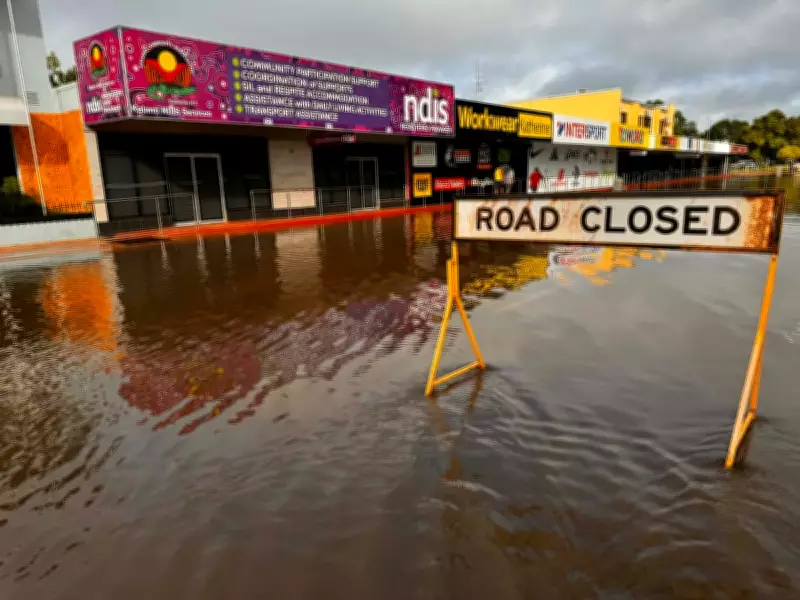
In March 2026, Katherine experienced its highest flood levels since 1998, forcing the evacuation of the hospital, closure of schools, and displacement of over 1,000 residents. Despite brief national headlines, the ongoing flooding and stranding of multiple First Nations communities across the Top End have received minimal attention.

Now, Tropical Cyclone Narelle threatens to compound the devastation, barreling toward flood-ravaged landscapes and dumping hundreds of millimetres of rain on communities still reeling from previous disasters.
Remote and First Nations Communities Bear the Brunt
Remote and First Nations communities have endured the worst impacts, with a patchwork emergency response drawing criticism from Aboriginal peak bodies. Residents from Naiyu and Palumpa have been evacuated to Darwin showgrounds and Adelaide River, with no return timeline, while those in Jilkminggan remain stranded in a shed at Mataranka. Approximately 500 residents of Numbulwar were airlifted to Darwin ahead of Tropical Cyclone Narelle.
Pastoralists face destroyed fencing, inundated infrastructure, and eroded access roads, while critical supply routes are severed and boil water alerts issued across multiple communities. These challenges exacerbate existing gaps in infrastructure, housing, and government support for a region nearly twice the size of Texas.
National Media Neglect and Economic Realities
The scale of these disasters is unprecedented, yet national media coverage has been sparse, reflecting a perception of the Territory as out of sight and out of mind. If similar events struck a capital city in the south-east, it would dominate national news.
Economically, the climate crisis has already arrived in Darwin, now Australia's most expensive city for home insurance with average premiums of $4,015 per year. Rising construction costs and escalating disasters make insurance unaffordable for many, while the National Climate Risk Assessment forecasts a 423% increase in heat-related deaths in Darwin and 70% of the NT population living in high-risk areas.
Government Inaction and Fossil Fuel Expansion
The NT government's review into Katherine flooding is undermined by its scrapping of climate and renewable energy targets. This contradiction highlights a failure to address the root causes of the crisis, as the Territory remains ground zero for fossil fuel expansion, including projects like Santos's Barossa gas, Beetaloo Basin fracking, and Inpex's Ichthys gas plant.
As LNG ships profit from Darwin Harbour, communities pay the price, fueling calls for a 25% tax on gas exports and a climate pollution levy on fossil fuel companies to fund disaster response and address cost-of-living pressures.
A Call for Honest Leadership and National Attention
The Northern Territory has long demanded resilience from its residents, but there is a limit to what communities can endure without adequate resources and leadership that acknowledges the climate crisis. With disaster following disaster, the need for honest dialogue and action has never been more urgent.
The climate crisis is here for the people of the Northern Territory, and it is time for the rest of Australia to pay attention and support meaningful change.