About 4 million homes in Britain now have an air conditioner, double the figure from three years ago. As summers get hotter, air conditioner sales are booming. If you are looking to invest, here is what to consider.
Do I need air conditioning in the UK?
British homeowners are rapidly acquiring air conditioners as the climate crisis superheats summers. An estimated 4 million homes have an air conditioner, double the figure from three years ago. Portable units with power ratings of about 1kW are slightly more common than built-in versions that can use 2.7kW of power, more than an electric oven. About 22% of British homes would require active cooling, such as air conditioners, with 2°C of global warming, the government's climate advisers said in a major report. However, air conditioners are energy-hungry and some researchers say they could threaten progress towards net zero.
Can air conditioning be green?
Because air-con units use more energy than other cooling devices, this results in more carbon emissions, according to the Energy Saving Trust. Using a portable air-con unit for an average of eight hours a day during summer would result in about 4.87kg of CO2 emissions, roughly equivalent to driving 18 miles. If you do not have solar panels, one approach is running it only when there is a high level of renewable energy on the grid, for example during the sunniest part of the day. You could also pre-cool rooms before the evening peak or power the unit with a home battery that charges during renewable surpluses.

What about heat pumps?
Heat pumps move heat around rather than generating it and can produce about three units of cooling output for every unit of electricity they use. An air-to-air heat pump, where external and internal units are connected by well-sealed pipes, is perhaps the best option for the environment. Homeowners who switched from oil or gas heating to an electric-powered air-to-air heat pump, using it for winter heating and summer cooling, are decarbonising their homes.
What kind of air conditioning could I get?
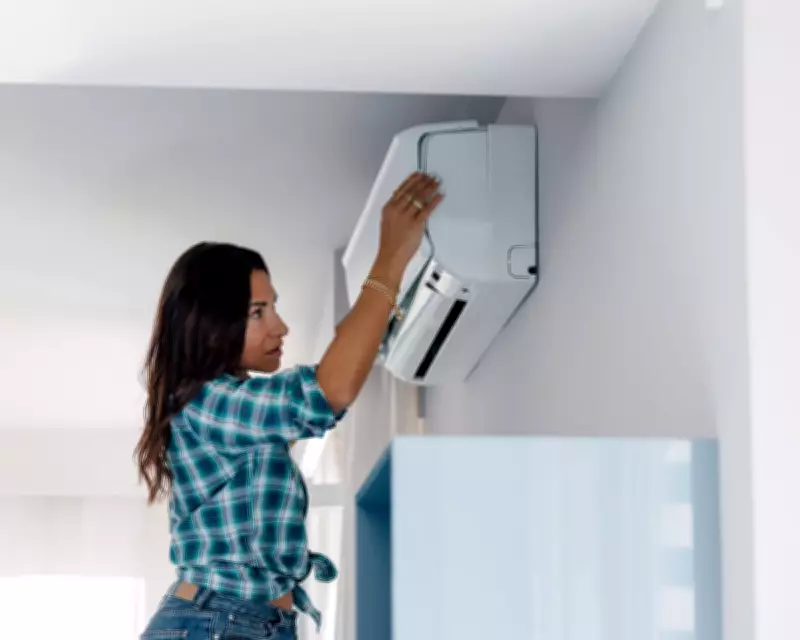
Not all air conditioners are alike. Portable versions are relatively inefficient because they lower air pressure indoors, drawing warm air back inside. A wall-mounted unit powerful enough to cool the average British bedroom costs about £750, plus £1,150 for installation. The equivalent portable unit costs £350, but running costs of built-in conditioners are nearly three times those of a portable version. The government offers a £2,500 grant for replacing fossil fuel heating with an air-to-air heat pump.
What about other ways of keeping cool?
Consider passive cooling steps such as shading windows, naturally ventilating your home when temperatures fall at night, and adding green roofs or additional insulation. Such measures may be enough on their own and would lower an air conditioner's energy demand. Using wet towels as curtains with a fan can also help.
How do fans compare with air conditioning?
The typical cost of running a fan continuously for 24 hours in Great Britain is 15p-31p, according to the Energy Saving Trust. Round-the-clock use of a portable air conditioning unit costs £5 on the same basis. A 2021 study found using an electric fan alone would have been comparable to an air conditioner in preventing heat stress during hot weather days between 2007 and 2019.
As one homeowner noted, "We have all noticed how the climate has changed in the UK, and how different summers are. It is a worry."