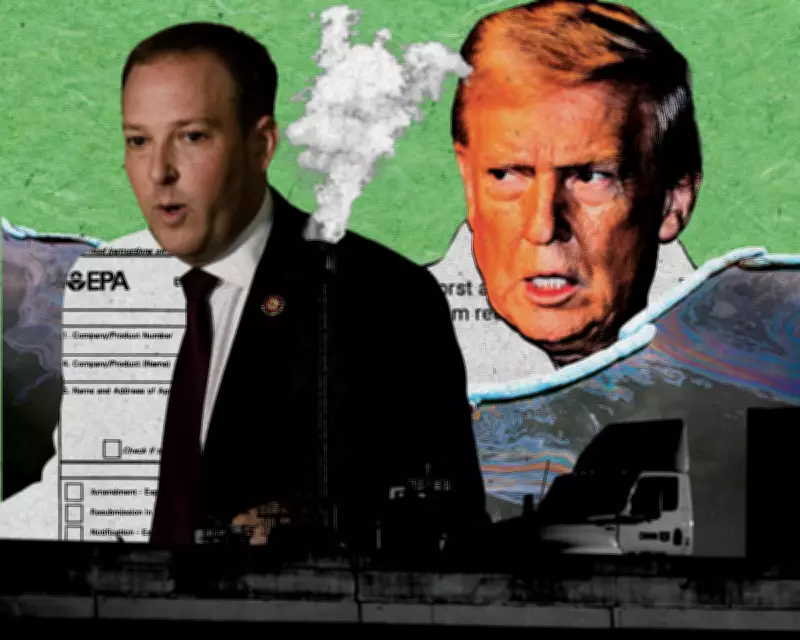
In a sweeping transformation of environmental governance, Donald Trump's administration has fundamentally reshaped the Environmental Protection Agency during his first year back in office. The agency has initiated nearly 70 distinct actions aimed at dismantling rules designed to protect ecosystems and combat climate change, according to an analysis by the Guardian based on research from the Natural Resources Defense Council.
A Comprehensive Assault on Environmental Protections
This unprecedented regulatory rollback represents what experts describe as "a war on all fronts" against environmental safeguards. The EPA's actions threaten to compromise air and water quality, increase exposure to harmful chemicals, and significantly worsen global warming. The agency has maintained a stunning pace of more than one regulatory reversal per week since January last year, targeting everything from pollution exemptions for industrial facilities to the legal foundations of climate regulations.
Matthew Tejada, former director of the EPA's environmental justice program and now senior vice-president at NRDC, characterized the approach as "an attempt to completely eliminate the EPA and just leave a symbolic husk." This sentiment is echoed by former EPA policy adviser Jeremy Symons, who stated that "the Environmental Protection Agency is now the Environmental Pollution Agency, helping polluters at the expense of human health."

Four Critical Areas of Environmental Risk
The EPA's deregulatory efforts span multiple domains of environmental protection, with particularly concerning implications in four key areas that directly affect public health and ecological stability.
Air Quality Compromises
The agency has taken numerous steps that experts warn will degrade air quality across America. These include offering Clean Air Act exemptions to over a third of domestic coal plants and toxic facilities, overturning strengthened pollution limits, and planning to shut down advisory committees crucial for developing clean air standards. Perhaps most alarmingly, the EPA has stopped estimating the monetary value of lives saved when regulating fine particulate matter and ozone, focusing instead solely on compliance costs to companies.
Tejada noted that this approach goes beyond typical regulatory pendulum swings between administrations: "They're ripping the pendulum out of the clock and telling people what time it is." An EPA spokesperson defended these changes as updating health considerations because "air pollution has already dropped so dramatically that older tools can't accurately measure today's smaller risks."
Water Safety Threats
Water protection measures have similarly faced systematic weakening. The EPA has moved to narrow the definition of waterways protected under the Clean Water Act, potentially easing restrictions on agricultural, mining, and petrochemical runoff. The agency has also announced plans to revise wastewater standards for coal plants that were designed to curb discharge of toxic heavy metals like arsenic, mercury, and lead.
Perhaps most concerning for public health, the administration has moved to rescind or reconsider federal limits on PFAS "forever chemicals" linked to cancer and developmental harm. The EPA proposed repealing four of six national drinking water standards for these contaminants, despite millions of Americans relying on water systems with PFAS levels previously deemed unsafe by the agency.
Chemical Regulation Rollbacks
The EPA has worked to loosen restrictions on numerous toxic compounds, raising particular concerns given Trump's appointments of former chemical industry executives to lead chemical safety efforts. The agency plans to cancel $40 million in grants for scientists studying toxic hazards to children in rural America and is revising rules for evaluating chemical risks in ways critics warn could weaken findings and limit regulatory action.
Specific deregulatory moves include reversing the long-standing position that no level of formaldehyde exposure is safe and weakening restrictions on methylene chloride used in industrial applications. Adam Finkel, former member of the EPA Science Advisory Board, characterized these actions as systematically targeting "evidence-based sound science" and creating "an agency gone rogue."

Climate Policy Dismantling
Perhaps the most audacious environmental rollback involves climate regulations. The EPA has proposed repealing the 2009 endangerment finding, the legal foundation for all federal climate regulations. This move, expected to be finalized soon, would effectively erase all federal climate rules at once. Simultaneously, the agency is moving to repeal limits on carbon dioxide from vehicles and weaken fuel economy requirements, despite transportation being the largest source of greenhouse gas emissions in the United States.
The administration has also announced plans to delay methane regulations and has shuttered offices responsible for climate research, including the Office of Research and Development. Olivia Guarna of Columbia University's Sabin Center for Climate Change Law noted that "the deregulatory action, the staff shrinkage, the reduction in research activities, all of these things add together to roll back the ability for EPA to carry out its duties."
Broader Implications and Expert Concerns
Environmental and public health experts express profound concern about the cumulative impact of these nearly 70 regulatory actions. Gaurab Basu, assistant professor at Harvard Medical School, called such acts "unconscionable," noting that health professionals "see the toll of their decisions, and we are enraged at the harm they are causing our patients."
The EPA has rejected criticism of its priorities, with a spokesperson stating that "unlike the climate zealots, the Trump EPA knows we can [avoid] economy-crushing regulations that make Americans poorer while also fulfilling our statutory obligation to protect human health and the environment." The agency maintains that its water policies are about "cleaner water, stronger infrastructure, and smarter, more workable rules" and that chemical policies are based on "gold standard science and radical transparency."
However, the sheer volume and scope of regulatory rollbacks suggest a fundamental reorientation of the EPA's mission away from environmental protection. As these changes continue to unfold, their effects will likely be felt across multiple dimensions of public health and ecological stability for years to come.