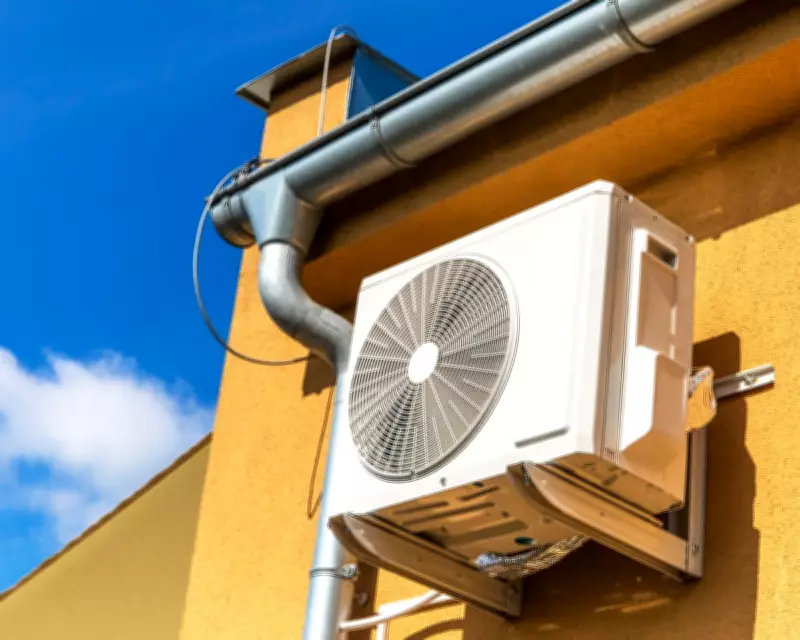
Climate campaigners have urged the UK government to urgently install air conditioning in schools, care homes, and places where vulnerable people live, as the country experienced record May temperatures. In 2022, when temperatures exceeded 40C (104F), approximately 3,000 people in Britain died from heat-related causes. Studies indicate that air conditioning can reduce heat-related deaths by 75%.
Rising Heat and Political Pressure
The world has warmed by about 1.5C compared to preindustrial levels, with Europe warming faster than any other continent. The UK is ill-prepared; most English homes overheat during summer. This is becoming a political issue, as people take matters into their own hands. An estimated 4 million homes in the UK now have air conditioning, double the figure from three years ago.
Sam Alvis, associate director at the Institute for Public Policy Research, stated: "Extreme weather is a growing political problem in the UK. As we’ve seen in Valencia, Los Angeles, and elsewhere, when increasingly severe climate impacts strike, populists exploit public anger over lack of preparation to advance their own agenda and weaken support for climate action."

In Valencia, populist politicians from the Vox party capitalized on 2024 floods that killed over 220 people, blaming the government rather than the climate crisis. In Los Angeles, after 2025 wildfires, Donald Trump and the Maga movement criticized Governor Gavin Newsom for not agreeing to a water diversion plan. Tech billionaire Elon Musk also attacked the fire department, accusing it of being woke.
Shift in Political Stance
Even political parties that previously opposed energy-intensive air conditioning now accept its necessity. A Green party spokesperson said: "Consecutive governments have failed to implement a mass home retrofit programme. While retrofitting must remain a priority, we now need air conditioning for vulnerable people in hospitals, care homes, schools, and households. As this will be required only during the hottest months, pairing with solar energy is beneficial."
Solar Power as a Solution
Air conditioning units consume significant electricity, straining the grid. However, solar power offers a solution. Sunny states like Texas, with extensive solar capacity, have experienced more grid stability during heatwaves. Solar power also reduces carbon emissions compared to fossil fuels.
Alvis added: "Extreme heat affects children’s exam performance, forces NHS surgeries to be cancelled, and makes it harder for farmers to grow food. Pairing long-term emissions cuts, such as solar panels on schools, with immediate adaptation measures like air conditioning in classrooms, will protect communities and strengthen public confidence in climate action."
Government Action
The government is promoting heat pumps to replace gas heating. Air-to-air heat pumps can also function as air conditioning in summer. Policy experts advocate nationwide adoption. In November, Energy Secretary Ed Miliband announced that grants for heat pump installation now cover those with cooling functions. However, experts note the need for more grid capacity to power these appliances.
Some campaigners argue that air conditioning should be used only in emergencies, alongside community cool spaces, like those in New York. Mike Childs, head of science at Friends of the Earth, said: "Air conditioning is energy-intensive and expensive, so should be prioritized for those who need it most. It must be powered by green energy, not fossil fuels. The government should also invest in cool spaces like community centres and churches."
Childs emphasized that British housing stock is poorly insulated. Other methods to keep heat out include shutters and retrofitting with insulation. "Britain’s poorly insulated homes are badly prepared for future weather. Insulation keeps homes warm in winter and cooler in summer," he explained.