US Subnational Leaders Take Centre Stage at Global Climate Talks
While the Trump administration has confirmed it will not send any high-level representatives to this month's United Nations climate negotiations known as Cop30, more than 100 American state and local leaders are making their way to Brazil to champion their climate initiatives. This substantial delegation, organised by subnational climate coalitions including America Is All In, Climate Mayors, and the US Climate Alliance, represents a powerful statement of continued climate commitment from within the United States.
A Mighty Coalition for Climate Action
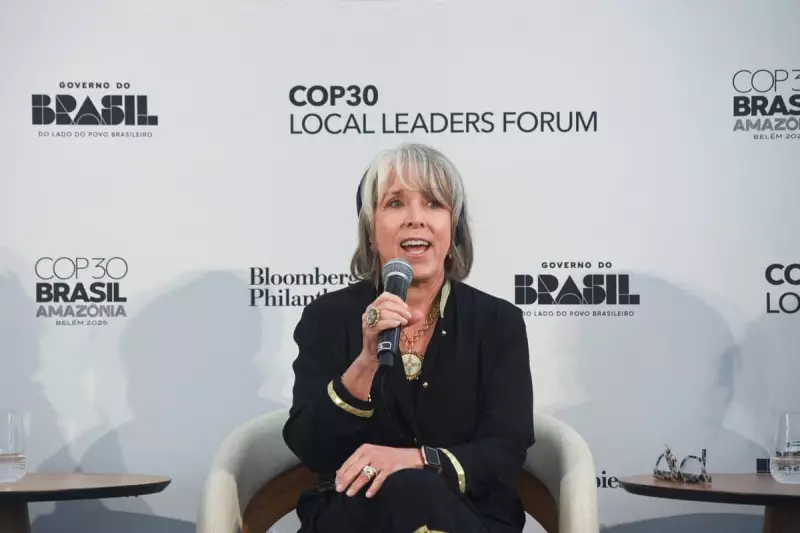
New Mexico's Governor, Michelle Lujan Grisham, who addressed reporters from a pre-Cop30 forum in Rio de Janeiro, emphasised the significance of this grassroots movement. "Whatever our nationalized policy is or isn't, the people on the ground locally are getting it done," she declared on a press call. Grisham will be travelling to the main negotiations alongside prominent figures such as Wisconsin Governor Tony Evers and Phoenix Mayor Kate Gallego.
This collective effort represents a formidable force in American climate policy. According to Todd Stern, the former special envoy for climate change under Barack Obama, this coalition represents some two thirds of Americans, three quarters of the US GDP, and over 50% of the nation's greenhouse gas emissions.

Friendly Competition and Contagious Climate Ambition
Governor Grisham described how states are engaging in a "friendly race to the top," competing to slash planet-heating pollution while simultaneously boosting their economies. She expressed hope that this model of subnational leadership would prove "contagious." The press call occurred shortly after US elections that delivered significant success for Democrats and progressives, with Gina McCarthy, a former climate adviser to Joe Biden, noting that over 30 climate mayors had secured victories.
Grisham highlighted New Mexico's own progress, noting that while the state has increased oil and gas production, it has simultaneously cut its methane output in half. She framed this as evidence that an "all of the above" energy policy, which supports both renewables and fossil fuels, is achievable today—an approach Donald Trump has notably eschewed.
Contrasting Visions and Future Implications
This stance, however, stands in stark contrast to warnings from top United Nations climate experts, who insist that meaningful climate action requires the rapid phaseout of fossil fuels. This fundamental disagreement was underscored by Keanu Arpels-Josiah, a lead organiser with the youth-led activist group Fridays For Future NYC. Arpels-Josiah pointed to the recent mayoral election victory of Zohran Mamdani in New York City as a sign of a different political direction.
Mamdani, a self-described ecosocialist, has been a vocal supporter of policies to phase fossil fuels out of buildings and to halt the construction of a gas pipeline. "He really stands in contrast to many Democratic governors who are trying to claim climate leadership... while continuing to push forward fossil fuel expansion in their states," Arpels-Josiah stated. His organisation plans to highlight Mamdani's win at Cop30 as evidence that Americans are ready for genuine climate-justice policies.
As nations gather to discuss the implementation of the 2015 Paris climate agreement—from which Trump withdrew the US on his first day back in office—concerns persist that the administration may still attempt to thwart climate action from afar. Despite these worries, Todd Stern remains confident, asserting that even if the Trump administration tries to intervene, "countries here are not going to care about it very much." He affirmed the global community's commitment, stating, "Countries of the world are in this agreement, and they're not leaving."