An exclusive new analysis has laid bare the staggering climate cost of potential US plans to exploit Venezuela's colossal oil reserves, warning it could consume more than a tenth of the world's remaining carbon budget to limit global heating to 1.5C.
The Carbon Budget Crisis
According to modelling conducted for the Guardian by the carbon accounting firm ClimatePartner, a scenario where Venezuela's oil production grows by an additional 0.5 million barrels per day by 2028, ramping up to +1.58 million barrels daily from 2035 to 2050, would by itself devour 13% of the total remaining carbon budget for staying within the critical 1.5C threshold. This limit is considered by scientists as the guardrail to avoid the most catastrophic effects of climate breakdown.
This projected expansion, while significant, would still fall far short of the nation's peak production of 3.5 million barrels a day during its 1990s oil boom. The calculation starkly highlights how any move to further tap the South American nation's resources—officially the largest proven oil reserves on Earth—would place immense and unsustainable pressure on international climate goals.

The World's 'Filthiest' Oil
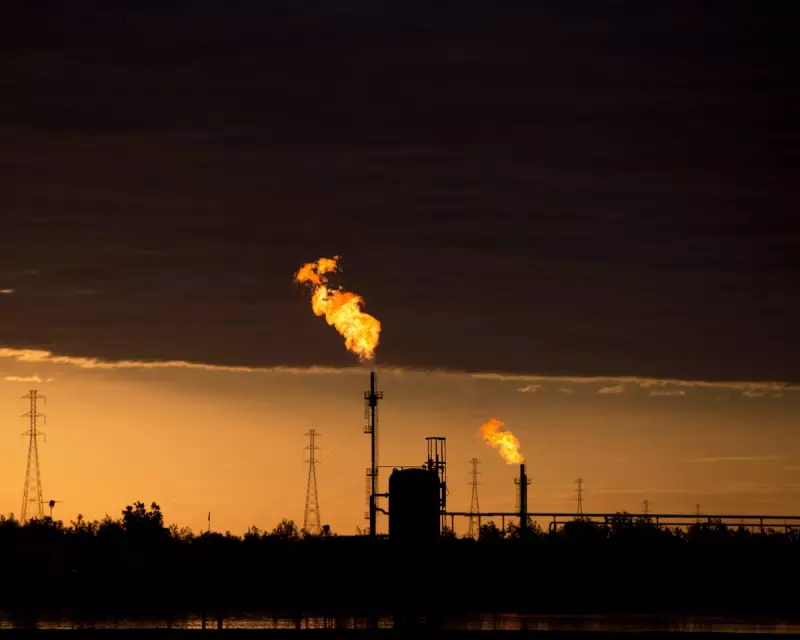
The environmental threat is magnified by the uniquely polluting nature of Venezuela's crude. Industry analysts classify it as a heavy, sour grade with a tar-like consistency and high sulphur content. Unlike lighter crudes, it requires energy-intensive processes to extract and refine.
A study by S&P Global Platts Analytics found that oil from Venezuela's Orinoco belt has by far the highest carbon intensity of any major oil region. Its emissions are almost 1,000 times higher per barrel than crude from Norway's low-carbon Johan Sverdrup field. The report concluded this "extreme" carbon intensity means the oil would face severe challenges in a world with tight carbon constraints.
Geopolitical Moves and Climate Consequences
The analysis comes amid heightened geopolitical focus on Venezuela's resources. Following recent US military action that resulted in the capture of President Nicolás Maduro, former US President Donald Trump has publicly urged oil giants to invest an estimated $100 billion to revitalise Venezuela's crumbling oil infrastructure, which has decayed under years of sanctions.
"We're going to be extracting numbers in terms of oil like few people have seen," Trump told executives last week. However, ClimatePartner's senior analyst, Hollie Parry, issued a grave warning: "The decision to ramp up production of one of the world’s most carbon intensive crude oils to historic levels would consume an estimated 13% of the remaining global carbon budget – the equivalent to nearly a decade of emissions from the entire European Union, from a single oil expansion."
Environmental campaigners have reacted with alarm. Mads Christensen, Executive Director of Greenpeace International, labelled the push for Venezuelan oil as "both reckless and dangerous," stating that the only safe path is a just transition away from fossil fuels.
The figures underscore a profound contradiction: fully exploiting Venezuela's proven reserves would, in theory, exhaust the entire global carbon budget for 1.5C on its own. While this extreme scenario is unlikely, the planned expansion represents a major step in the wrong direction, locking in decades of high emissions precisely when science demands a rapid shift to renewable energy.