Victoria's Scorching Heatwave Breaks Historical Records
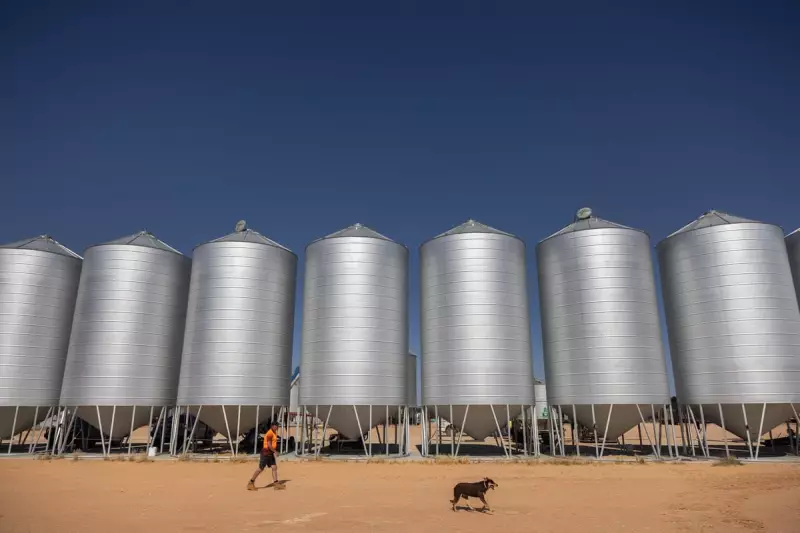
In the shimmering late-afternoon sun, the agricultural fields surrounding the remote Australian town of Ouyen transform into golden honey-coloured landscapes. Located approximately 450 kilometres north-west of Melbourne in Victoria's sparse Mallee region, this area is experiencing one of its most severe summer heatwaves in living memory. The edges of fields glisten with deceptive silver mirages, creating illusions of water where rainfall has been absent for weeks.
Unprecedented Temperature Records
Summer consistently brings intense heat to this flat, arid region, but current conditions have surpassed normal expectations. On Thursday 8th January, Ouyen recorded a staggering 47.5 degrees Celsius. Just days later on Monday, temperatures reached 44.3C. Preliminary meteorological data indicates that nearby Mallee towns including Hopetoun and Walpeup hit 48.9C on Tuesday, with the Bureau of Meteorology suggesting Ouyen Post Office may have experienced even higher readings.
These figures represent more than just uncomfortable weather - they constitute the highest recorded temperatures in Victoria's entire history. This milestone forms part of a prolonged heat event, marking the fifth consecutive day exceeding 40C with four additional days forecast to follow. The harvested fields appear bleached yellow while the earth resembles sweeping expanses of red dust, with no substantial rainfall since before the Christmas period.

Agricultural Adaptation to Extreme Conditions
"When temperatures escalate to such extremes, very few people continue working outdoors unless absolutely necessary," explains Deane Munro, a fourth-generation farmer from Ouyen. "Most operations simply bunker down - completing essential tasks during morning hours and seeking shelter throughout the afternoons. We strategically organise our weekly schedules to avoid exposure during peak heat conditions."
The 54-year-old agriculturalist manages 25,000 acres alongside his brother, cultivating wheat, barley, lentils, hay, oats and vetch. Their father and uncle remain involved in the family enterprise, with the next generation preparing to join the operation. Despite achieving a successful harvest last year, Munro acknowledges persistent dryness affected outcomes.
Climate Challenges and Farming Innovations
Australia experienced its fourth-warmest year on record in 2025, with national average temperatures rising by 1.23 degrees Celsius according to Bureau of Meteorology data. The climate crisis has demonstrably increased both frequency and severity of extreme weather events including heatwaves and bushfires, with long-range forecasts predicting above-average temperatures continuing until April across much of the country.
While Munro doesn't specifically attribute conditions to human-caused climate change, he expresses significant concern about escalating temperatures. "We operate with approximately 12 inches of annual rainfall. Missing just one or two rainfall events means we cannot cultivate viable crops, creating substantial anxiety about future conditions," he reveals. "This region will always remain on the drier spectrum rather than experiencing increased wetness."
The Munro family has implemented substantial agricultural modifications over two decades to accommodate drier environments. These adaptations include enhanced crop rotation systems and planting techniques that minimise ground disturbance. "Our summer moisture conservation practices have proven exceptionally effective," Munro notes, before adding a crucial qualification: "We're implementing numerous strategies to grow larger yields with reduced rainfall, but there will inevitably reach a threshold where these methods become completely ineffective."
Fire Risks and Wildlife Vulnerability
Extreme temperatures correlate directly with heightened fire danger across desiccated plains. Munro reports reduced immediate bushfire concerns this week due to low wind conditions, but emphasises ongoing vulnerability for animals and particularly native wildlife.
"Every livestock owner monitors water supplies at least twice daily during these conditions," he states. "However, wildlife unquestionably suffers tremendously during such extreme heat events."

Bushfires ignited during comparable heat recently devastated surrounding areas. Uncontrolled blazes continued burning elsewhere in Victoria, with Munro recalling a fire that consumed over 55,000 hectares at Boinka just two weeks earlier when temperatures approached 48C. "The scale of wildlife mortality shocked me profoundly," he confesses. "I've never witnessed such numerous animal casualties. The fire moved with incredible speed and intensity - I've never observed such extreme burning conditions. Literally tens of thousands of animals perished, creating genuinely disheartening scenes."
Human Experience of Extreme Heat
As Tuesday progressed and temperatures climbed, the heat became physically oppressive - a heavy, insistent presence penetrating clothing, sunglasses, windows and building structures. Statewide emergency warnings highlighted particular health dangers for elderly residents, young children, individuals with pre-existing medical conditions and socially isolated community members.
For lifelong residents like 86-year-old Lillian Hickmott, air conditioning represents relative luxury rather than necessity. Growing up in Nyah West among sixteen siblings on a fruit property cultivating sultanas, currants and various grape varieties, she recalls innovative cooling methods from earlier decades.
"During extreme heat like current conditions, my mother would direct us to the coolest available spaces beneath enormous peppercorn trees lining our driveway," Hickmott reminisces. "We would play outdoors while keeping infants in prams protected by fly nets. We created lemonade from our substantial lemon tree using chilled water from canvas bags suspended in shaded areas."
The family's corrugated iron home, lined internally with hessian, became unbearably stuffy during summer months. Sleeping indoors proved impossible, so they burned dried cow manure to repel mosquitoes while relocating mattresses onto limestone surfaces outdoors, only returning inside during early morning hours when temperatures moderated.
"Contemporary generations enjoy significantly improved conditions," Hickmott observes. "Most young people today would struggle to endure the lifestyles we experienced, having never known existence without air conditioning. They can simply enter buildings and activate cooling systems."
This stark contrast between historical adaptation and modern convenience underscores how communities in Victoria's Mallee region continue navigating increasingly extreme environmental conditions while maintaining agricultural traditions and community resilience against escalating climate challenges.