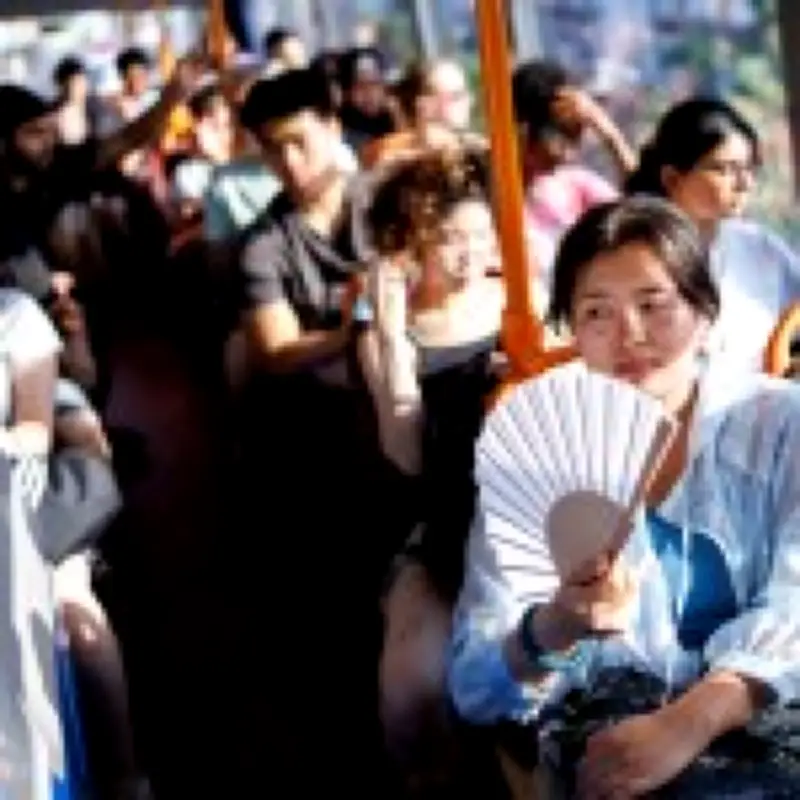
The UK's record-breaking heatwave, with temperatures reaching 37.3C in Santon Downham, Suffolk, has caused widespread disruption and a sense that the heat 'hits different' compared to other countries. The Met Office has attributed this to a combination of high humidity, building design, and psychological factors.
Why UK heat feels worse
Met Office spokesperson Stephen Dixon explained that the UK's air tends to be more humid than continental Europe, making it harder for sweat to evaporate and cool the body. Additionally, UK homes are built to retain heat during cold winters, which backfires during heatwaves. 'Houses in Europe are often more adapted to higher temperatures,' Dixon said, 'while many in the UK need well-insulated homes for those cold winter months, which means they naturally retain heat.'
Another factor is mindset: people in the UK are not accustomed to extreme heat and may not prepare as they would when traveling abroad. 'When people from the UK go abroad, they're often well-prepared for heat,' Dixon noted. 'Many European countries have a routine (meal times) that are adapted to it being hot. The heat can sometimes feel worse in the UK simply down to not expecting it.'

Disruption and adaptation
The heatwave led to hundreds of school closures, train and Tube service cancellations, and the closure of iconic attractions like Tower Bridge and Cutty Sark. London pavements and station platforms reached nearly 60C. Even a talk on extreme heat during London Climate Action Week was cancelled due to the weather.
Campaigners from Greenpeace described the situation as a 'public health emergency' driven by fossil fuel emissions, calling for government action to cool homes and schools, set safe worker limits, and increase shade and green spaces. London's mayor admitted the city is unprepared for worsening summers, unveiling a heat plan inspired by Phoenix, Arizona.
Unequal access to green spaces
Green spaces have been a lifeline, but access remains unequal. Natural England research shows only 26% of people in the most deprived neighbourhoods have access to a green space, compared with 38% in the least deprived areas. This disparity exacerbates the health impacts of the heatwave.