Artemis Mission Aims to Rekindle Earth Unity Through Lunar Perspective
For the first time in over five decades, astronauts are poised to witness Earth from the distant vantage point of deep space. The upcoming Artemis II mission, scheduled to launch this week, represents a pivotal moment in human spaceflight, with hopes that the images transmitted back will inspire much-needed global unity and environmental consciousness.
The Legacy of Apollo's Earthrise
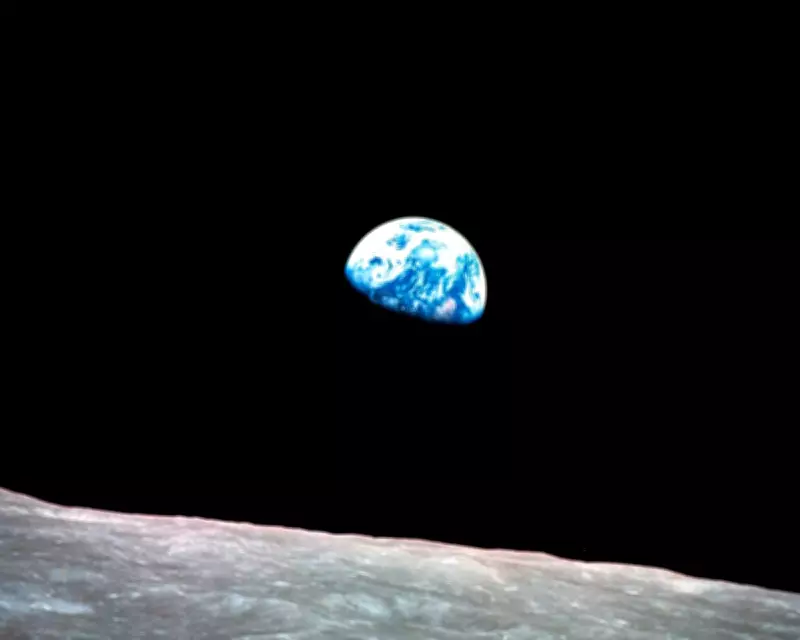
The famous 'Earthrise' photograph, captured by Apollo 8 astronaut William Anders on December 24, 1968, had a profound impact on society. At a time of division and conflict, this image revealed Earth as a finite, fragile sphere enveloped in a thin layer of life-sustaining atmosphere. This perspective contrasted sharply with humanity's everyday experience of seemingly limitless resources.
This visual revelation sparked significant environmental movements, including the establishment of Earth Day, the founding of Friends of the Earth, and the passage of numerous environmental protection laws. For a brief period, the Apollo achievements were celebrated as accomplishments of "we the human race" rather than merely American triumphs.

The Diminished Impact of Modern Space Imagery
In subsequent decades, human spaceflight has focused primarily on observations from space stations approximately 250 miles above Earth's surface—merely a thousandth of the distance from which Apollo astronauts viewed our planet. This proximity fails to convey the complete, humbling perspective of Earth's finite nature and precarious habitability.
Contemporary society has grown complacent toward space imagery. While technological marvels like Google Earth provide exquisitely detailed global data and up-to-date visuals, they often fail to evoke the emotional response that earlier space photographs inspired. At recent exhibitions, such displays have become almost invisible to visitors, dismissed as commonplace technological features rather than marvels of human achievement.
Social Media's Divergent Influence
The borderless, unifying vision of Earth that captivated post-Apollo generations could have been amplified through modern social media platforms. Instead, profit-driven algorithms and echo chambers have frequently driven communities toward polarization rather than unity. Rather than collaborating to protect our planetary home, societies have become increasingly divided by contentious politics and fractured international relations.
Artemis: A New International Endeavor
The Artemis missions represent a fundamentally different approach to space exploration. Unlike the nationalistic space race of the Apollo era, Artemis embodies international cooperation, with spacecraft built by communities from eleven nations harnessing diverse perspectives and problem-solving capabilities. Sixty-one countries have signed the Artemis Accords, committing to peaceful collaboration in space and lunar exploration.
Artemis II astronaut Christina Koch, poised to become the first woman to orbit the moon, emphasizes this inclusive spirit: "Any country that's interested in exploring, come, come along, be a part of this." Mission commander Reid Wiseman echoes this sentiment, stating, "We are going as humanity." Victor Glover, set to be the first African American to journey to the moon, adds that space travel teaches that "we're all brothers and sisters, and when we work together to do really hard things, it just brings you together in a way nothing else will."
A Sacred Perspective Renewed
As Artemis II astronauts travel more than 4,000 miles beyond the moon before being pulled back by lunar gravity, they will witness Earth emerging from behind the lunar disk. Unlike their Apollo predecessors who encountered this view unexpectedly, the Artemis crew plans to photograph and potentially stream this perspective live to audiences worldwide.
This experience promises to be transformative, not only for the astronauts but potentially for humanity as a whole. As poet Archibald MacLeish reflected after viewing Apollo 8 photographs, we may again see ourselves as "riders on the Earth together, on that bright loveliness in the eternal cold."

On the lunar surface below, a silicon disc containing goodwill messages from world leaders—placed by Apollo 11 astronauts in July 1969—awaits the Artemis crew. Among these messages, one from Eric Williams, then prime minister of Trinidad and Tobago, reads: "It is our earnest hope of mankind that while we gain the moon, we shall not lose the world." This sentiment resonates powerfully as humanity embarks on this new chapter of space exploration.
The Artemis mission stands as one of the few remaining truly unifying international projects, offering a renewed opportunity to appreciate our shared planetary home from a perspective that once inspired global cooperation and environmental stewardship.