Colombia's Coffee Paradox: Bountiful Harvests, Empty Fields
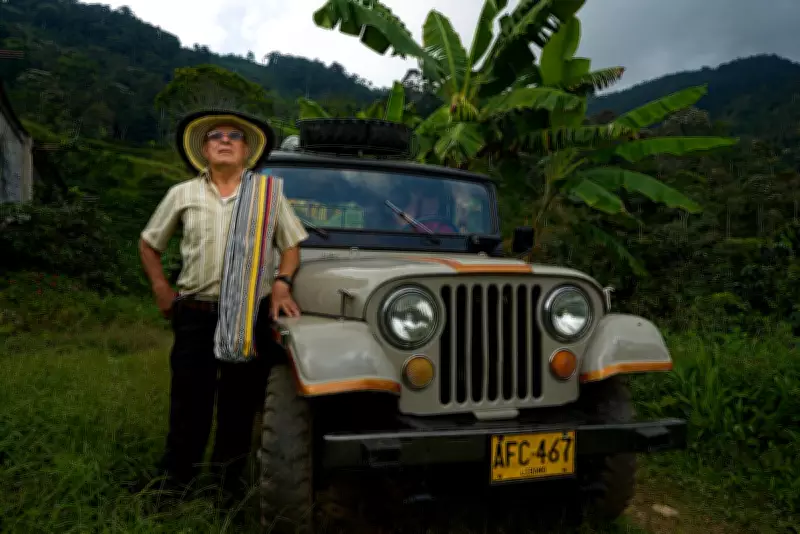
In the lush, mountainous region of Tolima, Colombia, the Pérez Arrubla family—fourth-generation coffee farmers—cultivate beans on steep Andean slopes near Líbano. Alongside the rest of the country, they have experienced a historic coffee harvest in 2025, driven by surging global prices that reached record highs for the second consecutive year. This boom, however, masks a deepening crisis: significant portions of the crop are rotting on the ground due to severe labor shortages, highlighting the precarious state of Colombia's coffee industry, which UNESCO recognizes for its cultural significance.
Climate and Market Forces Fuel Price Surge
The global coffee market has been reshaped by external pressures. Severe U.S. tariffs imposed on Brazil and Vietnam, the world's largest producers, combined with poor harvests in those countries exacerbated by the El Niño weather pattern and climate crisis, have driven prices upward. Ironically, these same conditions have favored Colombia's high-altitude growing regions, creating what should have been a prosperous year. Yet, the industry stands at a crossroads, grappling with erratic seasons, rural abandonment, and an aging workforce.
Colombian coffee is not immune to climate change. Since the 1980s, average mountain temperatures have risen by approximately 1.2°C, and sunlight hours have decreased by about 19%. Farmers report increased droughts, heavier rains, and more pests and diseases. Studies predict that from 2041 to 2060, yields may decline by 8% in lower-altitude areas but rise by 16% at higher elevations, prompting shifts in cultivation practices.

Labor Shortages and Rural Exodus
The scramble for coffee pickers has become desperate. While no nationwide estimates exist for unpicked harvests in 2025, complaints of labor shortages are widespread. The Pérez Arrubla family lost 10% of their crop due to a lack of workers. "We picked coffee non-stop for two-and-a-half months," says Mary Luz Pérez Arrubla. "More coffee seemed to be on the ground than on the branches."
Over a generation, the number of workers in Colombia's coffee industry has shrunk by a quarter, with the proportion of people over 60 more than doubling, according to the National Coffee Growers Federation. Decades of conflict have driven millions from the countryside to cities, fleeing violence from guerrilla groups, paramilitaries, drug cartels, and state forces. Even in less affected areas, youth migration persists due to wage gaps favoring urban jobs.
"It's brutal," says Wilder Gomez, the family's farm manager, showing callused hands from years of picking. "It's hard to find people." At harvest peaks, he struggles to hire 10-20 workers in Líbano's town square, where 30 are needed, and turnover is high as pickers seek daily opportunities elsewhere.
Innovation Barriers and Economic Realities
Countries like Brazil have addressed rural abandonment with large-scale mechanization, but Colombia's mountainous terrain makes this impractical. "Brazil's flat fields allow machines, but our slopes are all different," explains Yinson Javier Díaz, an agronomist with the growers' federation. Additionally, machines cannot distinguish between ripe and unripe cherries, wasting precious crops in Colombia's varied climate.
Technological solutions exist, such as eco-friendly mills that reduce water and labor, AI-powered sorting machines, and precision drones, but they remain out of reach for most farmers. Díaz notes that less than 5% have invested in new mills costing 22 million Colombian pesos (£4,150), with AI and drone technologies equally unaffordable.
Despite coffee being a global commodity consumed in 3 billion cups daily, small producers in countries like Colombia, which grow 70% of the world's beans, receive barely 10% of the profits. Most Colombian coffee families own just 1.4 hectares on average, compared to Brazil's larger plantations, limiting economies of scale.

Specialty Coffee: A Niche Hope with Risks
Experts suggest focusing on specialty coffees—differentiated by origin or fermentation—as a strategy for survival. By emphasizing quality over quantity, farmers can thrive on smaller plots. The Pérez Arrubla siblings experiment with exotic blends on two hectares, calling it "artisanal" and more valuable than mass-produced beans.
However, this approach carries risks. Specialty varieties often require longer bloom times and yield smaller harvests, and farmers struggle to connect with brokers in niche markets. While the federation guarantees purchase at set prices, it does not pay premiums for specialty beans. Moreover, these coffees are susceptible to diseases like coffee leaf rust, exacerbated by climate shocks that can cause losses exceeding 50% for smallholders.
Díaz warns that families with two hectares or less can barely survive on commercial beans and cannot risk specialty cultivation. "If we want to compete with Brazil, we'd have to industrialize, but that would support only 2,000-3,000 people instead of 560,000 families, devastating coffee culture," he says.
Future Prospects and Collective Action
Jacqueline Mazza, a professor at Johns Hopkins University, envisions a future combining small-scale specialty production with complementary crops and tourism. Yet, smallholders cannot build this model alone. "It requires strategic investment and organization," she emphasizes. Success also depends on cultivating domestic taste for specialty coffee, rather than relying solely on Western markets.
Mary notes a shift in Colombia, with more consumers willing to pay higher prices to support farmers. "People say, 'I can spend 5,000 pesos [£1] because I'm helping a coffee farmer survive,'" she observes. As climate crises deepen and labor shortages persist, the fate of Colombia's iconic coffee industry hinges on adaptation, innovation, and community resilience in the face of global challenges.