Queensland Cyclone Survivors Shelter in Shipping Containers as Narelle Ravages Region
As the most powerful cyclone in generations bore down on remote Queensland, Debbie Jackson and her family made a desperate decision. With Tropical Cyclone Narelle approaching their cattle station, they sought refuge in shipping containers alongside her husband Kevin, their family, and a family friend. The seven individuals remained awake throughout the entire night, anticipating the arrival of what would become a devastating weather event.
Unprecedented Wind Speeds and Widespread Destruction
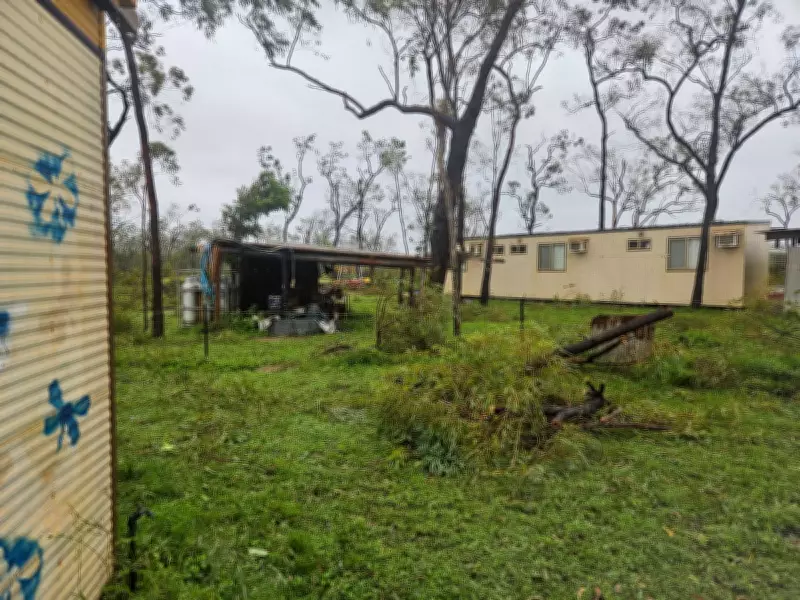
Boasting wind gusts reaching an astonishing 270 kilometers per hour, Tropical Cyclone Narelle tore through Archer River, a tiny community situated approximately 650 kilometers north of Cairns. This represents the most northerly city in Queensland, Australia. Eyewitness accounts describe winds so powerful they uprooted trees from the ground, hurling them onto houses and sheds with terrifying force.
Debbie Cameron, manager of the Archer River roadhouse and neighbor to the Jacksons, expressed equal concern about rising flood waters spreading from the Archer River. She anticipated her refuge would flood and devised an emergency plan to escape to a nearby hill, seeking cover beneath a vehicle. This created a dangerous race against time between rising waters and diminishing winds.

"She's devastation here," Cameron stated bluntly. "We've got buildings crushed, sheds down. I don't think there's a leaf left on any tree."
Record Ocean Temperatures Fuel Category 5 Storm
Tropical Cyclone Narelle made landfall in remote Cape York on Friday morning, merely two days after forming in the Coral Sea. The storm traveled at speeds reaching 25 kilometers per hour, according to forecasters from the Bureau of Meteorology. Record ocean temperatures significantly fueled the storm, which rapidly intensified to the highest possible category 5 rating while offshore. Initial forecasts predicted it would cross the coastline at this catastrophic level.
Nestled along the coastline, approximately three hours drive north-east of Coen, the 700-strong Aboriginal community of Lockhart River sustained substantial damage after Cyclone Narelle landed there around 9am Friday. Throughout the day, powerlines tumbled, massive trees were ripped from the ground and landed on homes, and debris floated freely throughout the community. The local airstrip will require extensive repairs before another aircraft can safely land.
Cyclone-Hardened Communities Demonstrate Resilience
Despite the destruction, David Clarke, CEO of the shire council, reported the community remained "relatively unscathed" due to two days of thorough preparation for the category 4 system's arrival.
"All of our folks are cyclone-hardened from birth, so they understand," Clarke explained. "Our preparation was pretty good. Our community is a very resilient one."
Clarke, who has lived in the community since the 1980s and experienced multiple cyclones, noted a strange coincidence: the seventh anniversary of the last major cyclone, Tropical Cyclone Trevor, occurred just one day before Narelle's arrival.
"Unlike Trevor, where we had all sorts of seabirds falling out of the sky before the system hit us," Clarke observed, "Narelle was not as bad as predicted. It was very windy, obviously. Probably 130 to 140km/h winds. It didn't get to the 160km/h that the BoM was predicting, but no one is whingeing about that."
He added candidly: "It was bloody horrendous, but we didn't have it as bad as Trevor this time. [But] Anything that comes up at 315km/h is going to make people nervous, including me."
Political Warnings and Narrow Avoidance
Queensland Premier David Crisafulli spent three days urgently warning residents of the remote area, many of them experienced cyclone survivors, to take the storm with utmost seriousness.
"If a category 5 system crosses the coast in this location, it's the first time that's happened in over 100 years," he emphasized.

The weather system ultimately produced sustained winds of 195 kilometers per hour, merely 5 kilometers per hour shy of the highest possible category 5 cyclone classification. The storm had been expected to directly hit the small town of Coen, population 320. Some residents evacuated, while parts of north Queensland underwent official evacuation procedures. However, as it made landfall, Narelle swung northward, away from Coen. It didn't travel far enough to strike Lockhart River directly either; Crisafulli noted it had "threaded the needle between both."
By Friday afternoon, authorities reported no injuries—a stark contrast to the last major cyclone to hit the area, Tropical Cyclone Mahina in 1899, which claimed 307 lives.
"Whilst there is some damage that we've seen ... that is an incredibly good news story," Crisafulli stated.
Community Spirit and Improvised Shelters
Coen resident Koi Ngoreoge spent the evening in her bathroom, having moved a mattress and cooking equipment into what she considered the most secure room in her house. By morning, the cyclone was already unleashing its fury.
"I'm making breakfast in the bathroom," she joked afterward.
Another Coen resident, Sarah Watkins, remarked: "We got off lightly." She took shelter at the local pub, the Exchange Hotel, because of its brick construction, returning home mid-Friday morning after winds subsided.
The entire town banded together to ensure everyone remained safe, fed, and hydrated, Watkins reported. Having expected massive damage, residents felt profound relief that the destruction proved less severe than anticipated.
"It was a direct hit forecast. We got really lucky that we were just slightly south of it, so the damage hasn't been too bad," she explained.
While parts of the town lost power, Watkins' area remained unaffected. However, the river continued rising, effectively cutting off the town from outside access.
Storm's Continued Path and Future Threats
By Friday, Narelle had weakened to category 3 strength, with forecasts predicting further reduction to category 2 before crossing the central Cape York Peninsula. The storm was expected to move west into the Gulf of Carpentaria on Friday night, potentially strengthening once again before a second landfall anticipated late Saturday night or early Sunday near the Northern Territory.
The experience of Queensland residents sheltering in shipping containers, bathrooms, and brick buildings underscores both the extreme dangers posed by intensifying cyclones and the remarkable resilience of communities accustomed to nature's fiercest challenges.