Britain's largest power station continues to burn trees up to 250 years old sourced from Canada's most ecologically valuable forests, according to a damning new investigation that challenges the company's environmental credentials.
Fresh Evidence of Old-Growth Logging
A comprehensive report by Canadian environmental organisation Stand.earth claims that Drax Group received hundreds of truckloads of whole logs at its biomass pellet production sites throughout 2024 and into 2025. The investigation suggests it is "highly likely" that these shipments included ancient trees from British Columbia's oldest forests.
The findings emerge just days after Drax secured additional green energy subsidies from the UK government, despite growing scrutiny of its sustainability claims. The North Yorkshire power plant, Britain's single biggest source of carbon emissions, receives over £2 million daily from British bill payers through renewable energy incentives.

Protected Forests Under Threat
Stand.earth's investigation, based on official British Columbia government data and satellite monitoring, identifies that Drax's Canadian subsidiary received 90 truckloads of logs specifically from old-growth forests in the Skeena region. This area contains some of Canada's largest undeveloped wilderness areas.
Old-growth forests in British Columbia are defined as areas containing trees older than 250 years in slow-growth ecosystems, or older than 140 years in faster-regenerating areas. While Drax stated in October 2023 that it had stopped sourcing from government-designated "protected" or "deferred" old-growth areas, the company continues to operate in other old-growth forest zones.
A Drax spokesperson responded: "Our sourcing policy means Drax does not source biomass from designated areas of old growth and only sources woody biomass from well-managed, sustainable forests."
Scale of Logging Operations Revealed
The investigation uncovered that Drax received at least 425 additional truckloads of whole logs from "cutblocks" - areas designated for timber harvesting - that contained old-growth forests during 2024 and 2025. Alarmingly, 63 loads originated from three cutblocks containing more than 90% old-growth forest, meaning these purchases "almost certainly contained old growth".
The remaining 362 lorry loads came from 22 cutblocks in the Skeena region that were more than 80% old growth, making it "likely" they contained ancient trees. Tegan Hansen, lead author of the Stand.earth report, told The Guardian: "The true volume of old growth sourced by Drax is likely higher than what our research was able to track."
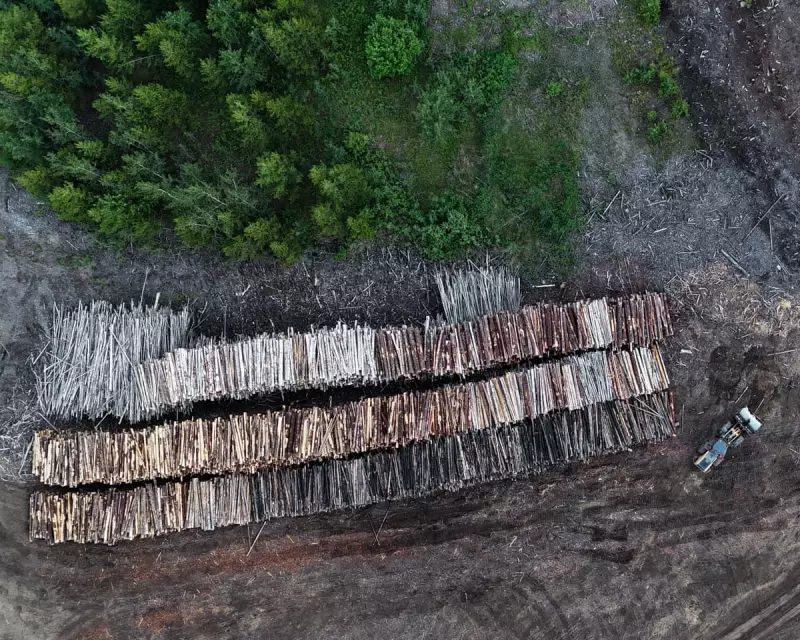
During site visits to Drax's Canadian pellet production facilities, Hansen observed "huge piles of logs" containing "large, healthy trees of different ages". She noted seeing fire-scorched trees that were "still alive when they were cut, which was apparent by the oozing sap".
Controversial 'Waste Wood' Definition
Drax maintains that it uses "low-grade" wood typically rejected by commercial sawmills, arguing it's "far better to use waste wood to generate renewable electricity rather than leaving it to burn". However, Hansen challenges this classification, stating that "a tree standing up in a forest is not waste".
She explained that exceptionally old trees can develop rot in their centres - a natural feature that makes them valuable wildlife habitats - but this leads the logging industry to classify them as "defective" waste wood.
"Drax has come into British Columbia claiming to solve some of the problems that our forestry industry has, but they have not," Hansen said. "It's very disheartening, and offensive, to hear Drax claiming to be solving these problems when really they're entrenching some of the problems that we have in forestry here."
The report raises fresh questions for Drax, which has previously faced investigation by Britain's energy regulator and the Financial Conduct Authority following a 2022 BBC Panorama documentary that revealed the company had cut down primary forests in Canada for wood pellets.