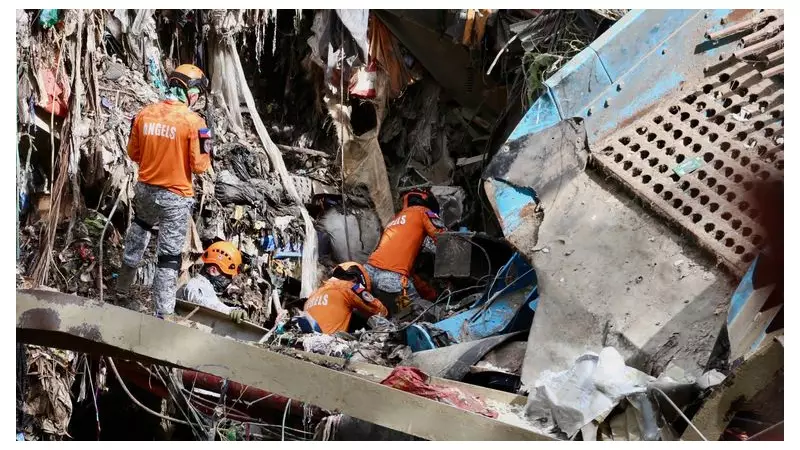
Rescuers in the central Philippines have detected signs of life as they search for more than three dozen people missing after a catastrophic collapse at a landfill site killed four workers. The disaster, described as an 'avalanche of rubbish', struck a waste management facility in Cebu City on Thursday afternoon.
Race Against Time in Dangerous Conditions
Dozens of police, firefighters and disaster responders are scouring treacherous piles of debris in the village of Binaliw. They are braving unstable mounds of refuse, twisted metal roofing, and combustible materials in a desperate hunt for 36 individuals who remain unaccounted for. Twelve injured staff members have already been pulled from the wreckage.
Cebu City mayor, Nestor Archival, confirmed that signs of life had been pinpointed "in specific areas, requiring continued careful excavation." To aid the delicate operation, a more advanced 50-tonne crane is being brought to the site. Mayor Archival emphasised that the safety of rescue teams "remains paramount" due to the risks of shifting debris and potential acetylene leaks, which have forced authorities to adjust the security perimeter.

Victims and a Survivor's Harrowing Tale
The four confirmed fatalities were all employees of the facility, which had a total staff of 110. Among the dead were an engineer and a female office worker. The death toll was revised up from an initial figure of two on Saturday, 10th January 2026.
Jaylord Antigua, a 31-year-old office worker, survived the terrifying incident. He recounted how a wall of refuse suddenly destroyed the administrative office he was in. "I saw a light and crawled toward it in a hurry, because I feared there will be more landslides," Mr Antigua said, describing his escape through darkness and rubble which left him with facial and arm bruises. "It was traumatic. I feared that it was my end, so this is my second life."
Underlying Causes and a History of Risk
The exact cause of the collapse is under investigation, though a survivor told the Associated Press it happened instantly without warning in fairly good weather. Local media outlet Philstar suggested that heavy rainfall from Typhoon Tino and a previous earthquake may have destabilised the ground beneath the massive rubbish mound.
This tragedy highlights long-standing safety and health concerns regarding landfills and open dump sites across the Philippines, particularly near impoverished communities where residents often scavenge. The incident echoes a 2000 disaster in Quezon City, near Manila, where a collapsing rubbish mound in a shantytown killed over 200 people.
Mayor Archival also noted that preparations are underway to manage the looming garbage collection crisis in Cebu, a major port city of nearly one million people. The city serves as a vital hub for regional trade, commerce and tourism, making the functioning of its waste management infrastructure critical.