Fukushima's Frozen Classrooms: Nature Thrives 15 Years After Nuclear Disaster
In the shadow of the Fukushima Daiichi nuclear power plant, a primary school classroom remains frozen in time, exactly as children left it fifteen years ago when they fled the catastrophic tsunami and nuclear meltdown. The Kumamachi elementary school stands as a haunting testament to the events of March 11, 2011, when Japan experienced its most powerful recorded earthquake.
A School Frozen in Time
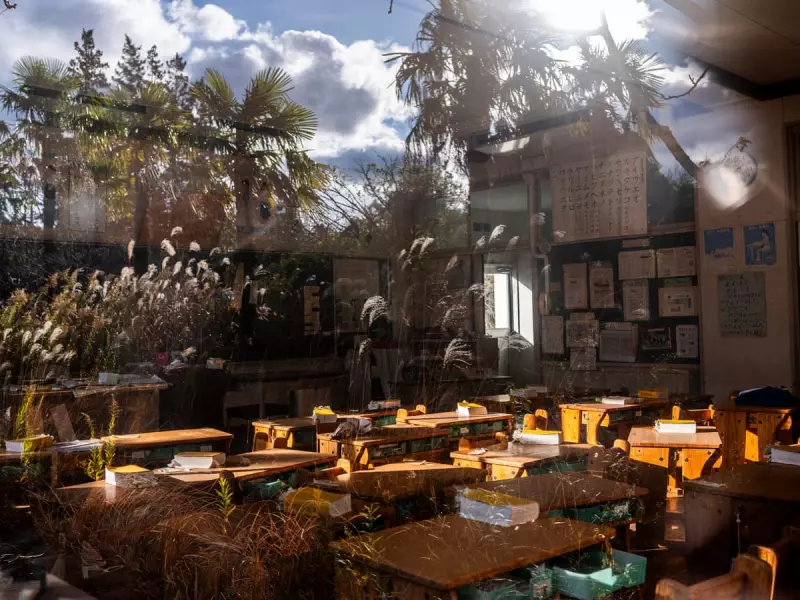
Textbooks still lie open on desks at Kumamachi primary school, pencil cases are scattered across the floor, and empty bento boxes that were never collected remain where children left them. Along the corridors, shoes line the escape route taken by pupils, some still wearing their indoor plimsolls from that fateful afternoon.
Outside, the once-pristine playground has been completely reclaimed by nature. Weeds and wild susuki grass have overtaken the area, with only the top of a slide visible above the vegetation. A metal ladder from an obstacle course has become inseparable from the tree it has leaned against for fifteen years, while rusting bicycles nestle in the undergrowth.

At the entrance, sections of a stone pillar bearing the school's name lie on their sides, demonstrating the destructive force of the magnitude-9 earthquake that triggered the tsunami and subsequent nuclear disaster.
Personal Tragedy Amidst Collective Loss
Among the 330 children who fled the school that afternoon was seven-year-old Yuna Kimura. She reached her coastal home less than two miles from the sea just before the tsunami arrived, which ultimately claimed her life along with her mother and grandmother. The disaster left behind her father, Norio Kimura, who was at work that day, along with his eldest daughter and father.
Kimura has never abandoned his dream of returning permanently to the coastal plot where his family once lived, despite years living in what he describes as nuclear limbo. "All I can do for now is clear the weeds and grass," he says. "But I definitely plan to return one day."
Nature's Relentless Reclamation
While human habitation remains limited, nature has flourished in the absence of people. Gardens have transformed into jungles, and homes have become nocturnal refuges for wild boar, raccoons, and black bears that now roam streets long deprived of artificial lighting.
Professor Kenji Nanba, director of the Institute of Environmental Radioactivity at Fukushima University, explains that trees continue to circulate problematic radiocaesium through their systems. "Rain and falling leaves transfer radiocaesium to the forest floor," he says. "The trees then absorb it through their roots along with potassium, which they need for growth."
Remarkably, wildlife populations have actually increased since the disaster. Professor Vasyl Yoschenko, a Ukrainian expert on forest radioecology, notes that "the only animals in danger in these areas may be humans."
The Complex Challenge of Return
Fifteen years after the disaster, authorities continue to wrestle with how to encourage people to return to affected areas while managing the thriving wildlife populations. The Japanese government launched an unprecedented clean-up operation a year after the meltdown, with workers removing contaminated topsoil near homes, schools, and public buildings.
This massive operation generated approximately 15 million cubic metres of radioactive waste now stored at interim sites near the wrecked power plant. However, the clean-up did not include the mountainous forests that cover 70% of the contaminated region, where elevated radiation levels persist.
Sanjiro Sanpei, a 77-year-old former cattle farmer who lost his livelihood in the disaster, represents those hoping to return despite the challenges. His home stands in a "difficult-to-return zone" where radiation levels remain too high for permanent residence, though recent legal changes now allow case-by-case returns following decontamination.

Preserving Memory While Planning the Future
Kimura and other residents are urging local authorities to preserve Kumamachi primary school as a permanent reminder of the disaster and a warning to future generations about the dangers of tsunamis and nuclear power. "It's part of our history now, and we need to protect it," the 60-year-old says.
He envisions transforming areas temporarily used for storing contaminated soil into an "eco-museum" where visitors can learn about the 2011 triple disaster. "Making the entire area into a museum would more realistically convey the history of this area that has been lost and the lessons of the nuclear accident," Kimura suggests.
Professor Thomas Hinton, a retired Fukushima University professor who has conducted extensive fieldwork in the disaster zone, believes limiting areas for human use could be beneficial for nature conservation. "Humans are generally the bane of nature and, if removed, nature seems to thrive, even in the presence of chronic radiation," he observes.
Searching for Closure
For Kimura, regular visits to a clearing near the coast provide a semblance of peace. A bunch of flowers marks the spot where, almost six years after the disaster, soldiers found fragments of Yuna's neck and jaw bones concealed in her favourite pink Minnie Mouse scarf. He continues searching for the rest of her remains while advocating for the area's preservation.
"I want people to come here to learn the truth about what happened," Kimura says. "I'm convinced that if I keep searching I'll find more of my daughter's remains. But a big part of me thinks it might be best to leave her in peace."
As Fukushima approaches the second decade since the disaster, the region stands at a crossroads between human reclamation and nature's resurgence, with frozen classrooms serving as poignant reminders of what was lost and what has unexpectedly thrived in humanity's absence.