

Water levels across the vast Great Lakes system are in a state of worrying decline, a situation now being compounded by the arrival of a powerful new industrial neighbour: mega-scale data centres. As drought conditions and warmer temperatures already strain the region, these energy and water-hungry facilities, crucial for powering artificial intelligence and cloud computing, are moving in, sparking fierce resistance from local communities who fear for their future.
Farmland vs. The Server Farm: A Clash in Ohio
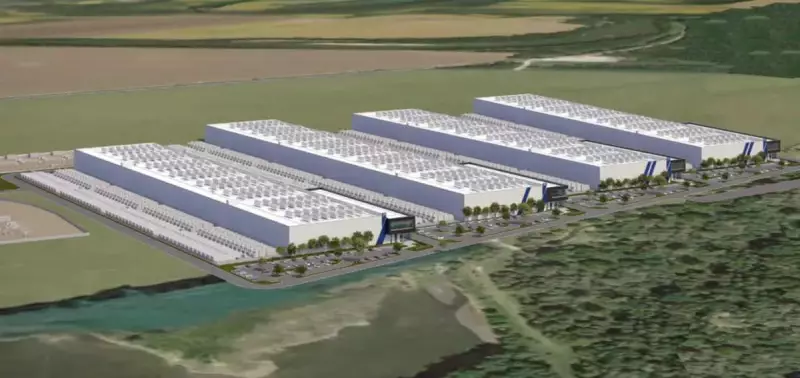
On a 1,200-acre farm in Perkins Township, Ohio, Tom Hermes represents a fifth generation of his family to work the land since 1900. His cattle and crops depend entirely on a reliable water supply. His concern is now fixed on the new construction next door: the NEO-01 data centre campus, a four-building, 200,000 sq ft facility being built by Texas-based Aligned Data Centers.
"We have city water here. That's going to reduce the pressure if they are sucking all the water," Hermes states bluntly. The $202 million "hyperscale" project, which broke ground in May 2024, promises just 18 permanent jobs. While Aligned claims its closed-loop, air-cooled system reduces water needs, experts note that the intense computing for AI and machine learning still relies heavily on water for cooling.

This local anxiety is set against a dramatic regional backdrop. A short drive north, the shoreline of Lake Erie is at its lowest point in years. Across all five Great Lakes, water levels have fallen by two to four feet since 2019. Although part of a natural cycle following record highs, the dip coincides perfectly with the arrival of a major new consumer.
A Thirsty Industry Targets the Freshwater Coast
The Great Lakes, holding the planet's largest surface freshwater system, are under multiple pressures. Drought, warmer water fuelling extreme snowstorms, and increased evaporation from lack of ice cover are taking a toll. Yet, the region's small towns, with their proximity to major cities like Chicago and Detroit, have become prime targets for data centre companies seeking space and resources.
The scale of consumption is staggering. In Mount Pleasant, Wisconsin, Microsoft is building a giant AI data centre set to use up to 8.4 billion gallons of water annually from Lake Michigan via the city of Racine. Similar projects are advancing in Hobart, Indiana, and Port Washington, Wisconsin. In Benton Harbor, Michigan, a proposed $3 billion facility raises fears of pollution and congestion.
"The Great Lakes region... is among the most data-centre dense," explains Kirsten James of the non-profit Ceres. "In addition to the high volumes of water used on site for cooling, even more water may be consumed to generate electricity to power data centres' energy needs." Purdue University research estimates an average data centre guzzles around 300,000 gallons of water per day.
Communities Fight Back Against a 'Fait Accompli'
Local opposition is mounting. Last October, hundreds packed a meeting in Ohio's Woodville Township to protest a proposed data centre. In Fife Lake, Michigan, residents recently celebrated after a plan for a facility in their 471-person town was scrapped due to public outcry.
However, the industry is pushing back hard. In Saline Township, Michigan, a community of 400 near Ann Arbor, OpenAI and Oracle used a legal challenge to override local opposition, securing approval for a facility needing 1.4 gigawatts of power—enough for roughly 1.4 million homes. The Detroit Free Press condemned the move as a "fait accompli, hammered into this tiny... community over the objections of residents."
Companies argue they bring vital investment and jobs. Aligned has paid hundreds of thousands to local authorities and schools in Perkins Township, securing a 15-year tax break. Yet, the firm declined to tell The Guardian how much water its Ohio centre will use or where it will come from. The site itself has a problematic history, having been cited by the Ohio EPA two years ago for contaminating a river flowing into Lake Erie.

For locals like Amanda Voegle, whose workplace now faces the data centre, the long-term cost is unclear but frightening. "I'm very concerned. Is this [water] going back into the lake?" she asks, also noting unexplained power surges. The battle for the Great Lakes' future, it seems, is just beginning.





