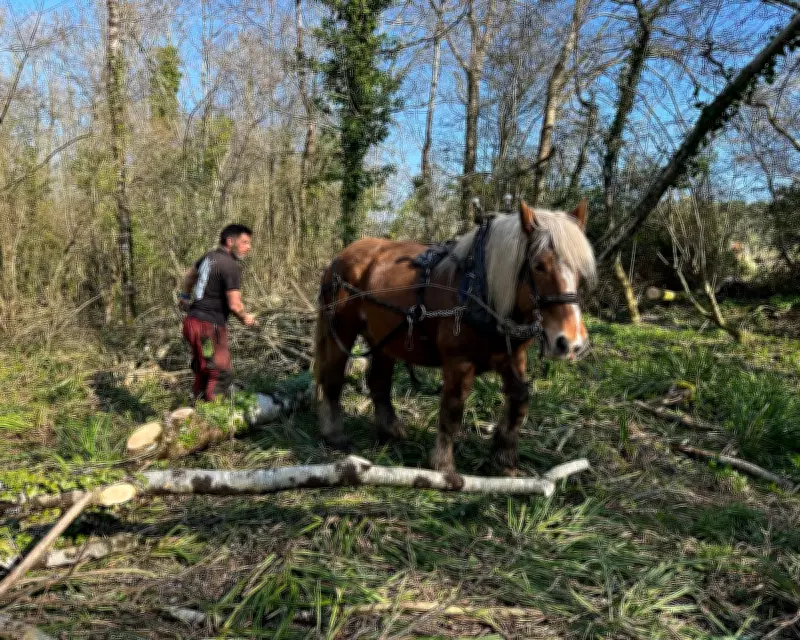
Heavy Horses Replace Machines in Sustainable Dorset Logging Operation
In the tranquil woodlands of Nettlecombe, Dorset, a remarkable partnership between man and horse is demonstrating how traditional methods can outperform modern machinery in delicate forestry work. Toby Hoad, a professional horse logger, works alongside his 12-year-old mare Etty, extracting felled tree trunks with precision that mechanical equipment cannot match.
The Art of Equine Logging
The scene unfolds with a heave, a grunt, and a sudden rush as a substantial tree trunk begins moving, dragged on a chain behind Etty's stocky chestnut hindquarters. This is heavy work for heavy beasts, but the French Comtois draught breed possesses exactly the right amount of horsepower for the task. Toby explains the essential nature of their working relationship: "You've really got to build up a relationship; you've got to build up trust. I can drop the reins, and she will pull out the log for me if it's in a tight spot."
This mutual understanding and constant communication form the foundation of their successful partnership, developed through years of training and careful handling.

Environmental Advantages Over Machinery
When it comes to extracting tree trunks from woodland environments, equine horsepower causes significantly less disturbance than mechanized methods. Horses offer numerous environmental benefits that modern machinery cannot replicate:
- Superior manoeuvrability in restricted spaces
- No ground compaction that damages forest floors
- Excellent performance in wet conditions without churning soil
- Minimal disruption to surrounding vegetation and wildlife habitats
Despite these clear advantages, Toby represents a dwindling profession, with only a handful of individuals working full-time in horse logging across the country. The specialized skills required take years to develop, both in training the horses and learning proper handling and care techniques.
Breed Selection and Seasonal Work
Toby specifically chooses French Comtois horses for their ideal characteristics: they are short, exceptionally strong "good-doers" who don't require excessive supplemental feeding. Traditional UK heavy horses like shires would be too large for the confined woodland spaces where they work.
The current operation involves removing diseased ash trees from coppice areas, some of the last to be extracted this spring before the seasonal felling halt that began on March 1st. Timber extraction will cease completely by May, allowing the woodland to recover during the growing season.
Signs of the changing season surround the logging team: the wood fills with birdsong, and Etty sheds her thick, woolly winter coat. Occasional puffs of soft, red fur drift among the woodrush, potentially providing ideal nesting material for birds like the blackcap warbler singing in blossoming blackthorn bushes that edge the wood with white flowers.
Beyond Logging: A Year-Round Sustainable Approach
As sunshine fills newly created glades and Etty's shoulders dampen with sweat from her efforts, the workday approaches its conclusion. Soon she'll rest and graze in an adjacent field, recovering from her labors.
Toby and his equine team will soon transition to bracken rolling, a non-chemical method of controlling the invasive fern by crushing emerging fronds with a specialized roller. Following this work, the team will take a short break and participate in agricultural shows before returning to woodland operations in September.
This sustainable approach to land management demonstrates how traditional skills and carefully selected horse breeds can provide environmentally sensitive solutions to modern forestry challenges, preserving both woodland ecosystems and valuable heritage practices.