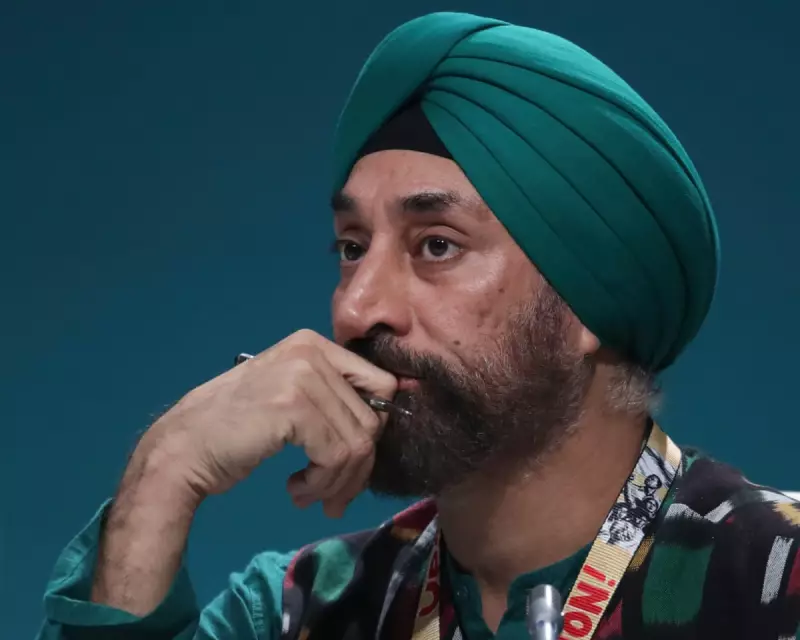
Indian authorities have arrested prominent environmental campaigners, alleging their advocacy for a global treaty to phase out fossil fuels constitutes activity against the national interest. The founders of the organisation Satat Sampada, Harjeet Singh and his wife Jyoti Aswati, were detained after raids on their home and offices in Delhi.
Enforcement Directorate's Allegations and Raids
The Enforcement Directorate (ED), India's financial crime agency, claims the couple's non-profit received nearly £500,000 in suspicious foreign remittances. The funds, allegedly channelled through climate campaign groups and prior reference NGOs like Rockefeller Philanthropy Advisors, were ostensibly for consultancy services and agro-product sales.
However, the ED asserts the money was actually intended to promote the agenda of the Fossil Fuel Non-Proliferation Treaty (FFNPT) within India. The agency stated that while presented as a climate initiative, the treaty's adoption could expose India to legal challenges at forums like the International Court of Justice and compromise the nation's energy security and economic development.

During the search of Singh's Delhi residence, ED officers reported discovering a large cache of whiskey exceeding legal limits. Local police were informed, leading to Singh's arrest and subsequent bail on Monday night. The agency is also probing Singh's trips to Pakistan and Bangladesh last year.
Campaigners' Defence and Broader Context
In a statement, Singh and Aswati called the allegations baseless, biased and misleading. They explained they started Satat Sampada in 2016 with personal savings and home loans. Consultancy work grew in 2021 after Singh left full-time employment to focus on the organisation. They stated legal reasons prevented them from sharing further case details.
Harjeet Singh is a well-known figure at UN climate conferences (COP), with over two decades of work for groups including ActionAid and the Climate Action Network. The FFNPT campaign, first endorsed by Vanuatu and Tuvalu, now has the support of 17 national governments, the WHO, and the European Parliament.
The investigation reportedly began based on intelligence received from the Cop30 climate summit in Belem, Brazil, in November last year. Unnamed ED officers told the Hindustan Times that other activists whose campaigns might be inimical to India's energy security are also under scrutiny.
NGO Crackdown and Legal Scrutiny
Under Prime Minister Narendra Modi's government, civil society organisations in India have faced significant pressure. Authorities have suspended almost 17,000 licences to receive foreign funding, leading to the closure of numerous groups.
The ED accused Satat Sampada of operating as a front, publicly marketing organic produce while its primary activity was channelling foreign funds to advance the FFNPT cause in India. The agency said the company ran at a loss until 2021, when payments registered as consultancy services turned its finances around.
The ED is investigating suspected mis-declaration of the foreign funds and whether the funded activities were against India's national interest, specifically its energy security. The case highlights the increasing tension between environmental advocacy and state security concerns in one of the world's largest economies.