

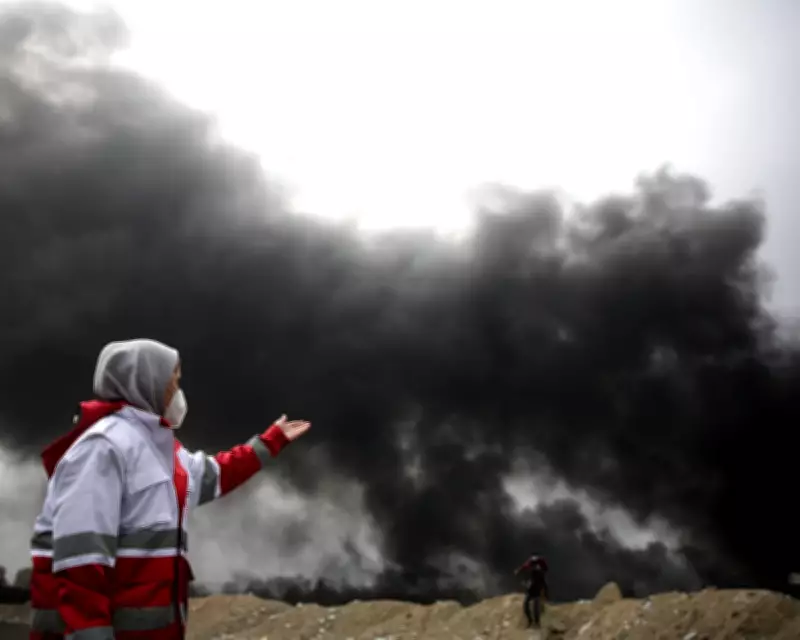
Environmental Catastrophe Unfolds in Iran Amid US-Israeli Strikes
Black smoke billowed from the Shehran oil depot in Tehran on March 8, creating a haunting visual symbol of the environmental devastation spreading across Iran. Photographic evidence captured thick plumes rising into the sky, foreshadowing the ecological crisis now unfolding. From black rain to marine pollution, the ongoing conflict between the United States, Israel, and Iran has triggered what environmental monitors describe as a disaster with potentially decades-long consequences.
The Toxic Legacy of Modern Warfare
If truth is the first casualty of war, the environment follows closely behind. The black rain that fell across Tehran two weekends ago represents just one visible symptom of widespread environmental damage inflicted since the beginning of March. Thousands of American and Israeli bombs and missiles have struck Iranian oil refineries, military installations, industrial zones, and nuclear facilities. In retaliation, Iran has launched suicide drones and ballistic missiles at similar targets within Israel and across Gulf states including the United Arab Emirates, Qatar, and Bahrain.
Each impact creates both human tragedy and environmental catastrophe. Together, these incidents accumulate into a toxic legacy that threatens to blight the entire region, with Iran facing particularly severe consequences. Environmental experts warn that the contamination will persist for generations, affecting air quality, water sources, and soil integrity across affected areas.

Monitoring the Environmental Fallout
With attacks occurring rapidly and frequently, environmental monitors struggle to document the full scope of damage. Wim Zwijnenburg, a remote sensing specialist with the Dutch peace advocacy organization Pax, has already compiled a database containing more than 500 incidents of environmental harm inside Iran and approximately 100 additional incidents outside the country. Remote sensing technology, which analyzes the Earth's surface using satellite imagery and aerial photography, provides crucial data about the conflict's ecological impact.
"What I'm examining currently are high-visibility impacts, including oil depot strikes and marine pollution," Zwijnenburg explained. While thousands of primarily military targets have been attacked, limited public information exists about their contents and the specific environmental hazards they present.
The Science Behind Black Rain and Toxic Contamination
When fuel depots in Tehran were bombed two weeks ago, authorities and the Iranian Red Crescent Society urgently warned residents to remain indoors. Scientific analysis indicates that the resulting fires released dangerous substances including soot, smoke, oil particles, and sulfur compounds. These pollutants dissolved within a low-pressure weather system developing over the city and subsequently fell as black acid rain, creating both immediate health risks and long-term environmental damage.
Attacks on military sites introduce additional hazardous materials according to the UK-based Conflict and Environment Observatory. Their published analysis identifies likely contaminants including "fuels, oils, heavy metals, energetic compounds and PFAS, while fires can release dioxins and furans." These substances pose serious threats to human health and ecosystem stability, with some persisting in the environment for years or even decades.
Information Blackout and Regional Vulnerability
Beyond scientific speculation, accurately assessing the environmental impact proves challenging. The Iranian government has not shared environmental data from affected areas. Normally, Zwijnenburg would gather ground-level information from local observers and environmental activists. However, he noted that "those are fairly nonexistent in Iran, because of the pushback against any environmental activism, traditionally associated with espionage."

The broader Gulf region remains ecologically vulnerable, with minimally protected oil and gas facilities positioned within range of Iranian missiles. Approximately one-fifth of global oil and gas supplies pass through the Strait of Hormuz, making potential attacks on fossil-fuel infrastructure particularly concerning. Should the conflict escalate to target these critical energy assets, the environmental and climatic consequences could prove catastrophic for both the region and the world.
Escalating Tensions and Uncertain Future
Iran has consistently warned that attacks on its infrastructure would provoke proportional retaliation. Despite this rhetoric, strategic restraint has generally prevailed until recently. On Wednesday, Israeli warplanes bombed Iran's South Pars gas field, marking a significant escalation. What follows remains uncertain, but environmental monitors continue tracking the conflict's ecological fallout.
The environmental cost of this conflict extends beyond immediate destruction to include long-term contamination that will affect air, water, and soil quality across the region. As military strikes continue targeting industrial and energy infrastructure, the toxic legacy grows more substantial with each attack, creating environmental challenges that will persist long after hostilities cease.





