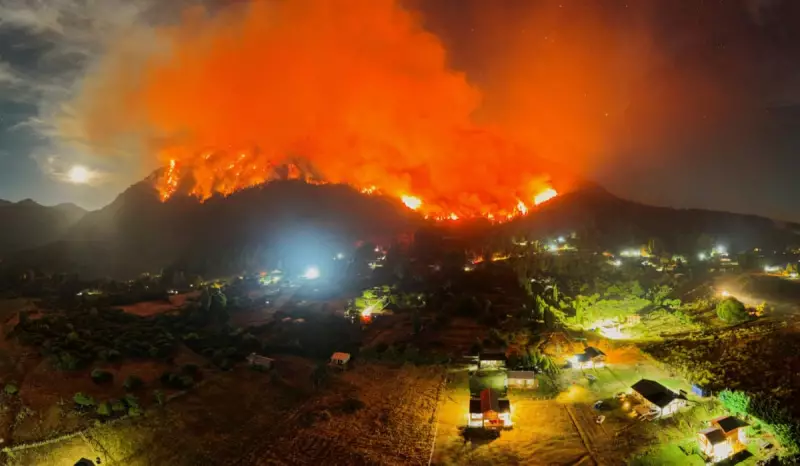
Since the beginning of January, devastating wildfires have swept through the Patagonia region, consuming more than 18,000 hectares of native forests, grasslands, villages, and tourist resorts. The southern Argentine province of Chubut has borne the brunt of this ecological catastrophe, with Greenpeace estimating the affected area could exceed 40,000 hectares. These fires have not only destroyed landscapes but have ignited a complex web of political, environmental, and social issues that are making containment efforts extraordinarily difficult.
A Long-Predicted Disaster
For decades, environmentalists like Lucas Chiappe have warned that replacing native trees in the Andes with highly flammable foreign pine species was creating a tinderbox waiting to ignite. In early January, those predictions became a terrifying reality as flames raced down Pirque hill towards Epuyén, where Chiappe has lived since the 1970s. Despite thirty people fighting the blaze with six motor pumps and kilometres of hoses, the inferno proved unstoppable, forcing residents to abandon their homes and equipment.
"We had to throw all our equipment into the stream and get the hell out of there," Chiappe recalls of his desperate escape. "The dragon chased us until we crossed the river, and we had to speed between two fire columns along a trail barely a kilometre wide." This dramatic account underscores the ferocity of the wildfires that have transformed Patagonia's landscapes into scenes of devastation.

Multiple Factors Fueling the Flames
Experts point to a dangerous confluence of factors driving the wildfire crisis. Andrés Nápoli, director of the Environment and Natural Resources Foundation, explains that insufficient snowfall, low humidity levels, and high accumulation of combustible materials have created perfect fire conditions. The monoculture pine plantations, which act as "powder kegs," have been particularly problematic, accelerating the spread of flames across the region.
Budget Cuts Crippling Firefighting Efforts
Compounding the natural factors are severe funding cuts implemented by President Javier Milei's government. The National Fire Management Service has seen an 81% reduction in its budget compared to last year, dramatically impacting prevention efforts and emergency response capabilities. Firefighting aircraft flight hours have been slashed from 5,100 to 3,100, while early-warning systems have been compromised.
The human cost of these cuts is stark. Firefighters are working in poor conditions for salaries ranging from 650,000 to 850,000 pesos monthly (£336-£440), well below the poverty line of 1.3 million pesos for a family of four. Many are forced to take additional jobs to make ends meet, even as they risk their lives battling the blazes.
Community Response and Conspiracy Theories
In response to the official shortcomings, communities have formed their own firefighting brigades. Diego Calfuqueo, a raspberry farmer, describes using everyday objects like chainsaws, rakes, hoses, and motor pumps to combat the flames. This grassroots effort has brought together people from all social classes, with Chiappe noting that "you'll see some bougie guy, all muddy, carrying a motor pump in a spectacular 4x4 truck."
Meanwhile, unfounded conspiracy theories have complicated the crisis. The government has promoted narratives blaming Mapuche Indigenous communities, with the national security minister alleging on social media that "preliminary evidence suggests that these crimes are linked to terrorist groups calling themselves Mapuche." Mauro Millán, a Mapuche leader, dismisses these claims as "rehashing the absurd theory of the arsonist Mapuche" that "nobody believes any more."
Even more bizarre theories have emerged, with some politicians and media pundits reviving the antisemitic "Andinia Plan" conspiracy that falsely claims Jews want to establish a state in Patagonia. Facundo Milman, a specialist in Jewish culture, traces this theory to Nazi sympathisers, noting its recent resurgence among those opposing President Milei.

Environmental and Social Consequences
The long-term consequences of the wildfires are expected to be severe. Nápoli highlights that the affected area is extremely biodiverse, containing protected sites for species like the huemul deer. Beyond environmental damage, local populations face serious impacts on housing, employment, and health.
"The trees will remain standing," Nápoli predicts grimly, "but the land will be left as ashes." This assessment captures the devastating transformation occurring across Patagonia, where once-thriving ecosystems are being reduced to charred landscapes.
Government Response and Climate Denial
President Milei's response has drawn criticism from those on the ground. While posting an AI-generated image of himself shaking hands with firefighters on Instagram and calling them "heroes," he has not visited the affected areas. Local firefighter Hernán Mondino describes this as "a little hypocritical and cynical," particularly given the budget cuts affecting his colleagues.
According to Hernán Giardini, forests coordinator at Greenpeace, government policy now aligns with Milei's claims that a human-made climate crisis does not exist. This ideological position has translated into practical consequences, including defunding forestry laws that previously supported wildfire prevention in Patagonian provinces.
As Argentina ranks among the world's top fifteen countries for deforestation, the current crisis highlights the dangerous intersection of climate denial, budget austerity, and environmental vulnerability. With climate scientists linking extreme weather events to the broader climate crisis, Patagonia's wildfires serve as a stark warning about the consequences of inadequate environmental protection and disaster preparedness.