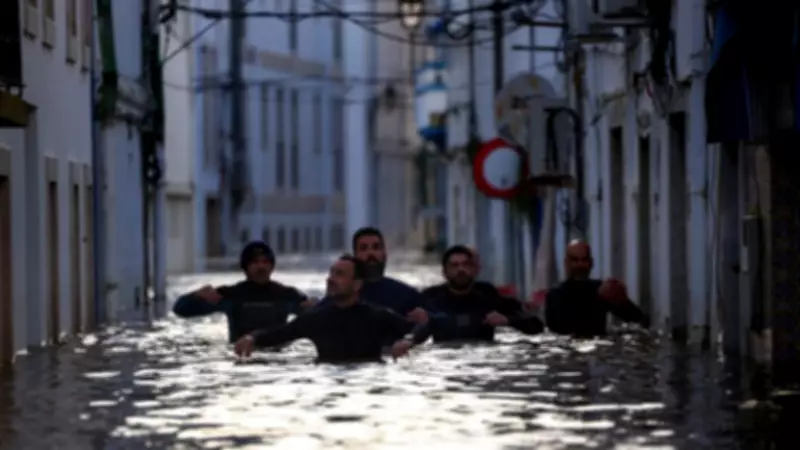
A devastating sequence of storms, named Leonardo and Marta, has unleashed chaos across the Iberian Peninsula, compelling thousands to evacuate their homes as torrential rains and severe flooding wreak havoc. The relentless weather system, described as a 'storm train', has already claimed lives and caused hundreds of millions in agricultural losses.
Tragic Losses and Widespread Disruption
The severe conditions have led to tragic fatalities. In Portugal's southern Alentejo region, a man believed to be around 70 years old died on Wednesday after his car was swept away by floodwaters. In a separate incident in Malaga, Spain, police discovered a body on Friday near where a woman was swept away by a river while attempting to rescue her dog.
The disruption is extensive, with nearly 170 roads closed across Spain and Portuguese rail services suffering significant delays and cancellations. Emergency services remain on high alert as the region braces for the arrival of Storm Marta, forecast to bring additional rain and snow on Saturday.

Critical Evacuations and Infrastructure Threats
Thousands of residents have been forced to evacuate amid fears of further flooding. Areas near the Guadalquivir River in Cordoba, Spain, were evacuated overnight due to dramatically rising water levels. In the mountainous village of Grazalema, 1,500 residents were evacuated as water seeped through building walls, compounded by the risk of structural collapse from the permeable rock formations absorbing excessive moisture.
Juan Manuel Moreno, Andalusia's regional leader, highlighted the precarious situation, noting that an expected 30mm of rainfall on Saturday poses a severe threat as saturated soil cannot drain and rivers are already at capacity. The Tagus river basin in Portugal was placed on red alert due to an abrupt increase in water flow, with six rivers across the country at risk of major flooding.
Agricultural Catastrophe and Economic Impact
The storms have inflicted catastrophic damage on the agricultural sector. Spanish farmers report fields submerged, with crops like broccoli, carrots, and cauliflowers underwater, describing the situation as a 'real natural catastrophe'. Preliminary estimates from Portugal's agriculture ministry indicate losses of approximately £650 million (750 million euros) due to the storms.
Miguel Angel Perez of the COAG farmers' organisation in Cadiz province emphasised the relentless nature of the rainfall, stating it has caused thousands of hectares to be inundated, resulting in millions of euros worth of damage to vital crops.
Government Response and Community Resilience
In response to the crisis, Portuguese Prime Minister Luis Montenegro extended a state of calamity in 69 municipalities until mid-February, citing 'unprecedented' rainfall and flood risks. Communities are rallying, with volunteers assisting evacuations and gathering donations for those displaced.
Residents in affected areas, such as Alcacer do Sal in Portugal, have shared harrowing accounts of fleeing with only the clothes on their backs, underscoring the human toll of this extreme weather event. As Storm Marta approaches, authorities and emergency crews continue to work tirelessly to mitigate further risks and support impacted communities across Spain and Portugal.